
Key takeaways
- Marvel's Wolverine's QTE sequences can be entirely failed without consequence, sparking criticism that misses the actual design problem.
- Contextual button inputs and visible consequences made QTEs work in Resident Evil 4 and Heavy Rain—tools Wolverine abandoned.
- The real issue isn't missing fail states but missing follow-through: identical animations and dialogue regardless of success or failure.
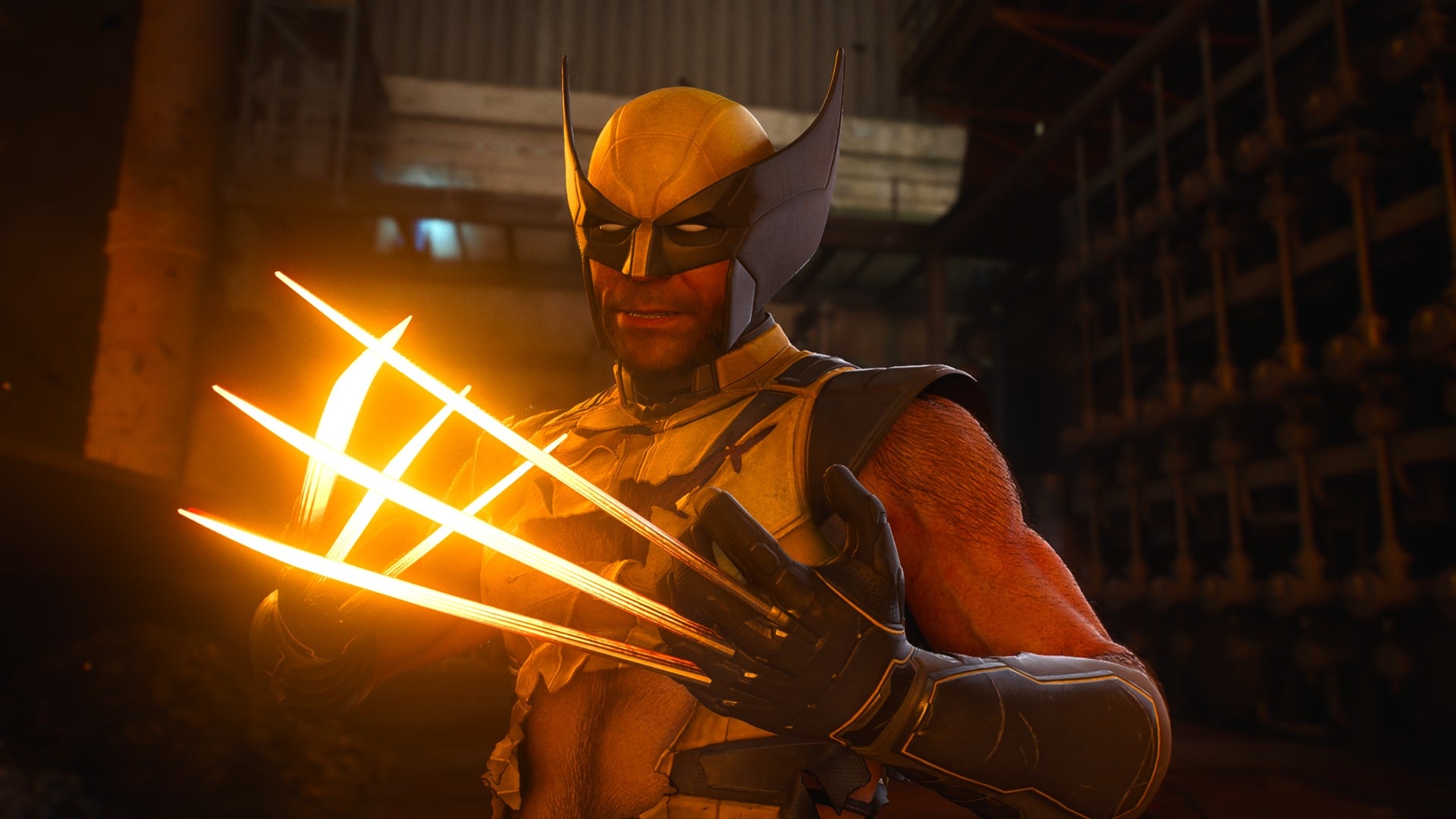
Marvel’s Wolverine arrived on PS5 on September 15 as Insomniac’s latest superhero action title, delivering what amounts to a conventional arcade beat-em-up wrapped in polished visuals. Despite its aesthetic strengths, the game has become the center of a heated discourse around one specific mechanic: its quick-time events that cannot fail in any meaningful way. Social media erupted with complaints about the game’s perceived handholding, but the actual issue runs deeper than whether pressing buttons should trigger a restart.
The No-Fail QTE Backlash
Since launch, players have focused their criticism on Wolverine’s inability to truly fail its QTE sequences. The argument seems straightforward: if you can ignore button prompts entirely and still progress, what purpose do they serve? YouTube critic Skill Up articulated this frustration in a review that has surpassed 3 million views, though his broader critique centered on the game’s overall accessibility design—white-painted platforms, scent trails, GPS markers, and directional arrows all present in a linear environment where getting lost seems impossible.
The motorcycle segments drew particular ire from players. Crash your bike into an obstacle and you’ll be thrown off, appearing to end in failure. Yet if you simply release the controls entirely, Wolverine will navigate the sequence autonomously, ricocheting off barriers and hugging roadside walls to survive. The game becomes a meditation on how non-interaction sometimes proves more effective than genuine attempts at engagement.
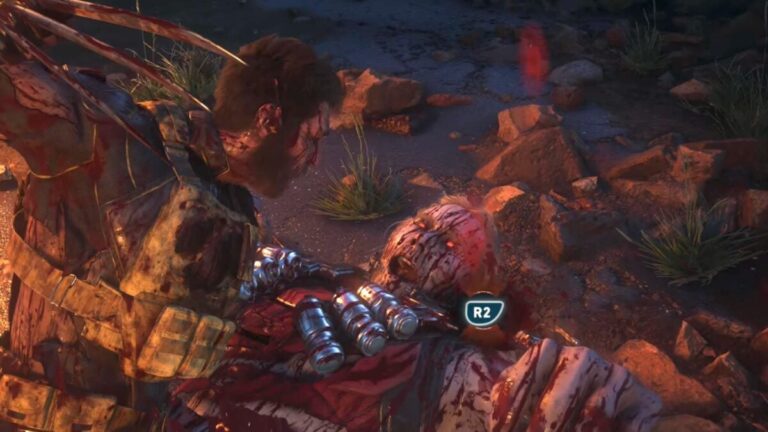
During combat encounters, on-screen prompts direct players to press shoulder or face buttons for specific claw attacks. Wrong button? Wolverine executes the intended move anyway. No button at all? The sequence advances. There is no traditional fail state, no checkpoint restart, no consequence for input errors.
Why No-Fail Doesn’t Mean Poor Design
QTE History: The Resident Evil 4 Model
To understand what went wrong with Wolverine’s implementation, examining how QTEs functioned at their most effective proves instructive. Resident Evil 4 popularized the mechanic with a boulder sequence that demanded rapid button mashing to escape, followed by a two-button simultaneous press to dodge at the last moment. Fail, and the boulder kills you instantly.
The brilliance lay in contextual design. The mashing action mimicked frantic escape movement; the simultaneous button press reflected the sudden complexity of an acrobatic dodge. Beyond binary success or death, subtle variations existed: pressing the dodge prompt early sent Leon behind one rock, while a late press positioned him behind a forward tree. The narrative result shifted even though mechanically both outcomes achieved survival.
Later, Krauser’s knife fight maintained that contextual tension. Complex movements demanded two buttons; tests of strength required mashing. Prompts arrived rapidly with minimal reaction time because Leon existed in a state of being overwhelmed and reactive. A single failure meant death.
Heavy Rain’s Flexible Failure
Not all successful QTEs require instant failure states. Heavy Rain’s fight between Scott Shelby and Troy the pimp demonstrated that missing some prompts didn’t mandate restarting. Shelby could miss a few QTEs and still win the encounter. More importantly, the game asked players to rotate the joystick for a hook punch followed by an aggressive throw—the physical controller movement mirrored the character’s action, creating intuitive harmony between input and outcome.
These examples establish a crucial point: QTEs work because of how they’re applied and narratively integrated, not because failing them forces a restart. Having Wolverine die from QTE failures would actually contradict his character, given his legendary healing factor and survival instincts. The power fantasy of playing an unkillable mutant shouldn’t be punctured by arbitrary button-press deaths.
The Actual Problem: Missing Consequence
Negligible Differences Between Success and Failure
What truly undermines Wolverine’s QTE sequences is their hollow follow-through. Players posted side-by-side video comparisons showing the difference between successfully completing and utterly failing a QTE—specifically the Sabertooth arm-wrestling sequence. The difference proved nearly invisible. Winning and losing produced essentially identical results with no distinctive animation, dialogue, or narrative branching.
Consider what creative implementation could have accomplished. Separate cutscenes for winning and losing the arm-wrestling match would immediately grant meaning to button inputs. Contextual character quips reflecting success or failure would acknowledge player choice. A system where repeated QTE failures accumulated into visible damage—Logan staggering into the next encounter half-dead with no margin for additional errors—would create actual stakes without requiring a restart.
Simplified Input Design
Beyond consequence, the QTEs themselves lack sophistication. Wolverine relies predominantly on single-button presses rather than the multi-button combinations or joystick movements that older games employed. Rotating the controller to pantomime a hook punch, tilting downward to suggest a full-body tackle—these nuances disappeared in favor of simpler inputs. It represents a mechanical step backward from design principles established years prior.
Distinguishing Between Accessibility and Laziness
The broader criticism of Wolverine’s perceived easiness has merit worth examining separately from QTE design. Some players argue the game assumes novice-level competency across all mechanics—environment navigation, combat difficulty, exploration rewards. If the game genuinely feels too simple, the difficulty slider exists for exactly this purpose.
The QTE problem, however, stands as its own distinct issue. It’s not an accessibility measure. It’s an indicator of incomplete design follow-through. Having no-fail QTEs doesn’t automatically make a game “dumbed down,” but failing to differentiate consequences for player actions absolutely signals minimal effort in sequence implementation. Lazy follow-through differs fundamentally from thoughtful difficulty calibration.
What the Criticism Actually Reveals
Players are frustrated with Wolverine’s QTEs, but they’ve often articulated that frustration by defaulting to the popular complaint about overall game simplicity. That conflates two separate design conversations. A productive discussion requires precision: the QTEs aren’t bad because they lack fail states. They’re bad because they lack creative differentiation, contextual input design, and visible consequences that make player actions matter within the game’s narrative and mechanical framework.
Insomniac crafted an enjoyable arcade experience with cinematic presentation. The QTE criticism shouldn’t distract from what the game accomplishes well. But addressing it accurately matters more than simply adding checkpoints to failed sequences. The developers deserve feedback about the right problems—not because the game is easy, but because the sequences that do exist deserve more thoughtful implementation. That’s how future superhero action games learn to do better.
Frequently Asked Questions
When did Marvel's Wolverine release?
Marvel's Wolverine released exclusively for PS5 on September 15.
What makes Resident Evil 4's QTEs effective compared to Wolverine's?
RE4's QTEs use contextual inputs—mashing for frantic movement, simultaneous buttons for complex acrobatics—that mirror the action thematically. It also offers subtle narrative variations based on timing. Wolverine relies on simple single-button presses with identical outcomes regardless of success or failure.
Why shouldn't Wolverine have fail-state QTEs?
Having Wolverine die from QTE failures would contradict his character as an unkillable mutant with a legendary healing factor. The real problem is the lack of visible consequences and creative follow-through, not the absence of checkpoint restarts.
