
Key takeaways
- Takara Tomy announced Enjoyn Games, an indie publishing label launching three multiplayer games on November 10, November 14, and December with design philosophies rooted in toy-making experience.
- The label represents the fifth new Japanese gaming initiative in a year, as media conglomerates including Sanrio, Toei, and Pocketpair pursue transmedia intellectual property opportunities.
- Major Japanese companies view indie publishing as a discovery pipeline for properties capable of expanding across mediums such as toys, films, and merchandise rather than as standalone revenue sources.
Toy company Takara Tomy, creator of Beyblade and Transformers, announced Enjoyn Games this week—a new indie publishing label marking the fifth such gaming venture launched by a major Japanese company in the past year. The initiative signals a significant shift in how media conglomerates approach digital entertainment and intellectual property development across mediums.
Enjoyn Games will release its first three titles over the coming weeks and into December, each designed around multiplayer gameplay and social experiences. The label’s launch strategy frontloads releases, with two games arriving consecutively in November before a third follows in December.
The Launch Lineup
Stack and Sus arrives November 10 as a three-to-six player social deduction game. Participants divide into staff and spies, with victory depending on whether the staff successfully constructs a burger or the spies sabotage the effort. The mechanics align with established party game traditions where hidden roles and player deception drive engagement.
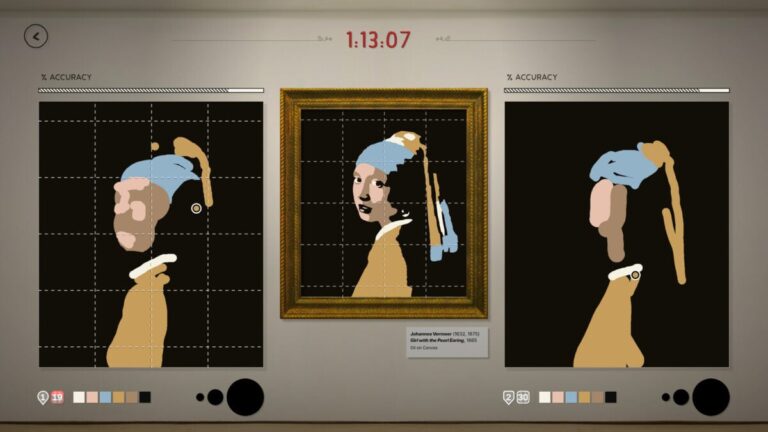
Sloppy Forgeries launches November 14, positioning itself as a competitive party painting game. Players must recreate classic artworks within a time limit while unable to undo their brushstrokes. The game’s design hinges on accuracy and speed rather than artistic interpretation—victory conditions reward precision over creativity.
Little Cheese Works, likely releasing in December, shifts to puzzle-platforming for up to four players using voice chat coordination. Participants control mice navigating levels to collect cheese while avoiding cats. The voice chat requirement differentiates it from asynchronous multiplayer, emphasizing real-time coordination.
Toy Heritage to Game Design Philosophy
Design Philosophy
According to Takara Tomy, Enjoyn Games aims to apply the company’s toy-manufacturing expertise toward guiding game development. The announced titles reflect this philosophy: each resembles experiences that could exist as board games or physical party games rather than digital-first interactive experiences.
Cross-Media Infrastructure
This design approach carries strategic implications beyond aesthetic preference. Takara Tomy’s existing manufacturing, distribution, and promotional infrastructure—built over decades of toy production—provides advantages smaller indie teams cannot replicate. Games can cross-promote with physical products; successful game properties can transform into toy lines or collectibles; characters and franchises can migrate between mediums.
A Wave Across Japanese Media
Enjoyn Games does not stand alone in the current landscape. Immediately before Tokyo Game Show 2026, Sanrio announced Sanrio Games, committing to release ten games featuring Sanrio characters over the next three years. Toei Games launched separately as the film studio giant’s indie publishing division, similarly aiming to expand existing properties into interactive media. PARCO Games, operated by the major Japanese department store chain, officially launched at the end of summer 2025.
The trend extends beyond these corporate entities. Kenji Ozawa, director of Visions of Mana, moved his Studio Sasanqua into indie publishing, releasing Afantasia as its first title. Established publishers like Playism and Shueisha Games continue operating in the space, while Pocketpair—developer of Palworld—established its own publishing label to support other projects.
The Transmedia Calculation
IP Development Strategy
Across nearly all these initiatives, the motivation transcends generating revenue from game sales alone. Instead, companies aim to cultivate intellectual property with potential to expand across mediums and formats. The Exit 8 serves as historical precedent: an indie title developed outside the corporate publishing framework that gained traction and successfully expanded into other media, becoming something substantially larger than its original release.
Financial and Creative Rationale
For Takara Tomy, Sanrio, and Toei, the calculation becomes transparent. A successful indie game can feed back into toy manufacturing, film production, merchandise licensing, or character merchandising opportunities. Publishing venture costs remain modest compared to internal game studio development, while the upside—discovering or nurturing a cross-media hit—justifies the investment and resource allocation.
This transmedia orientation appears consistent across the Japanese gaming industry currently. Rather than viewing games as standalone commercial products, these companies frame publishing as a discovery tool for ideas and properties capable of succeeding across formats. In that context, Enjoyn Games represents Takara Tomy’s specific bet that indie developers, given proper support and resources, generate exactly those kinds of cross-media concepts.
Market Confidence in Independent Development
The proliferation of new Japanese gaming labels reflects emerging confidence in indie development and recognition that smaller teams often move faster and accept creative risks larger studios avoid. Takara Tomy, Sanrio, Toei, PARCO, and Pocketpair collectively signal that major Japanese companies view indie publishing not primarily as financial profit centers, but as pipelines for discovering properties with broader commercial and creative potential.
For independent developers in Japan, the current environment creates measurable opportunity. Publishing support removes friction around distribution, platform access, and marketing—challenges that historically consume indie team resources. The stated focus on transmedia potential suggests successful games will receive investment across mediums, potentially multiplying returns beyond initial game revenue.
Source: Kotaku
Frequently Asked Questions
What are the three games Enjoyn Games is releasing?
Stack and Sus (three-to-six player social deduction game, November 10), Sloppy Forgeries (competitive party painting game where players recreate classic art with no undo option, November 14), and Little Cheese Works (four-player puzzle-platformer using voice chat coordination with mice collecting cheese while avoiding cats, December).
Why are Japanese media companies entering indie game publishing?
These companies aim to cultivate intellectual property with potential to expand across mediums—games that can become toys, films, merchandise, or other formats. The Exit 8 demonstrates this potential, having successfully expanded beyond its original indie game release into other media.
What other Japanese companies have launched gaming labels?
Sanrio Games (planning ten games in three years), Toei Games (the film studio's publishing division), PARCO Games (the department store chain), Studio Sasanqua (releasing Afantasia), Playism, Shueisha Games, and Pocketpair (the Palworld developer).
