
Key takeaways
- Blizzard reintroduced Plainsrunning, a scrapped tauren racial ability from WoW's original beta, with new mechanics and significant power increases.
- The ability reaches 60% movement speed—matching apprentice-level mounts—available to tauren starting at level 1.
- Plainsrunning builds speed through stacking while running, maxing at 30 stacks that reset whenever movement stops or combat begins.
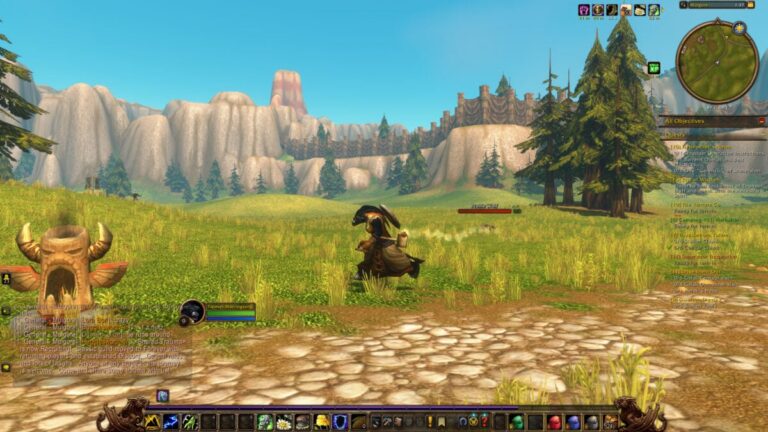
Plainsrunning disappeared from World of Warcraft decades ago, removed from the game so early in its history that many players never experienced it. This racial ability, unique to the tauren race, existed only in the game’s original beta phase before being abandoned in favor of a more conventional approach. Now, with the launch of WoW: Forever—Blizzard’s new offering of classic World of Warcraft—Plainsrunning has reemerged with significant mechanical redesigns and a power level that makes it arguably the strongest racial movement ability available to any race at the earliest levels of play. The ability allows tauren to reach 60 percent movement speed, equivalent to apprentice-level mounts that other races don’t access until level 40.
The reintroduction of Plainsrunning marks an unusual decision: investing development resources into reviving an ability that was abandoned nearly two decades ago. Rather than leaving it in history, Blizzard completely redesigned Plainsrunning and made it a central feature of tauren identity in WoW: Forever. The result is an ability that feels both powerful and balanced, one that genuinely changes how tauren players will experience traversal across classic Azeroth’s continents.
The Original Design Decision
Why Tauren Needed Different Rules
Tauren, the bovine-humanoid race inhabiting the Mulgore region, never fit neatly into World of Warcraft’s standard character mobility systems. Unlike humans, dwarves, elves, and orcs, tauren characters are substantially larger and bulkier than other races. During the game’s original beta testing, developers faced a practical problem: traditional mounts looked awkward when scaled to tauren proportions. A massive, muscular humanoid sitting atop a horse created visual and mechanical inconsistencies that the development team deemed unacceptable. Rather than redesigning mounts or tauren character models, they chose an alternative path.
Plainsrunning as the Solution
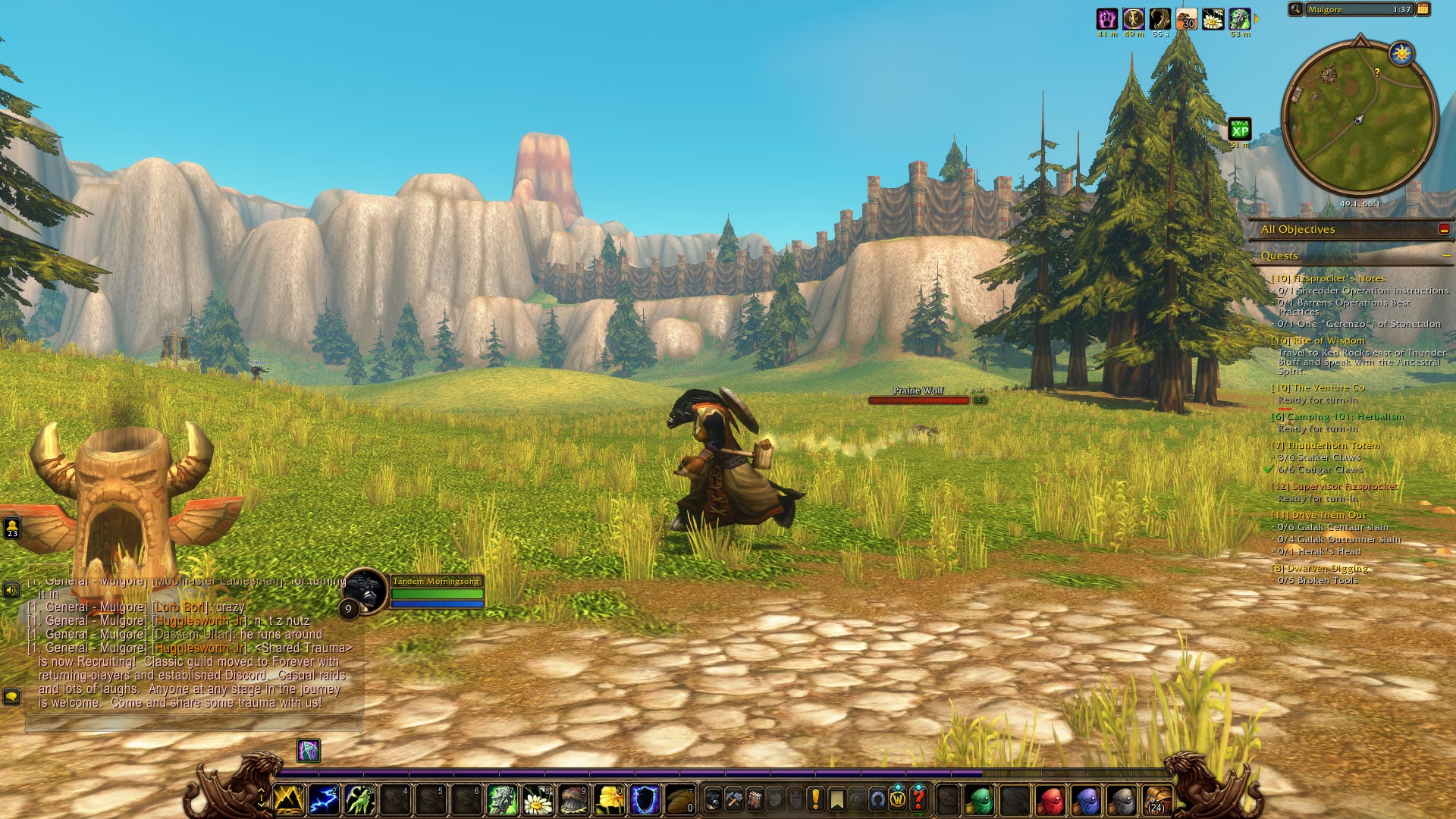
Instead of giving tauren access to mounts at level 40 like every other race, the developers created Plainsrunning—a racial ability that tauren would learn through a quest. The ability let tauren run at speeds equivalent to an apprentice-level mount, granting the same mobility without requiring the character to sit on an animal companion. For a race that evolved on the windswept prairies of Mulgore, running at mount speed felt thematically appropriate, even if the implementation was experimental. Tauren would get their speed not through a saddle, but through innate physical prowess honed by living on vast grasslands. It was an elegant solution to an awkward problem, at least in theory.
The Failed Experiment
The elegance of the concept did not survive contact with actual gameplay. Over time, it became clear that Plainsrunning did not function well within World of Warcraft’s established systems and player expectations. The ability created balance complications, required special handling in code, and did not integrate smoothly with the rest of the game’s movement mechanics. Blizzard made the pragmatic decision to remove Plainsrunning entirely and treat tauren like every other race. At level 40, tauren would receive kodos—riding beasts distinctive to their culture, with massive frames and tribal aesthetics suited to tauren proportions. The problem was solved through the conventional route after all. Plainsrunning faded into the game’s development history, becoming the kind of trivia that only dataminers and hardcore fans discussed.
Return to Mulgore
The Reintroduction in WoW: Forever Beta
When Blizzard opened beta testing for WoW: Forever, Plainsrunning reappeared—not as a direct copy of the original ability, but as something entirely redesigned. The new version operates on a stacking system: tauren build movement speed gradually as they run without interruption. Each few seconds of continuous running grants another stack, with each stack providing a 2 percent movement speed increase. This design meant that Plainsrunning rewarded sustained travel rather than providing instant speed, making it feel earned through commitment rather than gifted at level 1. According to Kotaku’s coverage of the beta, this gradual buildup created a satisfying gameplay experience that fit perfectly with classic WoW’s slower pacing and frequent long-distance travel.
The Buff Before Launch
Between the close of beta testing and WoW: Forever’s launch, Blizzard made a surprising decision: they significantly buffed Plainsrunning. The ability’s speed cap was set at 60 percent movement increase—matching the speed of apprentice-level mounts that players of other races don’t gain access to until level 40. This buff transformed Plainsrunning from a minor convenience into one of the single most valuable racial bonuses available in the early game. Tauren characters would now have access to mount-equivalent speeds from level 1 onward, provided they were willing to invest the time in building up their stacks through continuous running. The buff signaled that Blizzard viewed this reintroduced ability not as nostalgia, but as a core feature of tauren identity in WoW: Forever.
How Plainsrunning Works
Building Speed Through Stacking
The mechanics of the new Plainsrunning require both patience and sustained movement. As a tauren runs continuously, they accumulate a stack of Plainsrunning every few seconds, with each stack granting 2 percent movement speed. The ability has a hard cap at 30 stacks, meaning the theoretical maximum is 60 percent movement speed increase. Reaching that maximum requires running unimpeded for several seconds—not a huge time investment on its own, but significant enough to matter during short journeys. More importantly, the stacks are fragile: any interruption to movement breaks them completely. If a tauren stops running, enters combat, or performs an action like gathering herbs from the ground, all stacks reset to zero and the buildup process begins again from scratch.
Practical Applications and Trade-offs
This design creates interesting gameplay decisions throughout a tauren’s leveling experience. On long journeys between distant zones or across open terrain—the kind of travel that defines classic WoW—a tauren can maintain forward momentum, build up stacks, and eventually cruise at mount-equivalent speed. According to Kotaku’s observations, tauren at full speed are visibly faster than players of other races, creating a striking contrast as they race across landscapes. However, the same mechanic that makes Plainsrunning powerful in transit makes it useless during exploration or questing. Any time a tauren needs to stop and fight enemies, pick up quest items, or interact with the environment, they lose all their progress. The stacks cannot be maintained during dungeon runs, raids, or crowded towns where combat or NPC interactions constantly interrupt movement. This creates a natural balance where tauren gain a distinctive advantage for one specific type of gameplay—long-distance travel—without dominating in other contexts.
Fitting Into Classic WoW Gameplay
The reintroduction of Plainsrunning would have felt out of place in modern World of Warcraft, where fast travel systems, portals, and flying mounts have made running across zones largely obsolete. However, in classic WoW, travel is the backbone of the leveling experience. Players spend hours running across zones, continents, and terrain, frequently covering vast distances just to reach quest objectives or connect with other players. This slower pace, marked by lengthy periods of uninterrupted movement, is precisely what many players love about classic versions of World of Warcraft. It creates a sense of place and journey that modern WoW’s fast-travel conveniences have eliminated.
Plainsrunning fits perfectly into this reality. The gradual stacking mechanic rewards the exact type of gameplay that defines classic WoW: sustained travel across open terrain. A tauren running from one region to another can build up stacks naturally, eventually reaching mount-equivalent speed without needing to wait until level 40 or purchase a mount. This feels neither overpowered nor trivial; it is a genuine advantage that becomes increasingly valuable over the course of a classic WoW player’s journey. By the time WoW: Forever fully launches, tauren will have reclaimed their identity as swift runners of the plains, all thanks to an ability that Blizzard designed, abandoned, and ultimately reinvented for a new era.
Source: Kotaku
Frequently Asked Questions
What is Plainsrunning and why was it removed from World of Warcraft?
Plainsrunning was a racial ability for tauren in WoW's original beta that let them run as fast as a mount. It was removed because developers decided the concept didn't work well within the game's systems, and tauren were given kodos (distinctive riding beasts) at level 40 instead.
How does the new Plainsrunning work in WoW: Forever?
Tauren gain a 2% movement speed stack every few seconds while running, up to 30 stacks totaling 60%. The stacks build only during continuous movement and reset whenever the player stops, engages in combat, or performs actions like gathering items.
How fast is Plainsrunning compared to mounts?
At maximum stacks, Plainsrunning grants 60% movement speed, matching the speed of an apprentice-level mount available at level 40—but tauren can access it starting at level 1.
