
Key takeaways
- Control Resonant forces Remedy into character action territory, ditching parry mechanics for timing and spacing-based combat.
- Dylan's movement abilities—flight, dash, grapple—double as traversal and combat tools across a Manhattan structured like classic Zelda.
- The Pattern's recursive aesthetic reinforces narrative and design philosophy, making environment itself a visual storytelling device.
- While dialogue occasionally misfires and themes broadcast too obviously, the design rigor makes this Remedy's most demanding game.
Remedy’s Risky Reinvention
Remedy Entertainment has spent nearly two decades proving that video game sequels need not repeat their predecessors’ formulas. Alan Wake began as an arcade-influenced shooting gallery before Alan Wake II embraced methodical survival horror. Control established itself as a third-person shooter Metroidvania, yet its sequel diverges even more sharply. Seven years after the original, Control Resonant reimagines the franchise as a twitchy melee action RPG closer in spirit to Devil May Cry than anything Remedy has attempted before.
This willingness to upend established design frameworks distinguishes Remedy from studios that play it safe with sequels. But venturing into character action—one of gaming’s most mechanically exacting genres—represents a bold gamble. The studio has built its reputation on narrative-driven experiences where storytelling often overshadows moment-to-moment gameplay. Yet Control Resonant merges these signature formal ambitions with design this rigorous and uncompromising. The studio has stuck the landing: this is Remedy’s most demanding, most densely packed video game to date.
Dylan’s Escape and NYC’s Fall
Dylan Faden, younger brother to Control’s Jesse Faden, forms the narrative center of Resonant. Seven years after the original’s events, Dylan escapes confinement within the Oldest House—the sprawling, federally sanctioned paranormal research facility hovering beyond conventional reality. The intervening years have brought catastrophe: The Hiss, the extradimensional entities that laid siege to the Oldest House in Control, have breached into New York City proper. Dylan’s departure from containment places him squarely in the middle of this supernatural invasion, armed with little more than a supernaturally empowered melee weapon.
The narrative resists easy description, partly by design. More importantly, Control Resonant exemplifies how video games can reinforce story through interactive engagement. Rather than explaining Dylan’s motivations through exposition, the developers embed them into how he moves, fights, and navigates. Everything worth caring about achieves emotional weight because it connects to design decisions and player agency. The story’s full weight can only be felt by playing it.
The Remedyverse Question
Since 2019, Remedy has woven Alan Wake and Control into a shared fictional universe, with Alan Wake’s 2021 remaster retroactively linking the franchises. Control Resonant could have drowned in accumulated lore and self-referential callbacks. Instead, the game asserts its own identity completely. The relationship between Dylan and Jesse anchors the emotional core without deferring to prior canon. This selective approach to continuity—demonstrated equally by Alan Wake II’s willingness to reinterpret its own fiction—suggests Remedy feels no obligation to maintain consistency across projects if the current game’s vision demands otherwise. It’s clear the studio has few reservations about reinterpreting the contours of its canon depending on the needs of any given project.
Combat Built on Immediacy
Every Remedy game stretching back to Max Payne has centered on managing space. Jesse Faden approached the Oldest House as a detective would—cautious, observant, at deliberate remove even amidst combat. Dylan Faden operates under opposite principles. His cause is immediate and personal. He fights enemies that previously stole his autonomy, now controlled by an organization doing the same. His approach is direct, aggressive, unyielding. Gameplay translates this thematic shift into constant offensive pressure.
Input Simplicity, Spatial Mastery
Control Resonant strips away traditional character action complexity. Primary weapon attacks chain through repeated button presses until a finisher lands. Secondary weapons work identically. Psychokinetic abilities map to shoulder buttons, usable whenever sufficient meter accumulates through successful weapon strikes. No precise input sequences unlock hidden techniques. No style meter fills based on combo complexity. Aerial and grounded attacks function identically. Director Mikael Kasurinen cited Sekiro: Shadows Die Twice as inspiration, yet Control Resonant deliberately excludes parry mechanics—the very feature that defined Sekiro’s difficulty.
This omission represents calculated restraint. Parries have grown so ubiquitous in modern action design that rejecting them feels nearly as unusual as removing Mario’s jump. At their worst, parries eliminate negotiation of three-dimensional space, converting tense positional gameplay into simple counterattack exchanges. Remedy understood this pitfall and chose a different path, putting all chips on timing, spacing, aggression, enemy design, and situational awareness.
Righteous Desperation and Strategic Choices
Instead, Control Resonant constructs challenge through a game of chicken between player and enemy. Dylan accumulates damage while hazards approach from all directions. Most mandatory encounters force players to defeat heavy enemies—each with distinct strengths and weaknesses that encourage varied builds—before progression becomes possible. These heavy enemies cannot be easily stunlocked. Smaller enemies spawn endlessly but pose minimal threat and can be ignored entirely.
This design split creates constant high-stakes decision-making. Players must choose whether to rush the heavy enemies for faster completion or pick off smaller foes for crowd control and resource generation. Each approach carries distinct risk-reward profiles. When Control Resonant operates at peak efficiency, every section of its arenas—floors, walls, ceilings—functions as active combat territory. Dylan traces between targets like electricity, constantly engaged with multiple threats. The sound design reinforces this visceral feedback: deep, round, punchy audio where every impact reverberates like a bass drop.
Movement and Manhattan
Control Resonant frontloads movement abilities into its opening act. Flight, double jump, sprint, and air dash all become available before defeating the first boss. Later additions—long-distance grappling and situational gravity manipulation—arrive gradually. These abilities serve dual purpose: essential to combat and traversal simultaneously. Mastering one discipline facilitates mastery of the other. Dylan’s ease transitioning between ground and air creates abundant vertical space, particularly in encounters against hypermobile airborne opponents.
The overworld structure mirrors classic Zelda’s approach. Manhattan divides into discrete themed zones, each containing combat encounters, puzzles of varying quality, platforming challenges, and dungeon-like structures burrowing into the city’s depths. Clusters of skyscrapers function as massive jungle gyms, festooned with hidden goodies and passageways. This vertical abundance transforms what might feel like restrictive urban environments into playgrounds. The dungeon areas, particularly, showcase how Remedy synthesizes narrative, art, and level design into cohesive environments that dazzle through technical confidence.
The Pattern and Environmental Design
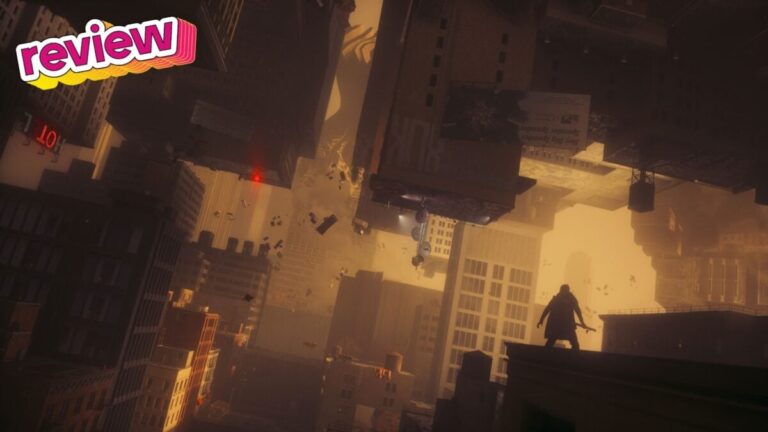
Trailers have already revealed Control Resonant’s secondary antagonistic force: The Pattern, which warps spaces and objects into fluctuating, kaleidoscopic structures that blur the line between environment and artwork. This concept undergirds much of the game’s most inventive aesthetic and mechanical ideas.
From Control onward, Remedy has embraced video games as interactive art exhibits. Designers approach three-dimensional environments and geometry as primary creative expressions rather than mere containers for gameplay. The Pattern exemplifies this philosophy, transforming sections of the game into visual and mechanical statements about recursion, distortion, and reality itself. It represents the culmination of a design philosophy where narrative, art, and level design reinforce one another through playability.
Where the Writing Stumbles
Control Resonant is not without blemishes. Dialogue wavers between sharp and labored, with occasional reliance on snarky banter substituting for genuine characterization—a tendency endemic to modern television as well. Thematically, certain ideas broadcast their importance too obviously. The game sometimes struggles to actualize its concepts elegantly, adopting an air of self-assured gravity that doesn’t always earn its emotional weight.
These issues notwithstanding, Control Resonant constructs a thoughtful, effective narrative overall. The writing arguably runs a few shades weaker than the design underpinning it—yet this imbalance proves far preferable to the reverse. Some overwrought plot beats and occasionally mindless traversal pad out sections that could benefit from tighter pacing, but these moments never derail the larger experience.
An Uncompromising Achievement
Control Resonant marks a pivotal moment for Remedy, the first instance where its signature formal ambitions merged with design this rigorous and uncompromising for both player and developer. The studio understands why interactive media demands to be interactive, refusing to coast on cinematic presentation alone. Responsive, tense combat pairs with varied encounter design and build variety. Art direction and level design cohere into something greater than their parts.
Remedy stumbles occasionally, but remains relentlessly, characteristically interesting. This is a game that knows exactly what it wants to be and executes that vision with confidence. Seven years after Control, the studio has not simply sequelized its own work—it has transcended it, proving that willingness to abandon established frameworks yields more interesting results than refinement ever could.
Frequently Asked Questions
What's the story of Control Resonant?
Set seven years after Control, Dylan Faden escapes the Oldest House after The Hiss has invaded New York City. His journey centers on regaining autonomy from forces that previously controlled him.
How does Control Resonant's combat system work?
Combat omits complex input sequences and parry mechanics, instead emphasizing immediate responsiveness, timing, spacing, and enemy awareness. Players build their own combo routes by combining simpler button inputs on primary weapon, secondary weapon, and psychokinetic abilities.
Who directed Control Resonant and what inspired it?
Mikael Kasurinen directed the game. He cited Sekiro: Shadows Die Twice as inspiration, though intentionally excluded parry mechanics from the final design to prioritize constant offensive pressure.
