
Key takeaways
- Fields of Mistria improves on nearly every mechanical aspect of the farming-sim genre, from crop variety and animal breeding to questline depth.
- The game distinguishes itself through exceptional NPC dialogue and context-aware interactions that remain fresh even after 40+ hours of playtime.
- Its narrative premise of being hired to rebuild a town after an earthquake provides meaningful motivation that elevates the farming loop beyond personal retreat.
- The 90s anime aesthetic and balanced pacing create an energetic, whimsical atmosphere that avoids both frantic demands and purposeless drift.
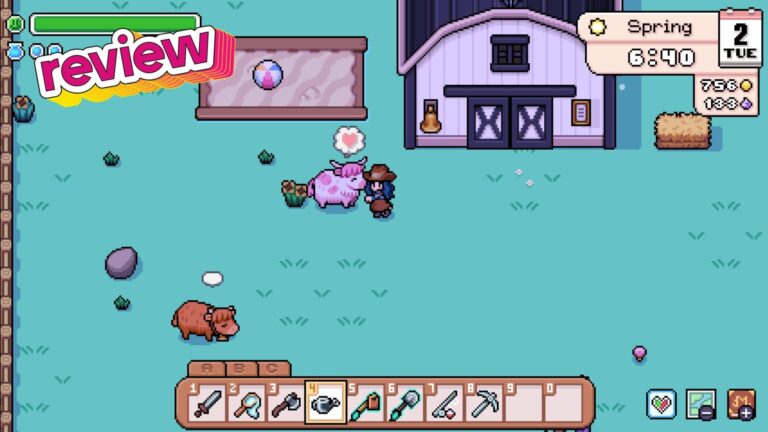
Fields of Mistria joins a long lineage of cozy farming simulators stretching back decades. The game plants you in a dilapidated farm surrounded by trees, rocks, and weeds—a setup so familiar that anyone who has spent time in Pelican Town, Mineral Town, or the fields of Stardew Valley will recognize it instantly. You clear the land, plant crops, raise livestock, befriend the townspeople, romance eligible locals, and expand your operation season after season. In nearly every mechanical sense, the formula remains unchanged.
Yet Fields of Mistria refines this formula with a thoroughness that demands attention. The game improves on nearly every aspect of its genre predecessors, from crop variety and animal breeding to quest design and NPC depth. What emerges is not a revolutionary reinvention but a refinement so thorough and thoughtful that it transcends simple imitation.
More of Everything That Works
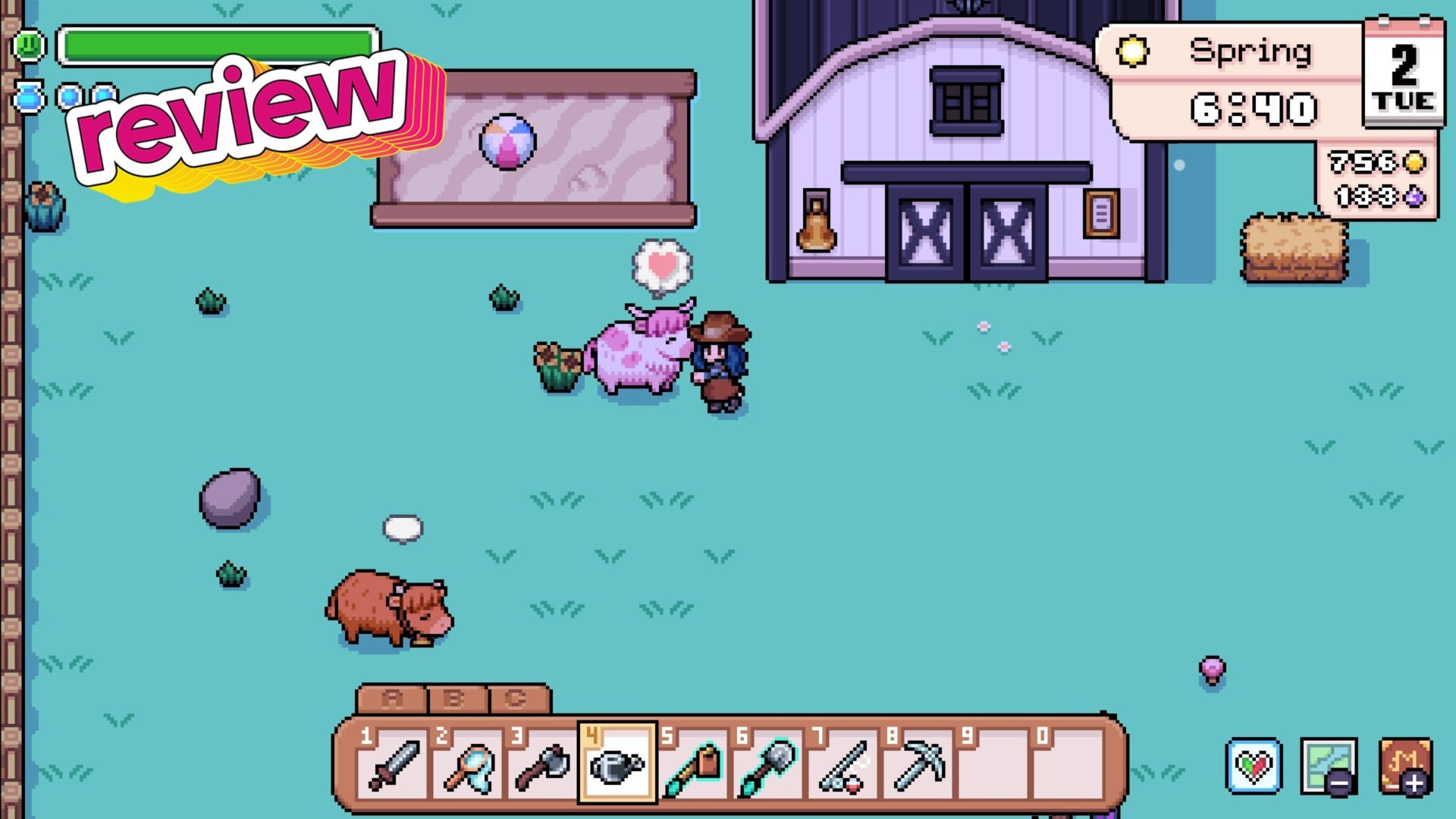
Fields of Mistria takes the established gameplay loop—wake up, pet livestock, water crops unless it rains, pursue a daily activity like mining or fishing—and supplies it with substantially more depth. The crop roster is far larger than what Stardew Valley or Harvest Moon offer, and the watering system eliminates one of the series’ most tedious requirements: no refilling the watering can endlessly. In ranching, players can breed animals for rare and unusual colors, adding a layer of experimentation beyond simple income generation. The roster of available livestock expands across the traditional selection.
Mining receives particular attention. Rather than feeling like a separate grinding obligation, the mines integrate into the game’s central narrative through dedicated questlines. Combat encounters gain additional options and variety. Away from the mines, players can swim, dive for treasure, and craft items directly from storage—conveniences that sound minor but accumulate into meaningful improvements in quality of life. The Community Center, a staple of the genre, merges with the museum for streamlined organization while expanding the number of bundles and associated rewards.
Expansion Through Cosmetics and Crafting
Character customization extends far beyond typical farming-sim options. Players can change their appearance at any time and collect extensive cosmetics throughout their playthrough. Seasonal variations in NPC outfits—different looks for spring, summer, fall, winter, plus wedding attire and swimwear—add visual richness and celebrate the passing of time in ways that strengthen seasonal identity. Furniture crafting enables players to decorate their homes and farms with a breadth of options uncommon in the genre.
A Premise That Matters
Where Fields of Mistria diverges most clearly from its inspirations lies in its narrative framing. Rather than inheriting a grandfather’s farm through an unexamined legacy, your character is an Adventurer specifically hired by the town to revitalize an old farm and stimulate economic recovery following an earthquake. This seemingly small shift carries outsize weight. The hiring provides clear, external motivation for your efforts. It anchors the farm not as an isolated retreat but as a meaningful contribution to rebuilding the town after the earthquake. The world extends beyond your immediate property, and your actions ripple outward into it—even if those effects occur off-screen.
This foundation transforms the farming loop from a personal project into something resembling a civic responsibility, a distinction that strengthens emotional investment without requiring constant story cutscenes.
Dialogue as the True Innovation
The most striking aspect of Fields of Mistria emerges not in any single mechanical feature but in the sheer volume and sophistication of character writing. Most farming simulators restrict NPCs to a handful of dialogue lines repeated once per day on random encounters. Fields of Mistria provides contextual dialogue across numerous situations: different lines for varying weather, for running into someone on the road versus at the tavern, for interacting at shops, for moments following quests involving that character, and much more. Players can speak to the same NPC multiple times in a single day and encounter new responses.
Visual Identity Through 90s Anime
Character portraits adopt a distinctly retro anime aesthetic from the 1990s, rendered in a style that evokes shojo manga sensibilities. The character designs possess undeniable charm—each receives seasonal outfit variations plus special attire for weddings and swimming. While portrait expression variety could be expanded further, the consistency and care applied to visual characterization exceed what most farming sims attempt. The style establishes an immediate and cohesive identity, distinct from the pixel-art traditions that have long dominated the genre.
Building a Cast That Stays Fresh
After 40 hours of playtime spanning a full year and additional months, only one or two lines of dialogue had repeated—a feat that speaks to the breadth of writing involved. By the second year of gameplay, entirely new dialogue branches emerge specifically acknowledging the player’s returning status, suggesting that the depth of character writing extends further than a single playthrough might exhaust. This abundance of dialogue transforms NPCs from mechanical gating systems into genuine characters with layered personalities and relationships. Weekly gatherings at the local inn provide structured social moments while evolving storylines week to week, creating a calendar of social obligation that feels genuine rather than imposed.
Pacing: Urgency Without Panic
Farming simulators often struggle with pacing, tending toward either frantic demands or purposeless drift. Fields of Mistria navigates this tension with remarkable skill. The game structures itself around three primary questlines running in parallel: one rooted in mining progression, another centered on resource collection, and a third tracking the town’s development through completing smaller tasks. Each reaches the appropriate size to pursue gradually as your farm expands, accumulating progress without demanding crisis-level attention.
The abundance of side quests—dozens are available—ensures regular injections of character flavor and context between main progression beats. Failing to complete a spring-themed bundle by the end of spring creates no sense of failure or panic. The game communicates that these goals extend across seasons and years, that the farming loop is fundamentally about long-term engagement rather than quarterly performance reviews. This restraint in narrative pressure allows players to move at their own pace while still sensing momentum and direction.
A Year and Counting
The reviewer’s experience with Fields of Mistria spanned 40 hours, advancing through a complete year of in-game seasons plus additional months. During this period, they explored roughly 50 floors of the mines but had not yet entered an official romance, suggesting the game’s content extends well beyond traditional completion metrics. The progression feels natural rather than gated, inviting continued play without demanding exhaustion.
Fields of Mistria will not appeal to players who fundamentally dislike the farming-simulation genre. It makes no attempt to escape its lineage or broader category. However, for anyone drawn to the formula—whether through Stardew Valley, Harvest Moon, Story of Seasons, or Rune Factory—Fields of Mistria presents a compelling reason to return to those familiar routines. The game doesn’t reinvent the premise; it perfects the execution to a degree that compels returning players to lose themselves in another spring, summer, fall, and winter, uncertain what surprises await despite knowing exactly how the seasons will unfold.
Frequently Asked Questions
How does Fields of Mistria compare to Stardew Valley?
Fields of Mistria improves on nearly every aspect of Stardew Valley, including crop variety, animal breeding, mining integration, crafting options, and NPC dialogue. The game provides a 10-percent quality-of-life improvement across the board, refining the formula without reinventing it.
What makes the NPC dialogue unique in Fields of Mistria?
NPCs provide contextual dialogue for multiple situations—different weather, locations like taverns or shops, and after specific quests. Players can speak to the same character multiple times daily and encounter new responses. After 40 hours, only one or two dialogue lines had repeated, and the second year introduces dialogue acknowledging the player's returning status.
How long does it take to complete Fields of Mistria?
The reviewer completed 40 hours of gameplay spanning a full year in-game plus additional months, explored approximately 50 floors of mines, but had not yet entered an official romance, suggesting the game's content extends well beyond these traditional checkpoints.
