
Key takeaways
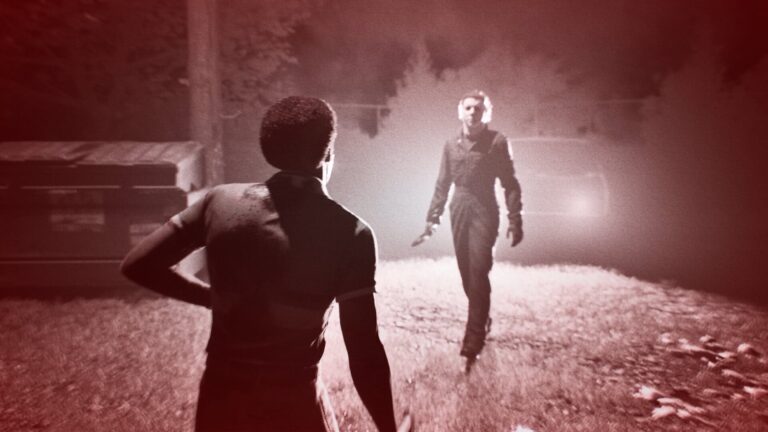
- Halloween: The Game launches September 4 via early access on PS5, Xbox, and PC with one Michael Myers player hunting up to four survivors in matches.
- NPC townspeople populate each match, giving Michael more targets and creating moments where survivors must choose between helping civilians escape or prioritizing their own survival.
- Michael's ghost form ability to fly invisibly and materialize in darkness creates compelling gameplay, though technical bugs including frozen NPCs and animation glitches hamper the experience.
- The single-player campaign recreates scenes from the original film but lacks enough missions to justify purchase for solo players without friends for multiplayer.
After playing through several asymmetrical horror experiences—including Predator: Hunting Grounds, Friday the 13th, Killer Klowns From Outer Space, and Dead by Daylight—I approached Halloween: The Game with measured expectations. The subgenre hasn’t consistently delivered engaging multiplayer horror, yet this entry manages to feel fresh despite inheriting the familiar format. What began as cautious curiosity has transformed into genuine investment; I’ve already logged nearly a dozen hours, even accounting for the technical issues that occasionally derail matches.
The Asymmetrical Formula
The core setup follows the established template: one player controls Michael Myers while up to four others take on survivor roles. Michael operates with distinct advantages—enhanced map traversal, immortality, and an arsenal of lethal powers—that keep him positioned as an overwhelming threat. Survivors lack the killer’s raw power but gain access to tools and objectives that create counterplay. Rather than a straight survival race, the goal becomes executing a plan: locate escape points, gather necessary components, and reach freedom before Michael catches you.
What Michael Brings to the Hunt
The masked killer receives several mechanical advantages beyond traditional slasher conventions. He can move across maps with unusual speed, materialize in dark spaces, and accumulate bonus experience points for stalking victims before finishing them off. The design encourages psychological warfare—breaking windows, cutting power lines, creating paranoia—rather than pure mechanical dominance. When Michael corners a survivor near supplies or herds them toward other players, the asymmetry feels justified rather than oppressive. The game’s pacing hinges on this balance; Michael is terrifying but not unbeatable.
Survivor Mechanics and Escape Routes
The opposing team coordinates to achieve one of several escape conditions. They might collect parts to activate a vehicle exit, navigate toward a basement passage, or survive long enough for police intervention via a police wagon. Survivors carry flashlights, firearms, bicycles, and some decidedly out-of-place magical items that let them hold ground temporarily. The decision space extends beyond simple evasion: do you split up to cover more ground, or stay together for defense? Do you stop to help trapped townspeople or rush toward the nearest exit? These choices create natural tension without requiring scripted encounters.
NPCs as the Differentiator
Where Halloween: The Game diverges from its peers is through environmental density. Matches feature numerous non-player characters—some sourced from the original film’s cast, others generic townspeople going about daily routines. You encounter them reading, watching television, smoking on porches, or otherwise inhabiting their homes. This design choice transforms each match from a tight cat-and-mouse game between five players into something resembling a small community under siege.
Shifting Michael’s Focus
As the killer, you’re no longer hunting five targets. NPCs provide additional victims to stalk and dispatch, expanding your hunting ground dramatically. The survivors, meanwhile, now operate within a more cluttered environment where the actual threats blend with background characters. Moments emerge where Michael kills an NPC while survivors are occupied elsewhere, triggering audio cues that spike anxiety without providing concrete threat assessment. You hear the scream, the crash, the killer’s strike—then must decide if you’ve just lost precious time or if Michael remains elsewhere.
The Bargain Between Ambition and Survival
Survivors face a constant resource dilemma. Helping townspeople escape nets bonus experience points and denies Michael additional targets, but every minute spent convincing an NPC to follow you is a minute Michael uses to close distance. I watched a teammate lock themselves in a house, enter a bedroom to convince an NPC to join them, only to have me materialize from the closet using Michael’s spectral form. The NPC didn’t stand a chance. That sequence—one player guiding an AI character toward safety, another player manifesting to ruin both escapes—generated more memorable drama than the entire multiplayer campaigns of some established titles.
Michael Myers: Feeling Truly Powerful
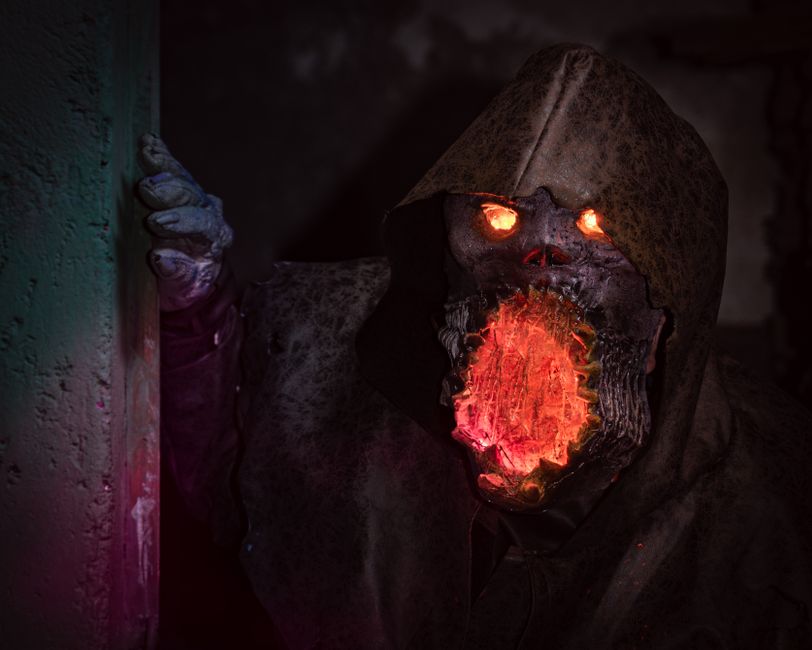
The power fantasy of playing Michael resonates beyond simple mechanical advantage. His immortality and movement capabilities create a sense of predatory control. Walking around a corner to surprise teammates, making them vocally react with genuine fear, then retreating before they mount a defense—the game rewards this psychological dominance through bonus experience. You’re not just racking up kills; you’re being incentivized to torment, stalk, and terrorize before delivering the final blow.
The Ghost Form Advantage
Michael’s shadowy ghost ability becomes the most tactically versatile tool available. Flying invisibly across the map, passing through unlit doorways, and materializing in darkness create ambush opportunities that feel genuine rather than cheap. The single limitation—you cannot materialize in someone’s direct line of sight or in illuminated spaces—creates decision trees around light management. A clever survivor team notices when lights die and stays alert; a distracted team gets flanked from impossible angles.
Psychological Warfare Over Mechanics
The dynamic shifts when Michael appears. Runners sprint. Defenders lock doors. Teamwork intensifies. Yet Michael rarely wins through raw overpowerment. Instead, the killer sculpts the survivors’ behavior through threat presence, making them make mistakes, split up, or abandon objectives. Hearing Michael’s iconic score swell as he closes on your position isn’t just audio design—it’s the game actively communicating the predator’s approach.
Technical Issues Holding It Back
My experience wasn’t frictionless. NPCs occasionally clipped through roofs, becoming unreachable. More frustrating were moments when Michael couldn’t execute victims because I’d picked up an object positioned awkwardly near a wall or during animation sequences. Executions—typically violent setpieces mimicking classic slasher kills—sometimes displayed visible clipping and animation breakage. Dead teammates attempting to respawn as police officers rarely succeeded in my sessions; whether this was user error or system malfunction remains unclear.
What’s Coming and What Isn’t
The developer confirmed that a day-one patch will address several reported issues. The studio has also committed to post-launch support. However, performance problems and crashes weren’t listed among planned fixes. Given that both currently impact playability, hoping they resolve quickly after launch feels necessary rather than optional. When the game functions smoothly, the experience is genuinely compelling. When technical issues interrupt, they shatter immersion entirely.
The Campaign Mode Verdict
Halloween: The Game includes a single-player campaign where you play Michael Myers recreating scenes from the original film. The attention to detail throughout these missions is evident, but there aren’t many of them. They function more effectively as extended tutorial than as standalone story content. If you’re purchasing primarily for solo play or lack a friend group interested in PvP horror, the campaign won’t justify the purchase. Playing Michael against bots outside the campaign exists as an option, though it lacks the unpredictability and stakes of human survivors.
Launch Window and Next Steps
The game launches on PS5, Xbox, and PC on September 4 via paid early access. Full public availability arrives September 8. The iconic theme from the original film accompanies every match, grounding the experience in established horror legacy. Despite technical rough edges, Halloween: The Game captures what makes asymmetrical horror multiplayer compelling: moments of chaotic failure, memorable sequences, and the occasional play that will make you cackle while your friends curse your name.
Frequently Asked Questions
When does Halloween: The Game launch?
The game launches on September 4 via paid early access on PS5, Xbox, and PC, with full public release on September 8.
What makes Halloween: The Game different from other asymmetrical horror games like Dead by Daylight?
Each match includes multiple NPC townspeople based on original film characters and generic civilians, giving Michael Myers additional targets to hunt and survivors the choice to help NPCs escape for bonus experience points or ignore them to focus on survival.
What are Michael Myers' main abilities in the game?
Michael Myers can move quickly across maps, remains immortal, gains bonus experience points for stalking victims before killing them, and can use a ghostly form to fly invisibly and pass through unlit doorways—though he cannot materialize in direct sight of survivors or in lit areas.
