
Key takeaways
- WoW: Forever transforms the limited-time Season of Discovery into a permanent standalone game preserving Classic's methodical rhythm while adding new raids, dungeons, and content.
- Blizzard takes a selective approach to modernization, keeping conveniences like bag consolidation while preserving friction points such as buying spells and manual group formation.
- The removal of Season of Discovery's hidden rune system and the return of mandatory 40-person raids raise questions about who this game is truly designed for.
World of Warcraft: Forever marks Blizzard’s most deliberate attempt yet to capture the appeal of Classic by essentially transforming Season of Discovery—a limited-time experiment in alternate-universe Vanilla WoW—into a permanent game. Rather than chase players across yet another re-release of old expansions, Blizzard has doubled down on the formula that kept people invested: the core experience of original Azeroth, but with new content woven throughout.
From Season of Discovery to Forever
The Concept That Stuck
Season of Discovery began as proof of concept. It took the Vanilla WoW framework and introduced hidden runes players could discover, which unlocked entirely new class specializations—mage healers, shaman tanks—alongside new quests, dungeon bosses, and raids. It was Classic, but unbound by the constraint that it had to match what existed twenty years ago. The model worked. People showed up. And when it ended, Blizzard faced a choice: let the concept die with the season, or turn it into something permanent.
A Game, Not Another Service
They chose the latter. WoW: Forever takes the Season of Discovery playbook and commits to it as a standalone MMORPG. This isn’t a new expansion for the existing retail client, nor another re-release of an old one. It’s its own game, running on Vanilla’s bones but shaped by modern thinking about what makes that era compelling—and what exhausting compromises it demanded.
Design Philosophy: Friction and Comfort
Selective Modernization
The pitch is paradoxical: everything you remember about original WoW, but better in specific ways. That means combining new features like bag consolidation and interface customization with the friction that defined the era. You still buy your spells when you level, still navigate with a map that occasionally requires you to ask for directions. The Looking for Group system falls into this middle ground. Rather than the retail version’s automatic matchmaking, WoW: Forever lets you post group requests and respond to others’ posts, recreating the social negotiation of recruiting without forcing the penalty of waiting 40 minutes for a group. Transmogrification—the transmog system that lets you customize appearance—is opt-in entirely: use it and you see it on others, or don’t use it at all, but you don’t get the hybrid experience of seeing some players fully mogged while others are stuck in quest gear.
The Trade-Off Strategy
These aren’t small decisions. Each one represents a conscious choice to preserve some friction while removing others. It’s permissive in directions that matter to casual play, stubborn about things that shaped how the game felt. Blizzard is betting that slow immersion matters more than optimized convenience, that the arc of discovery and surprise outweighs the friction of coordination.
The Blizzcon Hands-On Experience
A Familiar World, Subtly Altered
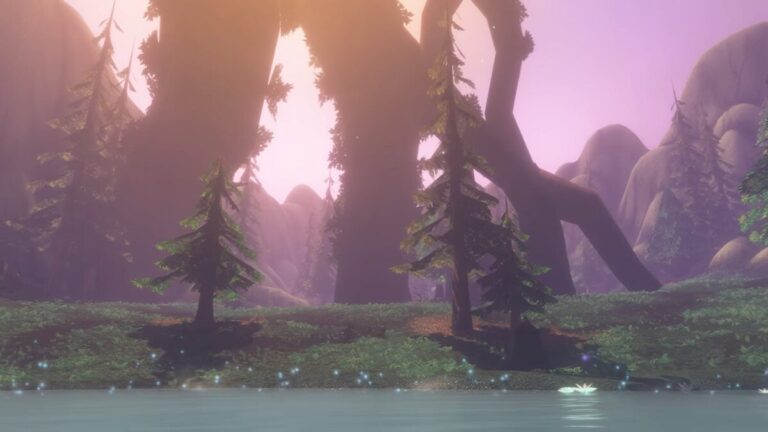
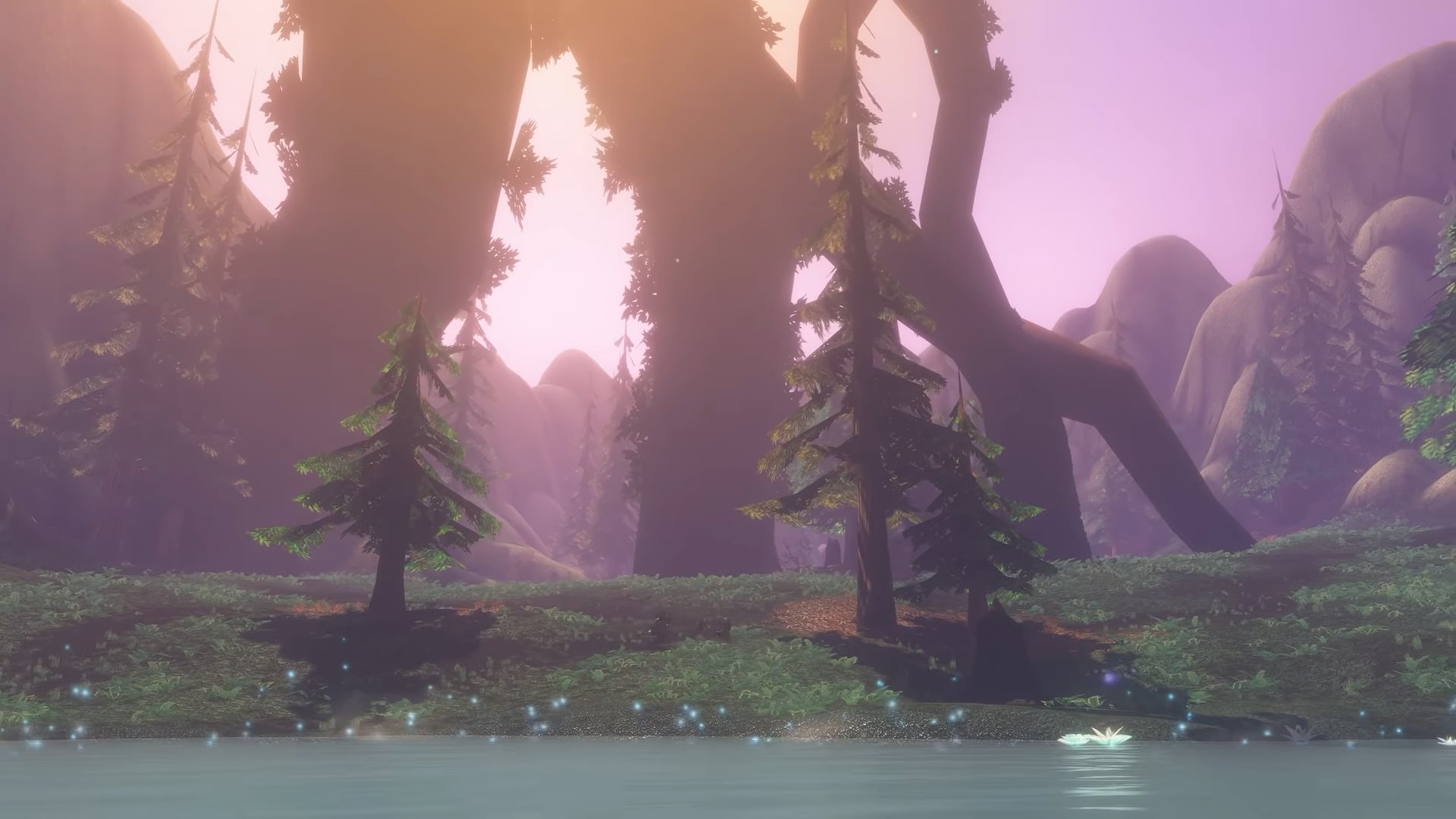
A two-hour demo at Blizzcon this past weekend offered a glimpse at how this philosophy plays out in practice. The new Skyborne Elf race—added to give Horde a less visually rough option—occupies an attractive ruins-dotted starting area with wind effects, though as a $30 addition, the race alone doesn’t justify the price for most players. More striking is how the existing world felt altered without being replaced. Mulgore, the tauren starting zone, appears dustier than players remember it, with a dry haze in the air. New lighting and water effects sit alongside the ancient, sparse textures and muddy geometry. It’s simultaneously lovely and retro: you’re looking at a 20-year-old game, but one that’s been caught in amber and then gently refined.
New content threads through familiar areas without announcing itself. Some additions are grandiose—new raids and dungeons—but others are deliberately small. A quick quest to retrieve someone’s mother from a well, a profession tutorial that wasn’t there before, a ritual involving carrying flame between camps to honor the Sun God An’she. The tauren racial passive was updated to Plainsrunner, originally a beta ability that never made it to retail, offering a modest speed boost. Early players could spend hours in Mulgore without noticing much had changed, which is precisely the point. Season of Discovery unfolded surprises slowly; Forever applies the same philosophy.
The Drowned City: New Dungeons, Old Rhythm
The Drowned City dungeon showed how far Blizzard is willing to push novelty while keeping the feel intact. It visually echoes Zul’Farrak—the same twisted troll ruins aesthetic—but deepens into something stranger. Underwater sections, Naga and Murlocks instead of endless troll packs, a geography that twists further with each turn. Combat demanded the resource management that defines Classic: careful mana spending and threat monitoring, not mechanical difficulty checks. A two-hour raid attempt against one boss yielded only one kill out of approximately eight or nine in the dungeon, with a shark in the dungeon’s central courtyard proving lethal to underleveled players. That’s not frustration; that’s the specific appeal for players who miss the era when dungeoneering meant coordination and caution, not just executing mechanics correctly.
The Hidden Costs of Forever
Forever isn’t without friction of its own kind. Season of Discovery’s greatest strength was the hunt for hidden runes, the ability to radically reshape your class into builds that wouldn’t otherwise exist. Forever appears to abandon this entirely. The rune system won’t carry over, at least not as players knew it. That’s a significant loss for anyone whose main appeal was experimenting with class roles.
The raid system compounds this concern. Forever promises 10, 20, and 40-person raids. The 10 and 20 are manageable, but returning to mandatory 40-person coordination feels like a step backward—retail WoW’s move to smaller raid tiers was one of the better scaling decisions the game has made over two decades. A retail guild with 15 to 25 active players, even with consistent attendance, rarely assembles an exact player count on raid night. Raiding in Forever might simply be off the table for entire communities.
A Personal Reckoning
Not everyone will want to slow down, to repeatedly ask for directions, to manage threat carefully and watch mana pools instead of just casting. But for players who loved original WoW not out of nostalgia but out of genuine preference for its rhythm and scope, Forever is closer to an answer than anything Blizzard has offered in a long time. After years of chasing players across expansions and re-releases, Blizzard has finally committed to building something that doesn’t pretend to be all things to all players, but rather doubles down on being exactly what a particular group of players actually wants.
Frequently Asked Questions
What is World of Warcraft: Forever?
WoW: Forever is a standalone MMORPG based on Vanilla World of Warcraft that incorporates the Season of Discovery formula—adding new dungeons, raids, and class specializations while preserving Classic's methodical gameplay and slower pacing.
Is WoW: Forever just another Classic re-release?
No. While based on Vanilla WoW, Forever is a permanent standalone game with new content woven throughout. Season of Discovery was a limited-time experiment proving players wanted this formula; Forever is Blizzard's commitment to making it permanent.
Will the hidden rune system from Season of Discovery return in Forever?
No. WoW: Forever retains the spirit of Season of Discovery's new content and class specializations, but does not include the hidden rune system that allowed players to unlock new class roles and builds.
