
Key takeaways
- Virtue and a Sledgehammer combines cathartic destruction mechanics with somber exploration of grief, consciousness, and loss in a hometown transformed by robots.
- The sledgehammer's weight and three-tier swing system create satisfying destruction, with damage shifting the visual palette to reds and blacks to communicate Pratelle's vulnerability.
- Deconstructeam handles serious themes including suicidal ideation, euthanasia, and depression with care, letting memory systems and dialogue choices reshape the player's role in the narrative.
- The four-hour campaign struggles with pacing issues in its final section, but the ending provides nuanced conclusions determined by player decisions.
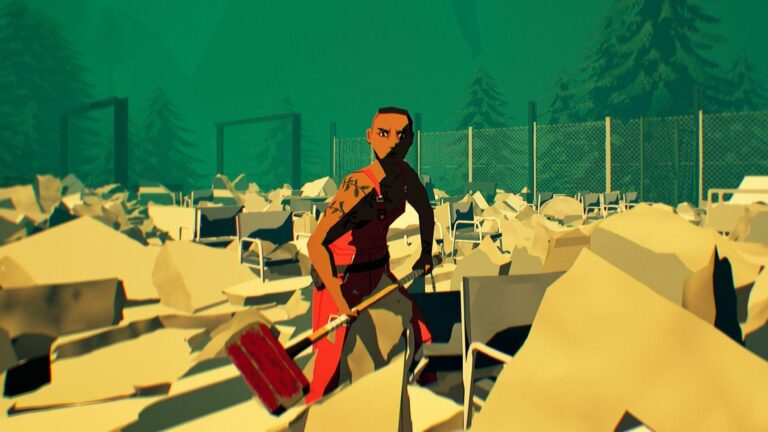
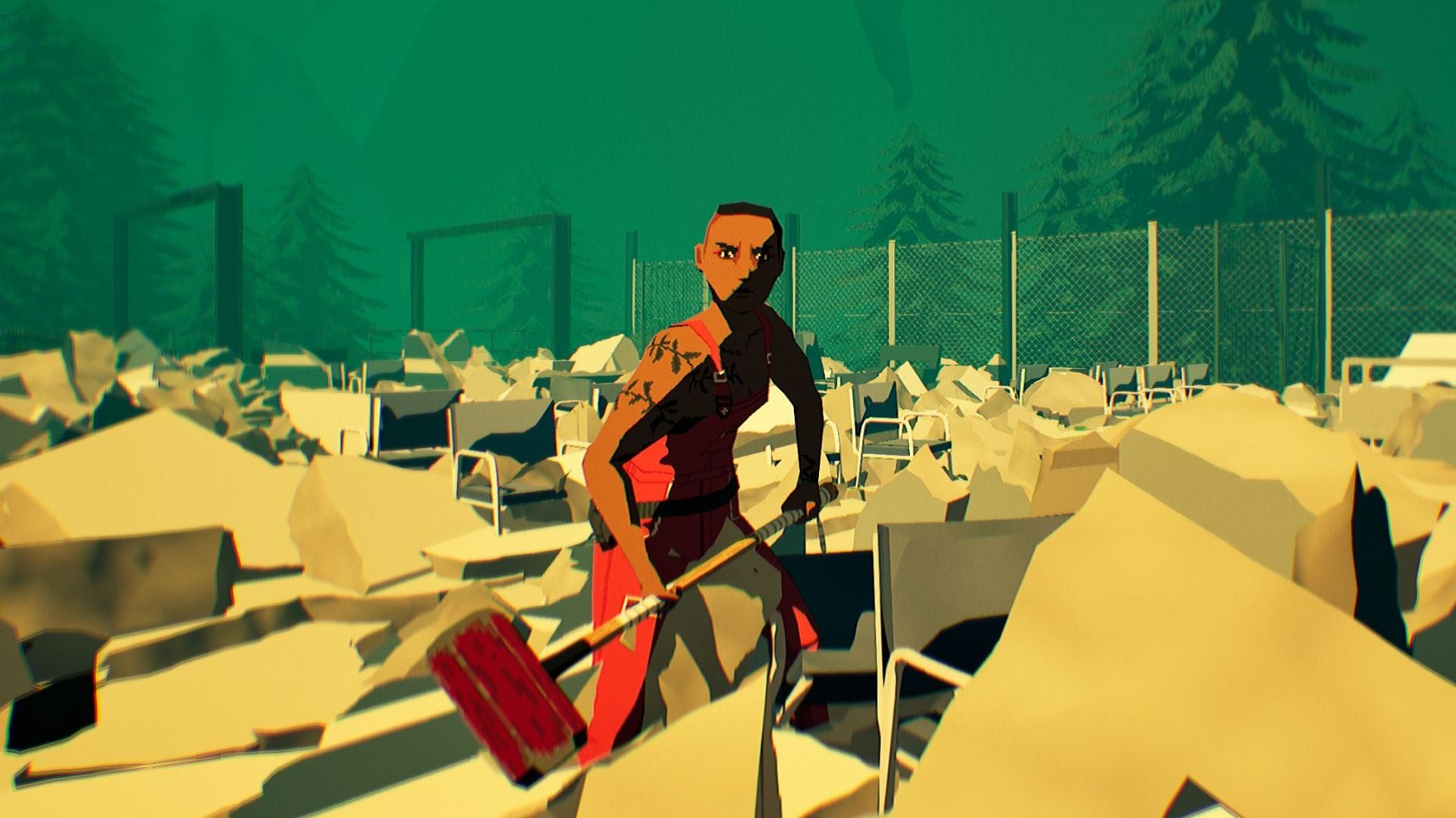
Deconstructeam’s new title Virtue and a Sledgehammer, published by Devolver Digital, presents itself as straightforward destruction wrapped around something far more complex. You play as Pratelle, recently returned to her hometown following her mother’s death. Instead of therapy, Pratelle has chosen a sledgehammer. The town she knew has transformed completely: robots now inhabit spaces where people once lived, their consciousness claims ranging from conversational to hostile.
Destruction as Catharsis
The Sledgehammer’s Weight
The sledgehammer serves as both literal tool and emotional anchor. According to Kotaku’s review, the weapon possesses notable weight that prevents Pratelle from running; instead, she lumbers. This heaviness extends to timing mechanics, requiring deliberate setup before each strike. When the sledgehammer connects with a wall, concrete and brick explode outward. Sufficient destruction triggers full building collapses, creating a sense of permanent change across the town.
The destruction mechanics offer three distinct variations through button timing. Taps produce quick jabs that push robots away temporarily, giving Pratelle space to maneuver. A standard press delivers an arcing swing, while extended holds charge a massive overhead strike capable of demolishing structural elements and metallic enemies alike. Kotaku noted this destruction feels weightier than Red Faction ever achieved, combining primal satisfaction with therapeutic weight. The game never requires health management; damage only demands that Pratelle escape immediate danger for several seconds.
The Ambiguity of Robots
Whether the robots represent actual consciousness or serve as metaphor remains deliberately unclear. Some attempt communication, others flee the moment they spot Pratelle’s sledgehammer, and several become aggressive. Pratelle’s search for her sister Nina, a genius obsessed with questions of personhood and identity, provides narrative direction through this robot-filled landscape. The game’s science-fiction framework allows these speculative elements to comment on human reality through distance and allegory, letting players decide what feels literal and what feels symbolic.
Visual Language and Memory Systems
Color and Environmental Feedback
Deconstructeam employs a distinctive art style blending stylized cartoon elements with PS2-era animation. Color communicates directly with player experience: taking damage shifts the world palette toward reds and blacks, increasingly murky and unreal as health deteriorates. This visual feedback removes the need for traditional health bars, instead using chromatic distortion to convey danger and proximity to failure.
Red-and-black electrical objects float throughout the environment, serving as gateways to a peculiar columned chamber where memories manifest. Interacting with these relived moments provides dialogue options that let players redefine how Pratelle responded in key situations, essentially allowing narrative revision of formative experiences. Blue-and-white memories scattered across the town offer additional flashbacks without player agency in response; these automatically reveal relationships between Pratelle, Nina, and their mother, including moments of genuine connection and deeply upsetting dynamics.
Narrative and Thematic Weight
Difficult Subjects Handled with Care
The game addresses serious subject matter including suicidal ideation, euthanasia, depression, and allusions to abusive relationships. Kotaku observed that Virtue and a Sledgehammer handles these themes with notable care, avoiding the exploitative approach some titles employ for shock value. The opening, where Pratelle retrieves her sledgehammer without remarking on her mother’s body in the trunk, establishes immediately that this won’t shy away from discomfort.
Mechanically, the experience remains deceptively simple: strike things with a hammer, navigate Talos Principle-style conversations that explore identity and consciousness. Kotaku described appreciating this directness. The ending presents nuanced choices shaped both by earlier decisions and immediate selections, meaning player agency genuinely influences the conclusion. The campaign runs approximately four hours, though players can extend this by thoroughly demolishing every destructible element in each area.
Where the Design Breaks
The final section’s pacing deteriorates noticeably. According to Kotaku, this portion “goes on for far too long,” with extended stretches offering minimal activity while momentum dissipates. Despite reaching its most thematically ambitious moments, the ending struggles to maintain engagement through extended traversal sequences. This doesn’t erase what comes before—the conclusion itself proves nuanced and meaningful—but the path toward it stumbles.
Deconstructeam’s Continuing Evolution
The studio has built a reputation through unconventional mechanical frameworks for storytelling. The Cosmic Wheel Sisterhood embedded narrative within tarot mechanics. Gods Will Be Watching presented story through resource scarcity. Virtue and a Sledgehammer structures its themes around destruction and memory systems. Deconstructeam consistently chooses esoteric approaches to interactive narrative, and this latest release follows that established pattern while delivering something mechanically distinct from previous work. The core proposition remains compelling despite its flaws: smashing things feels genuinely satisfying, and that satisfaction carries weight when placed against meditation on consciousness, grief, and identity.
Frequently Asked Questions
What is Virtue and a Sledgehammer about?
The game follows Pratelle, who returns to her hometown after her mother's death with a sledgehammer, processing grief through destruction in a town now populated by robots with claimed consciousness.
How does the destruction system work?
The sledgehammer has three swing variations through button timing: taps push robots away, standard presses deliver arcing swings, and extended holds charge massive overhead strikes that can demolish buildings and enemies.
What previous games did Deconstructeam develop?
The studio created The Cosmic Wheel Sisterhood and Gods Will Be Watching, establishing a reputation for unconventional approaches to interactive storytelling through unique mechanical frameworks.
