
Key takeaways
- The Outlast Trials is a co-op prequel set in 1950s Cold War paranoia, where the Murkoff Corporation subjects players to psychological trials and moral dilemmas.
- Kotaku's reviewer identifies the game as possibly the most graphically intense game ever made, with extreme violence that deliberately avoids protective narrative framing.
- The game's multiple endings across Congo, Cuba, China, and Saigon frame violence manufactured by government as inevitably returning home through domestic terror and assassination.
- The narrative draws from Rex Miller's 1987 novel Slob, Tom O'Neill's 2019 book Chaos documenting real programs, and the historical fact of MK-Ultra.
Red Barrel’s The Outlast Trials is a multiplayer prequel to the studio’s 2013 survival horror game Outlast, extending the Murkoff Corporation’s dark history into the 1950s Cold War era. Players enter this institutional nightmare not as investigators but as experimental subjects, selected from society’s lowest rungs and subjected to a battery of psychological conditioning trials. Working in co-op teams of up to four, participants navigate designed scenarios, solve puzzles, elude detection, and confront ethical dilemmas deliberately constructed to be impossible to navigate cleanly. The trials present a grim choice: commit acts of violence yourself or watch as Murkoff commits those acts upon you.
The Murkoff Corporation’s Unlimited Scope
Murkoff operates according to a logic of boundless resources and human expenditure. The organization recreates specific environments including commercial spaces, religious buildings, arenas, and places designed to elicit specific behavioral responses, each serving as a laboratory. Unlike traditional institutions with budgetary constraints and oversight, Murkoff answers to no authority but its own ambition. The corporation pushes the outer limits of what chemically induced mind control and psychological trauma can produce. Its explicit purpose: create sleeper agents capable of operating anywhere, designed to destabilize political movements, enforce geopolitical advantage for Western powers, and return home as weapons deployed against domestic opposition.
Violence Scaled to Inhuman Proportions
According to Kotaku’s review, The Outlast Trials presents one of the most graphically intense experiences in gaming. Environments are saturated with gore—the distinction between mannequin parts and actual eviscerated limbs dissolves into ambiguity. The variety of execution scenarios the game presents creates a macabre taxonomy: castration and tarring-and-feathering sequences prove as stomach-turning as depictions of judicial brutality involving gavels and broken bones. The Kotaku reviewer notes one trial implies the player has created a pandemic pathogen. The game presents these horrors without the protective distance of narrative justification; players face the moral dimensions directly.
A Gallery of Manufactured Monsters
Failed Experiments and Prime Assets
Two categories of enemies populate the game: the failed experiments and the “prime assets.” Failed experiments are subjects whose augmentations, physical mutations, and psychological trauma have rendered them unsuitable for field deployment. The prime assets represent Murkoff’s success: elite murderers whose charisma and reputation earned them favor within the organization’s hierarchy.
Character Archetypes
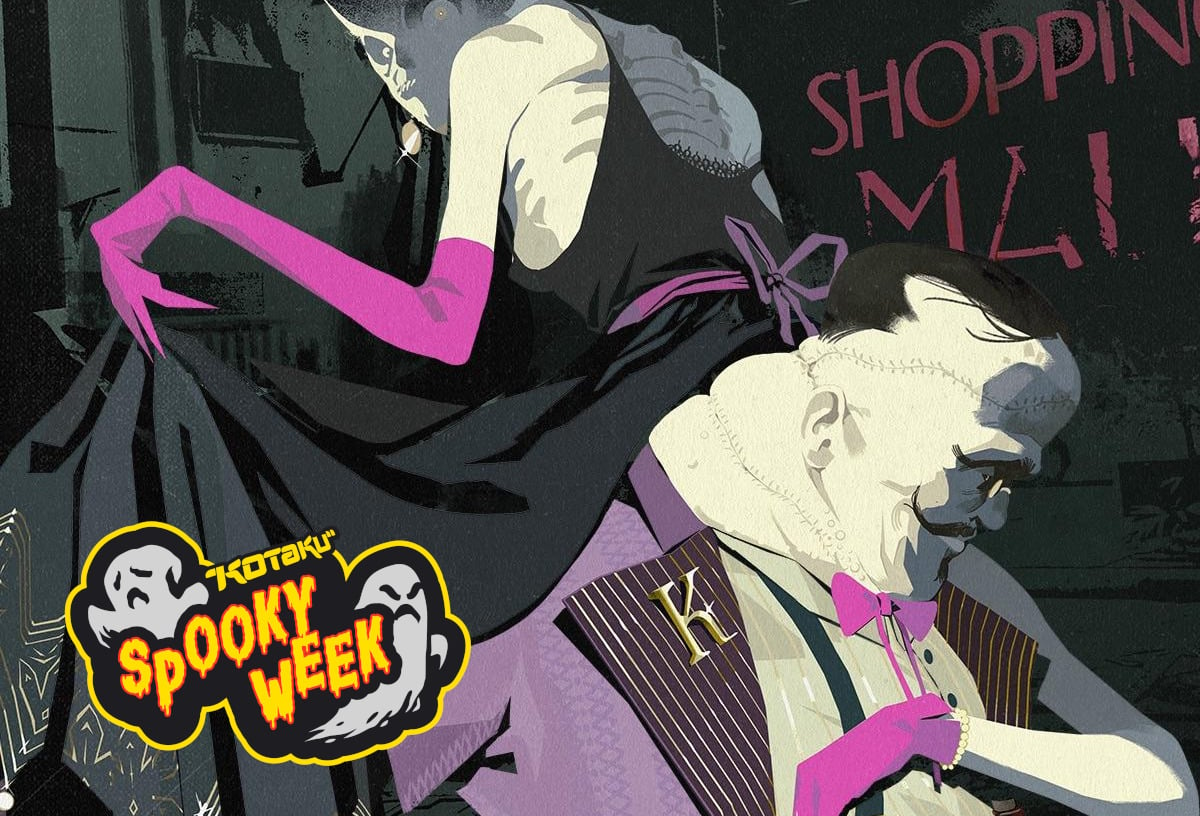
One prime asset is a Miami-based criminal with psychosexual pathology. Another is a law enforcement officer with extreme violent fixations. A third consists of conjoined twins whose radical physical disfigurement nonetheless permits sophisticated conversation. The Kotaku reviewer characterizes them collectively as “the Village People from hell,” totemic representations not simply of violence but of the erosion of human dignity, civil rights, and democratic values.
Endings Across the Globe
The narrative branches into multiple conclusions, each positioning the player in a different geopolitical theater. One ending places the player on their knees in the Congo, facing a firing squad, being interrogated about trigger phrases. Another surfaces in a Cuban hotel room covered in blood. A third awakens the player in China after committing acts of sexual coercion. The Saigon ending positions the player behind the wheel of a car accelerating past a checkpoint with explosives attached—a scenario the Kotaku reviewer notes mirrors real embassy bombings from the early 1950s. Each ending functions as punctuation on the game’s political statement: the violence generated in Murkoff’s laboratories extends outward across geography and time.
Debt to Historical Paranoia
Literary and Real-World Influences
The game builds upon specific literary and historical references. The Kotaku reviewer identifies the influence of Rex Miller’s 1987 novel Slob, which fictionalizes a Pentagon-created supersoldier deployed in Vietnam, and Tom O’Neill’s 2019 non-fiction investigation Chaos, which documents actual government mind control and assassination programs. The template is MK-Ultra, the CIA’s documented secret program of psychological experimentation and pharmaceutical testing. The game engages with decades of American anxiety about government-manufactured violence.
Supersoldier Mythology
Tales of institutionally created human weapons run through American genre fiction and historical paranoia alike. The fear that covert programs might produce operatives capable of executing political opponents, conducting targeted assassinations, and destabilizing civilian movements deemed inconvenient to state power permeates the cultural anxiety this game taps. The Outlast Trials doesn’t invent this paranoia; it inherits and systematizes it.
Violence Returns Home
The Blowback Cycle
The Kotaku reviewer interprets the game’s architecture as a statement about institutional blowback. Murkoff manufactures violence according to specific objectives: suppress foreign political movements, eliminate inconvenient opposition, maintain Western dominance. But manufactured violence cannot remain contained. It spills backward. The murder weapons created for overseas deployment eventually turn on domestic targets through unexplained assassinations, serial violence driven by indifference to human life, and political violence with no coherent ideology beyond chaos. The game suggests an inescapable trajectory: intentional violence, once honed and released, returns to its architects.
Connection to Mount Massive
The Trials prequel anchors itself to Mount Massive Asylum, the setting of the original Outlast, but the Kotaku reviewer suggests the historical narrative may overshadow the series connective tissue. The game constructs an alternative history accounting for decades of American violence and terror through the lens of covert experimentation and state-sponsored assassination programs. How this prequel leads mechanically into the original game matters less than the trajectory it implies about how institutional violence perpetuates and metastasizes through time.
Source: Kotaku
Frequently Asked Questions
What is The Outlast Trials and how does it relate to the original Outlast?
The Outlast Trials is a multiplayer prequel to Red Barrel's 2013 horror game Outlast. It's set in 1950s Cold War era within the Murkoff Corporation, a research firm creating sleeper agents through psychological experimentation. The original game features Mount Massive Asylum, which connects to this prequel's narrative.
What makes The Outlast Trials so graphically intense according to Kotaku?
Kotaku's reviewer describes the game as possibly the most graphically violent game ever made, with gore-saturated environments where mannequin parts and eviscerated limbs become indistinguishable. The variety of extreme scenarios—castration, tarring-and-feathering, judicial brutality—all prove equally stomach-turning.
What historical references inform The Outlast Trials' narrative?
The game draws from Rex Miller's 1987 novel Slob about Pentagon-created supersoldiers, Tom O'Neill's 2019 book Chaos documenting real government programs, and MK-Ultra, the CIA's documented secret mind control experiments. The game engages with decades of American paranoia about state-manufactured violence.
