
Key takeaways
- Valor Mortis launches October 13 at $40, positioning itself below the traditional $60–$70 premium tier in a bid for player attention during a crowded fall season.
- The pricing strategy reflects a broader industry trend: Mafia: The Old Country arrived at $50, Star Wars Zero Company at $50, and Mina the Hollower at $20, showing widespread reassessment of premium pricing.
- Publisher Lyrical Games frames Valor Mortis as an 'and' game meant to be purchased alongside—not instead of—other fall releases like Grand Theft Auto 6 and Zelda: Ocarina of Time.
- The strategy reveals a shift in how studios compete: when players' budgets are already committed, lower pricing removes the friction of secondary purchases rather than fighting for primary attention.
Valor Mortis, the upcoming Soulslike from Ghostrunner’s studio, will arrive on October 13 priced at just $40—a significant departure from the $60 and $70 baseline that has defined premium releases for years. The decision signals a calculated bet that in an unusually dense fall release window, price accessibility offers better odds of reaching players than premium positioning.
The Ghostrunner Team Enters Soulslike Territory
A New Direction for a Cyberpunk Studio
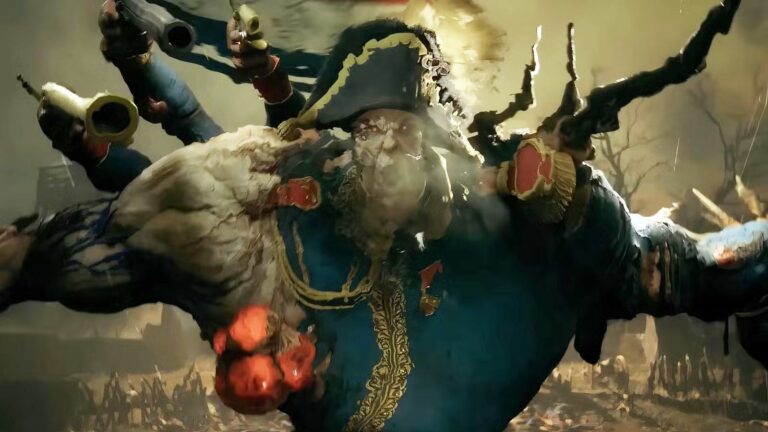
Ghostrunner, the studio’s previous release, built its reputation on cyberpunk aesthetics and fast-paced first-person parkour mixed with melee combat. Valor Mortis represents a tonal and mechanical departure. The game casts players as a former Napoleonic soldier who has acquired supernatural abilities, navigating a battlefield where military history collides with the supernatural. The campaign stretches across roughly 20 hours, providing the type of playtime and production scope typically associated with premium-priced games.
Pricing Below Premium Despite Premium Quality
Yet despite meeting or exceeding the quality and content benchmarks of $60 and $70 releases, the developers opted to undercut that entire tier. The decision was not made lightly. The studio’s announcement stated: “We have had many discussions over the past year about the price of Valor Mortis. We believe the game has the quality, fidelity, and playtime in its 20-hour story to go toe-to-toe with many ‘full price’ titles. Still, this fall is stacked and there’s high demand for your time and money.” The acknowledgment cuts to the heart of contemporary game marketing: producing a capable, finished product no longer guarantees visibility when dozens of other products demand the same resources from potential players.
A Widening Gap Between Price and Quality
Premium Tier Price Cuts
The $40 price point for Valor Mortis is not an anomaly but the latest chapter in an industry-wide reassessment of what premium pricing actually means. Mafia: The Old Country, released last year, launched on Steam at $50 rather than the historical $60 baseline. Star Wars Zero Company, which arrived more recently, similarly priced at $50. These are not experiments in a niche; they represent major releases making deliberate pricing choices below traditional premium tiers.
The Indie Acceleration
The pattern extends further into indie releases. Mina the Hollower, a title with comparable production budgets and scope to games that had been inching toward $30, arrived at $20 instead. More recent successes like Peak have achieved cult status at even lower prices. As Steam’s catalog swells with quality games at aggressive price points, developers face an implicit question: does premium positioning ensure profitability, or does it simply cede potential players to competitors offering similar experiences at lower cost?
The Publisher’s Confidence and Caution
Blake Rochkind, head of publisher Lyrical Games, approached the pricing decision with both conviction and anxiety. “This is something we’ve really agonized over,” he told The Game Business. “My biggest concern was that it would send the wrong message about the game. But this decision is made out of confidence.” The tension he describes is genuine: lower pricing risks signaling lower quality, particularly to players accustomed to equating cost with production value.
For a Soulslike—a genre whose players often associate difficulty, depth, and prestige with premium pricing—the risk feels especially acute. A $40 Soulslike could be read as either strategically positioned or discounted, and Rochkind’s concern that messaging could muddy players’ interpretation is understandable. Yet the studio chose confidence in its work over confidence in premium positioning.
Navigating the Crowded Fall Release Calendar
The October release window is not merely busy; it is historically packed. Grand Theft Auto 6, one of the industry’s most anticipated releases ever, lands in the fall. The Zelda: Ocarina of Time remake represents a different but equally potent draw for players. Even with temporal separation between releases, the sheer volume of major launches means most players’ discretionary budgets and free time are already spoken for before Valor Mortis’s October 13 date arrives.
Against this backdrop, Valor Mortis cannot reasonably position itself as the must-have experience. A Napoleonic-era soldier with supernatural combat abilities is genuinely novel, and the collision of historical and fantastical genres is uncommon enough to warrant attention. Yet novelty, Rochkind’s reasoning implies, is no longer a sufficient guarantee of success. Neither is quality execution alone.
The “And” Game Philosophy
Rochkind reframed the entire positioning challenge: rather than asking how to be players’ primary purchase, he asked how to be players’ secondary one. “We are pretty confident in Valor Mortis. But ultimately, the worst thing we could do is not push our chips in and say, ‘We want this to be a game that you can pick up alongside these other great games,’” he explained. The shift from “instead of” to “alongside” fundamentally changes the pricing calculus.
He referenced a conversation with another developer who had achieved significant success at $30 pricing—roughly equivalent to $40 in today’s dollars. That developer’s insight proved decisive: “We never regretted being an ‘and’ game. We never regretted pricing our game as something that you can pick up alongside other games.” The message inverts the zero-sum model that has long dominated game sales thinking. Rather than forcing a choice between Valor Mortis and competitors, lower pricing removes that choice’s friction entirely. Players can afford both.
“Going with this price point will help us be an ‘and’ game,” Rochkind concluded. The strategy accepts that massive market share is unrealistic in this window. Instead, it optimizes for accessibility within players’ existing financial and temporal commitments.
What the Trend Reveals About Player Spending
The convergence of aggressive pricing across premium and indie releases suggests the industry has identified its bottleneck: not quality or novelty, but player attention and discretionary spending. Every announcement of a $40 or $50 game, every $20 indie success, sends the same message. Developers now compete for a fixed slice of players’ time and money, and traditional pricing no longer guarantees access.
Valor Mortis will either validate this thesis or serve as a cautionary example. Either way, a 20-hour Soulslike from a capable studio arriving at $40 signals that the premium tier has lost its monopoly on quality signaling. What matters now is the strategic decision to fit into players’ lives as an “and” rather than an “instead of”—and pricing, once a proxy for quality, has become a tool for market positioning.
Frequently Asked Questions
When does Valor Mortis release, and at what price?
Valor Mortis launches October 13 at $40. Despite offering 20 hours of story with production quality comparable to premium-priced games, the developers chose to price below the traditional $60–$70 tier to compete in a crowded fall release window.
What is the 'and' game strategy mentioned in the article?
The 'and' game strategy positions Valor Mortis as something players can purchase alongside other major fall releases like Grand Theft Auto 6 and Zelda: Ocarina of Time, rather than as a must-have replacement for them. Lower pricing removes the friction of choosing between games.
Are other games pricing below the traditional premium tier?
Yes. Mafia: The Old Country launched at $50 on Steam, Star Wars Zero Company arrived at $50, Mina the Hollower shipped at $20, and Peak achieved success at even lower pricing. These releases reflect an industry-wide shift in how premium games approach launch pricing.
