
Key takeaways
- Undead Labs separated from Xbox through a management buyout, making State of Decay 3 its first new title in over eight years as an independent studio.
- Studio head Philip Holt repositioned the game from potential Xbox tentpole to a title that must generate revenue to sustain independent operations.
- Employee stock distribution and mandatory transparency will form the studio's culture as reduced staff must manage development with compressed timelines.
- State of Decay 3's launch success will determine whether the independent path was justified and potentially establishes a model for other studios.
Undead Labs has successfully completed its separation from Xbox, following a management buyout that preserved the Seattle studio’s independence after a proposed sale to Splash Damage fell through. Studio head Philip Holt orchestrated the transition through Full Measure, an acquisition vehicle created to house the studio and its ongoing work on State of Decay 3. The game represents the team’s first new release in over eight years, making the title’s success or failure existential for the newly independent operation.
In a recent interview with The Game Business, Holt addressed how the separation has shifted priorities, what independence demands of the development team, and how the studio plans to navigate the immediate future. He declined to name State of Decay 3’s new publisher or disclose the number of layoffs that accompanied the split from Xbox, but spoke candidly about the philosophical and practical realities of going independent.
Tentpole Aspirations Versus Independent Realities
The First-Party Vision
State of Decay occupied a particular role within Xbox Game Studios. As a first-party title, the franchise carried aspirational weight. Holt explained the positioning: “Inside of first party, the idea for State of Decay has always been that given proper support, it could ascend to tentpole status alongside some of the biggest brands inside Xbox.” That framing presumed Xbox’s long-term commitment, the studio’s integration into Microsoft’s platform strategy, and the resources that accompany flagship status.
Survival Economics
Independence obliterates that presumption. The studio now operates under fundamentally different economics. “As an independent company, we have to make sure that we can survive and that we have a durable cost structure that’s going to not only get us through launch, but we’ll be supported by the revenue that we produce,” Holt said. The shift from first-party showcase to independent title with revenue obligations changes how the development team must think about feature scope, market timing, and production efficiency.
That reckoning is not theoretical. Recent staff reductions accompanied the split from Xbox, though Holt would not specify the headcount impact. The studio must now ship State of Decay 3 as a lean operation, unable to absorb delays or revisions at the scale available under first-party backing.
The E3 2020 Announcement Strategy
Marking Territory
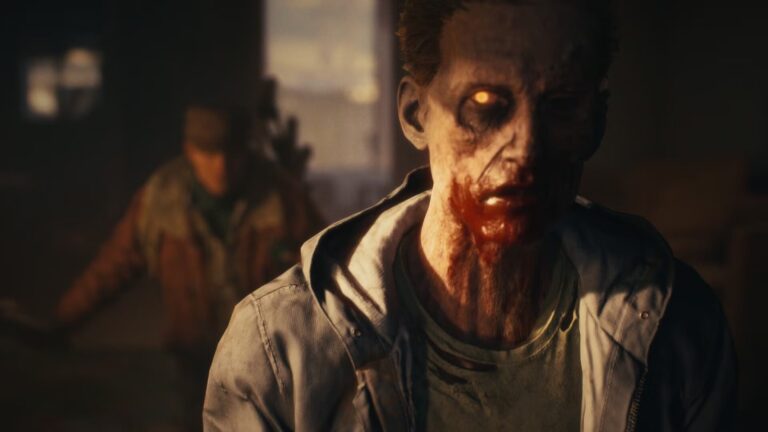
Undead Labs announced State of Decay 3 at E3 2020 through a cinematic teaser rather than gameplay footage or progress build. The reveal functioned as what Holt described as placing “a bit of a marker on the table” regarding the studio’s future direction. The timing mattered acutely: the announcement arrived amid an acquisition frenzy within Xbox, when studio leadership across the industry signaled staying power and future direction by announcing projects publicly.
Separating Aspiration from Reality
The teaser represented aspirational direction rather than completed work. It offered mood and tone without confirming specific gameplay systems or design decisions. That gap between cinematic promise and actual development status became evident through specific details. The teaser included an infected zombie deer that prompted fan speculation about whether State of Decay 3 would introduce infected animals as a game mechanic. The speculation proved premature—the deer was a visual element in the cinematic mood board, not confirmation of implemented systems.

Employee Ownership and Organizational Philosophy
The Full Measure Name
Holt selected “Full Measure” deliberately, drawing from Abraham Lincoln’s Gettysburg Address. The phrase “last full measure of devotion” carries specific meaning in the context of studio independence. “To your question about being independent and the life-and-death nature of hitting milestones, there’s this commitment that we have to engender in our studio. I can’t say require, because commitment is something we freely choose to do. So, I selected that name because any company’s obligation is to be worthy of a team’s commitment,” he said.
Stock Distribution and Transparency
Undead Labs will distribute stock to employees in coming weeks, making the studio employee-owned. That structural choice reflects both practical necessity and philosophical commitment. Holt emphasized that the cultural foundation would rest on transparency: “Being transparent, and sharing the good news, and especially the bad news. Those are part of how a company can be worthy of that commitment.”
A smaller, independent studio cannot compartmentalize problems or manage information asymmetries the way larger organizations do. Staff morale, retention, and engagement depend on honest communication about both success and difficulty. That transparency becomes not merely a management ideal but an operational requirement.
Development Timeline and Testing Strategy
Near-Term Beta Plans
State of Decay 3 will open closed beta sign-ups on PC in the near term, with a full alpha test planned for 2027. The extended testing window serves multiple purposes: it generates user feedback before launch, validates core mechanics and systems, and provides the studio with quantifiable data about performance and player response.
The Stakes of Milestone Management
For an independent studio, every missed deadline carries different weight than it did under first-party status. Holt acknowledged that the team must “ruthlessly manage” its development timeline to avoid further staff reductions or worse. The game’s development has slipped in the past, a luxury that becomes untenable once the studio must sustain itself through revenue rather than platform subsidies.
Market Positioning and Launch Reality
State of Decay 3 must now succeed as an independent title competing for audience attention rather than a first-party tentpole. The game will face market conditions without the built-in platform support that comes with Xbox exclusivity. That shift in positioning, combined with a lean staff and compressed cash runway, means the final product’s quality and market appeal determine viability in ways that were previously buffered by larger corporate structures.
The game’s launch will signal whether the independent path was the right call, both for Undead Labs and as a potential model for other studios navigating separation from major publishers.
Source: Kotaku
Frequently Asked Questions
Why did Undead Labs separate from Xbox?
Studio head Philip Holt orchestrated a management buyout after a proposed sale to Splash Damage fell through. Holt chose to preserve independence through Full Measure, an acquisition vehicle, rather than remain as part of Xbox Game Studios.
How has independence changed State of Decay 3's development strategy?
Under Xbox, State of Decay was positioned as potential tentpole status alongside major Xbox franchises. As an independent studio, Undead Labs must now develop a durable cost structure that generates revenue to support operations through and after launch. The studio must also manage its development timeline more strictly to avoid further staff reductions.
When will State of Decay 3 release?
Closed beta sign-ups on PC will open in the near term, with full alpha testing planned for 2027. An official release date has not been announced. State of Decay 3 was first revealed at E3 2020 and is the studio's first new title in over eight years.
