
Key takeaways
- Prominent VRChat community contributor Patroll halted all volunteer work in protest against the proliferation of AI-generated worlds and assets on the platform.
- VRChat banned deceptive AI-generated thumbnails and outlined permitted AI uses like translation and code assistance, while remaining uncertain about user-facing AI content.
- The company will consult the community for one week before finalizing its AI policies, including decisions on content labeling and search algorithm improvements.
A prominent volunteer contributor to VRChat announced an abrupt departure from community work this week, citing frustration with the unchecked proliferation of artificial intelligence on the platform. The decision by Patroll, who maintained the community wiki, aided in translations, and assisted with community testing, marked a visible sign of deeper discord within a platform built almost entirely by its users. Their departure, coupled with calls for other developers to label their work as free from generative AI, catalyzed broader conversation about what role, if any, AI should play in spaces where human creativity and connection are supposed to be central. The community response proved swift and substantial, with many popular worlds quickly adopting visible banners declaring their AI-free status.
A Platform Built on User Creation and Community
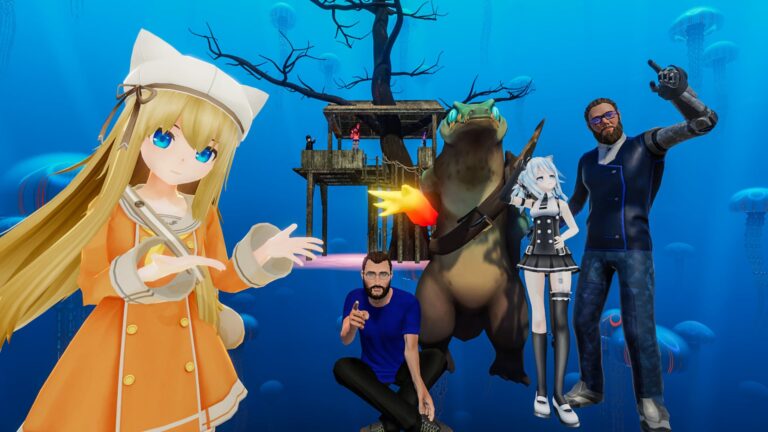
VRChat operates as a free social space where players construct and inhabit custom virtual worlds. Unlike corporate-built metaverse projects backed by major tech companies, the platform has become a genuine gathering place for communities with shared interests—some playing games together, others sharing artistic work, many simply talking and socializing in spaces they or other volunteers built. The platform has also attracted official use cases, hosting branded virtual events and concerts for corporate clients. Revenue comes through subscriptions, cosmetic items available for purchase, and a thriving creative economy where artists design and sell custom avatars to other players. The service essentially functions as a marketplace where user creativity drives both the player experience and the financial sustainability of the entire platform.
The Influx of Low-Quality AI Content
The emergence of artificially generated worlds and assets has degraded the experience of discovering new communities within VRChat, according to those protesting the trend. Patroll pointed to a specific and particularly deceptive problem: worlds listed in the platform’s search results displayed thumbnail preview images created by generative AI tools, yet these AI-generated previews often misrepresented the actual content players would encounter upon entering. Beyond false thumbnails, entire worlds supposedly built with AI generation—lacking careful design, coherent themes, or genuine play potential—now clutter discovery feeds, making it significantly harder for users to find authentic community spaces built by hand over weeks or months of creative work.
For creators who invested substantial time designing intricate environments and for communities invested in authentic social connection, the accumulation of low-effort, algorithmically produced content felt like an invasion of spaces meant for human expression. In their protest statement, Patroll characterized the situation as a rampant plague that VRChat itself appeared unwilling to address. Beyond stepping down from volunteer roles, they requested that the company institute stronger filtering mechanisms to remove AI-generated content from searches, minimize the platform’s own internal reliance on generative AI, and allow independent creators to display badges or banners explicitly stating their worlds contained no generative AI. They additionally asked for systems that would let the player community itself design discovery mechanisms, rather than depending solely on the company’s algorithms and human moderation teams.
VRChat’s Response and Immediate Policy Shifts
The company responded to the outcry within days, publishing a formal statement that acknowledged the genuine conflict without dismissing the perspectives of either side. In their assessment, VRChat found itself at an uncomfortable crossroads: generative AI could genuinely assist developers in reducing workload and accelerating technical aspects of creation, yet the same tools flooded the platform with what the company described as endless streams of low-quality, low-effort content that erodes human connection. The company made one immediate and unambiguous policy decision: deceptive thumbnail images generated by AI tools would be banned outright, effective immediately.
AI Uses the Platform Now Permits
The statement outlined several categories of AI use that VRChat considers permissible moving forward. These include translation of content into different languages, code assistance and programming help using tools like GitHub Copilot, and leveraging AI-powered features already built into mainstream development software such as Blender or Unity. Personal development projects that incorporate AI but are not shared publicly or uploaded to the platform also fall into the approved category. These exceptions recognized that AI tools had become ordinary parts of the creative software ecosystem, and imposing strict bans could place unrealistic demands on independent developers creating in their spare time.
Unresolved Questions on User-Facing AI
The company expressed explicit uncertainty about broader, more visible applications of AI within the player-facing portions of the platform. Whether worlds built entirely through generative AI should be permitted, whether AI-generated visual assets should appear inside player spaces, and whether AI-powered systems handling game physics or world logic crossed an acceptable threshold all remained unsettled questions. Rather than impose rigid rules unilaterally, VRChat asked its community to participate in determining how strict these boundaries should be and whether simply labeling such content might suffice, or whether outright prohibition became necessary. The company also committed to improving its search algorithms to prioritize higher-quality content and reduce the visibility of low-effort output.
Mixed Reception and Lingering Skepticism
The announcement sparked divided responses across the community. Some users viewed the company’s willingness to engage directly and its immediate ban on false thumbnails as meaningful progress toward addressing the problem. Others questioned why the company hesitated on implementing content labeling—a seemingly straightforward solution that would let individual players filter worlds according to their own preferences. If developers could mark their worlds as AI-free or tag worlds built with significant AI assistance, those seeking human-made spaces could find them easily, and those comfortable with generative content could explore it freely. The company’s delay on this point drew considerable skepticism from users who saw it as an unnecessary complication or potential delaying tactic.
Calls for Stronger Community Control
Patroll themselves responded with requests for stronger measures, including mechanisms that would allow players to customize their own discovery systems rather than defaulting entirely to the platform’s algorithms. Their position reflected a foundational concern: that without active intervention and user control, search results and recommendation feeds would become increasingly dominated by rapid, low-quality AI output simply because such content was inexpensive to generate in massive volume.
Community Consultation and Policy Finalization
VRChat announced a consultation period lasting approximately one week, during which community members were encouraged to submit detailed feedback on how generative AI should be handled across the platform. The company committed to publishing its findings and formally implementing AI policies once the feedback window closed. This consultation process was not guaranteed to produce the specific results that protesters sought, but it represented a concrete step toward treating AI governance as requiring genuine community input rather than top-down corporate decree alone. For a platform where user-generated worlds and niche communities form the actual foundation of the service, ignoring the voices of longtime contributors and active players would undermine the platform’s fundamental identity and value proposition.
Source: Kotaku
Frequently Asked Questions
What is VRChat?
VRChat is a free platform where players create and inhabit custom virtual worlds, form communities, and socialize. The service supports official events and concerts, generating revenue through subscriptions, cosmetics, and a user-built marketplace for custom avatars.
Why did Patroll quit VRChat?
Patroll protested the unchecked influx of AI-generated worlds and assets degrading the discovery experience. They specifically objected to deceptive AI-generated thumbnails misrepresenting world content and requested stronger platform filtering and community-driven discovery tools.
What AI uses did VRChat permit versus mark uncertain?
VRChat allows AI for translation, code assistance like GitHub Copilot, and development tools like Blender and Unity, as well as personal projects. The company expressed uncertainty about AI-generated assets, fully AI-created worlds, and AI-powered game physics or logic in user-facing spaces.
