
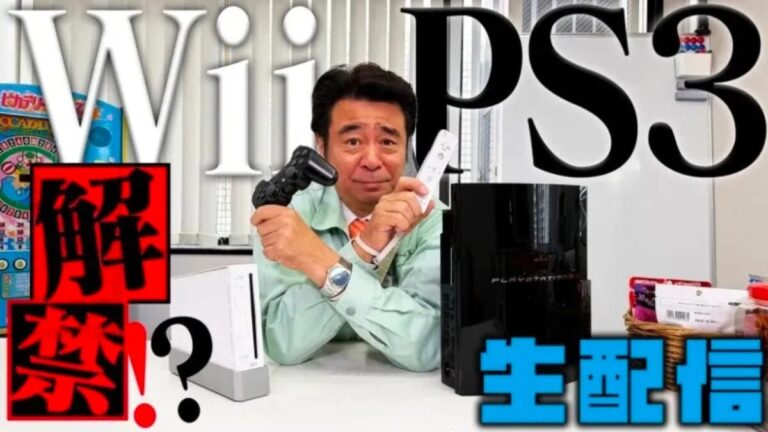
Key takeaways
- GameCenter CX will host a formal debate on August 23rd to determine whether Nintendo Wii and PlayStation 3 should be classified as retro systems.
- The potential inclusion would mark the first time the 23-year-old show tackles hardware that launched after it began airing in 2003.
- Recognizing these 20-year-old systems as retro forces viewers to confront the passage of time and their own aging.
- Shinya Arino has transcended television to become an institution in Japanese gaming culture, influencing Nintendo projects and preserving gaming history.
Shinya Arino, the host of GameCenter CX, has spent over two decades challenging himself against video games—first conquering classic cartridges, now potentially facing the cruel arithmetic of time. The long-running Japanese television program, which debuted in 2003 and has amassed nearly 400 episodes, has established itself as a cornerstone of gaming culture through Arino’s relentless pursuit of completing notoriously difficult vintage titles. As the show approaches its 23rd year on air, a milestone broadcast scheduled for August 23rd will examine whether the time has come to expand what counts as “retro” in the eyes of a program that has historically focused on systems from the Sega Master System through the PlayStation 2.
The debate centers on Nintendo Wii and PlayStation 3—consoles that launched two decades ago. Super Mario Galaxy and Fallout: New Vegas, both flagship titles of those platforms, have now crossed into the two-decade mark. For long-time viewers of GameCenter CX, the proposition carries a sting of existential awareness: admitting these systems have grown old means acknowledging how much time has actually passed.
The History of GameCenter CX
Two Decades of Challenges
GameCenter CX arrived in 2003 as a program built on a deceptively simple premise: place Arino in front of a controller and task him with completing challenging games. The show gained cult status, particularly in Japan, through its documentation of both triumph and frustration. Over the 20-year span, viewers have watched Arino navigate the demanding gauntlets of classic Famicom titles that defined an era of gaming.
The selection of games tackled by the program reflects the golden age of Japanese gaming. Titles like Ghosts ‘n Goblins, with its notorious difficulty, and Ninja Gaiden, known for punishing level design, became fixtures of early seasons. Super Mario Bros.: The Lost Levels represented another cornerstone challenge. Human Entertainment’s Septentrion emerged as a particular highlight within the show’s catalog, showcasing the breadth of lesser-known gems the program has highlighted. The show’s formula proved durable. Viewers tuned in not necessarily expecting Arino to always achieve victory, but to witness the genuine struggle, the sweat, and the perseverance that defined the experience of gaming in that era. The consistency of this approach carried the program through nearly 400 episodes without losing its core appeal.
Expanding the Definition of Retro
The 20-Year Threshold
The August 23rd broadcast will convene a formal debate to determine whether hardware from the Wii and PlayStation 3 era should now fall under the umbrella of “retro.” Both systems reached their market debut 20 years prior to 2026. This alignment of timeline is no coincidence: GameCenter CX itself has now existed for over two decades, meaning the program would be considering games and hardware that, until recently, represented the cutting edge rather than the archive.
First Hardware Younger Than the Show
What makes this moment particularly significant is that including Wii and PlayStation 3 titles would mark the first time GameCenter CX tackled hardware that launched after the show itself had already been on the air. The program has historically covered systems predating or contemporary with its own debut, creating a consistent retrospective posture. Crossing into post-2003 hardware represents a fundamental shift in the show’s scope and approach.

The Stakes of Nostalgia
Recognizing the Wii and PlayStation 3 as “retro” carries implications that extend beyond simple classification. For viewers who grew up with these systems, the designation forces an uncomfortable confrontation with the passage of time. Games like Super Mario Galaxy and Fallout: New Vegas feel immediate to many players—yet both are now firmly in the two-decade range. The proposal that these games and their hardware have aged into antiquity strikes at a different emotional chord than discussing Famicom cartridges.
The aging of these platforms also intersects with broader industry concerns. Sony’s decision to end disc production looms large in the context of this debate. As physical media becomes increasingly rare, the practical question of how future audiences will even experience these games takes on added weight. The precariousness of digital ownership and the discontinuation of physical formats underscore why preservation and recognition of these systems matters.
GameCenter CX’s Place in Gaming Culture
Shinya Arino has transcended his role as a television personality within Japan’s gaming landscape. The show’s influence manifested in tangible ways beyond the broadcasts themselves. Nintendo developed two games for the Nintendo DS directly inspired by GameCenter CX’s format and appeal. Arino himself gained the honor of an unlockable outfit in Super Mario Maker, cementing his status within Nintendo’s creative universe.
The program has also explored dimensions of gaming beyond pure competition and challenge. Episodes have ventured into cultural archaeology—such as Arino’s journey to locate Japan’s northernmost arcade, showcasing how the show balances competitive gameplay with curiosity about gaming’s broader geography and history. These appearances and side projects reflect how GameCenter CX evolved from a niche television program into an institution. The show influenced the broader conversation about what gaming history means and why preservation of these experiences carries cultural weight.
What Comes Next
If the August 23rd debate results in an affirmative decision, viewers can anticipate Arino tackling titles like Wii Sports and Portal through the lens that has defined GameCenter CX for two decades. The spectacle of watching the host engage with motion controls and first-person puzzle mechanics carries novelty, even as the core tension remains intact—will Arino complete the game, or will the game defeat him?
The meta-joke underlining this expansion is impossible to escape: fans who have grown with the show now confront evidence of their own aging. As observers have noted with grim humor, when the PlayStation 5 turns 20 in the future, the realization of what that means for those watching will feel even more acute. For now, the August 23rd episode promises to settle whether two of gaming’s most beloved systems have finally earned their place in GameCenter CX’s gallery of challenges.
Frequently Asked Questions
When did GameCenter CX first air and how many episodes has it produced?
GameCenter CX debuted in 2003 and has produced nearly 400 episodes over its 23-year run.
What systems has GameCenter CX historically covered?
The show has covered games from the Sega Master System through the PlayStation 2, with the upcoming August 23rd debate considering expansion to Wii and PS3.
Why is including Wii and PS3 gaming significant for the show?
It would mark the first time GameCenter CX tackles hardware that launched after the show began airing in 2003, and both systems are now 20 years old.
