
Key takeaways
- Multiple major gaming franchises have recently added features allowing players to craft using stored items, reducing inventory management busywork.
- Stardew Valley 1.4 enabled adjacent-chest crafting, Animal Crossing: New Horizons 3.0 added direct storage access, and Pokopia introduced universal containers.
- Fields of Mistria's 1.0 release demonstrates unrestricted storage crafting improves player satisfaction without reducing game depth or challenge.
Players who enjoy sandbox and simulation games with crafting mechanics face a recurring frustration: the inventory management bottleneck. Most games intentionally limit what players can carry at any given time, forcing excess materials into storage containers scattered across their play spaces. While this constraint serves a design purpose—preventing players from accumulating everything without consequence—it creates a secondary problem that consumes valuable playtime: the hunt for ingredients across multiple containers.
The Storage Problem Plaguing Crafting Games
Why Inventory Limits Create Busywork
The typical workflow becomes tedious quickly. A player might store tree products in one chest, processed ore in another, and completed items in a third. When crafting, they must physically travel to each container, retrieve the necessary items, navigate to a crafting station, complete the recipe, and then figure out where the newly created item belongs in their ever-growing collection of boxes. With dozens or hundreds of recipes available in most crafting games, players can easily spend more time juggling items between containers than engaging with the actual creative act of crafting itself.
How the Industry Is Responding to Player Frustration
Multiple Solutions Across Major Franchises
The gaming industry has gradually recognized this pain point and begun implementing solutions. Several major franchises have already updated their approaches:
- Stardew Valley (update 1.4): Introduced a Workbench that allows crafting using materials stored in adjacent chests
- Animal Crossing: New Horizons (3.0 update): Added bulk crafting and direct-from-storage crafting capabilities
- Pokopia (latest update): Introduced a universal storage container to reduce friction when accessing scattered materials
- Palworld: Reportedly implements this feature effectively in its farming and creature-collection gameplay
- Fields of Mistria (1.0 release): Allows crafting using any item anywhere without restriction
From Partial Solutions to Comprehensive Approaches
Stardew Valley’s approach streamlines the process without fully solving the problem. A player can place ingredient chests next to a crafting station, but they still cannot access storage containers elsewhere on the map. Pokopia initially restricted storage-integrated crafting to situations where the storage container physically touched the crafting table, only adding broader access through its latest update.
Animal Crossing: New Horizons took a more aggressive approach. The 3.0 update, released earlier this year, provided a significant quality-of-life improvement that transformed the experience for players juggling hundreds of furniture recipes and crafting materials. The ability to select multiple items at once and craft from anywhere in your storage system cut inventory management time substantially.
Fields of Mistria Sets the Gold Standard
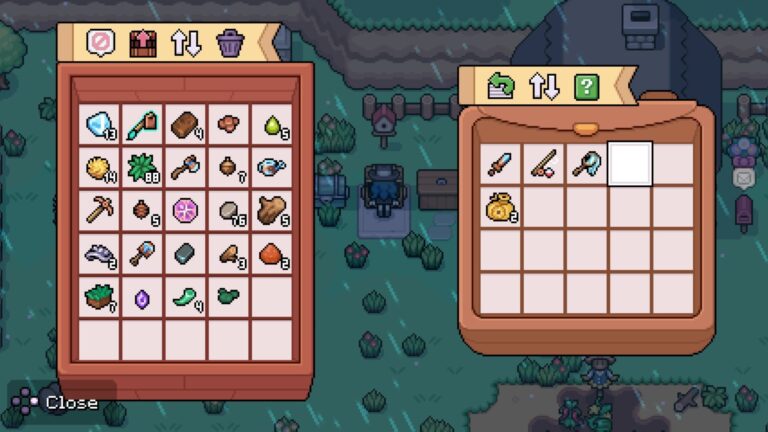
Fields of Mistria, which reached its full 1.0 release recently, exemplifies the most player-friendly approach to this problem. The game allows crafting using any item in the player’s possession or storage, regardless of location or proximity to crafting stations. This eliminates the entire category of friction that has plagued the genre for years. A player can gather materials, store them in containers scattered across their farm or village, and then craft those items from anywhere—whether standing in the forest, inside a shop, or at a crafting station in town.
This design philosophy transforms the crafting experience from a logistical puzzle into something more aligned with the relaxation that these games are supposed to provide. When players spend less time frustrated with storage systems, they spend more time enjoying the actual gameplay loops the developers designed.
What This Shift Reveals About Player Preferences
The accumulation of these changes across multiple popular franchises suggests a genuine shift in design thinking. Developers are recognizing that quality-of-life features targeting inventory management directly translate to improved player satisfaction. The industry messaging has become increasingly clear: restricting access to storage during crafting is not a feature most players value.
Many crafting games justify inventory limits through a lens of realism, suggesting it wouldn’t make sense to craft items using materials physically stored elsewhere. Yet players have demonstrated repeatedly that they prioritize convenience and gameplay flow over immersion-breaking logistics. Games that have retroactively improved their systems—like Stardew Valley and Pokopia—have done so in response to player feedback rather than keeping the original limitation as permanent.
Games Without This Feature Now Face Criticism
Despite the clear trend, some games still haven’t caught up. New releases and updates that maintain traditional inventory separation between carried items and stored materials continue to appear, suggesting that not every development team prioritizes these conveniences equally. Games launching without this functionality now face criticism from players accustomed to the convenience offered by competitors. The feature has shifted from a luxury quality-of-life improvement to a baseline expectation.
The Future of Crafting Game Design
For developers still implementing crafting and storage systems in their games, the path forward is clear: allow players to craft using materials regardless of where those materials are stored. The player base has demonstrated this preference through engagement with games that provide this option. This functionality doesn’t diminish challenge or depth—it simply removes busywork that most players never wanted in the first place.
The games leading this charge have proven that removing unnecessary friction strengthens the overall experience rather than weakening it. The future of crafting games lies not in forcing players to solve inventory puzzles, but in letting them focus on the satisfaction of creation itself.
Frequently Asked Questions
Which games let you craft directly from storage?
Fields of Mistria allows crafting from anywhere using any stored items. Animal Crossing: New Horizons and Pokopia offer this through recent updates. Stardew Valley's Workbench allows crafting from adjacent chests. Palworld also reportedly implements this feature well.
What problem does crafting from storage solve?
It eliminates the need to travel between multiple containers to gather ingredients, reducing time spent on inventory management so players can focus on the actual creative act of crafting.
When did these games add crafting from storage?
Stardew Valley added the Workbench in update 1.4. Animal Crossing: New Horizons added the feature in its 3.0 update earlier this year. Pokopia added a universal storage container in its latest update. Fields of Mistria had it at its full 1.0 release.
