
Key takeaways
- Affleck's AI-positioned Netflix thriller Animals fails with critics and viewers despite his year of ethical AI advocacy.
- The director remains vague about which production elements used AI, contradicting his public messaging about transparent, ethical implementation.
- Audiences favor human-created entertainment over AI-generated content, undermining Hollywood's push to integrate AI into production workflows.
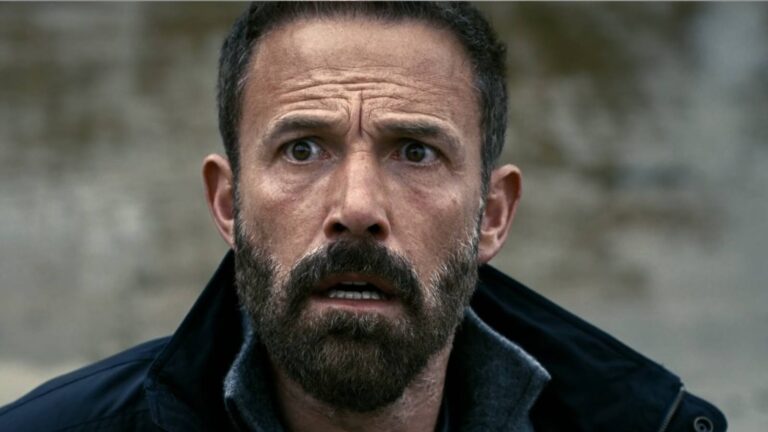
Ben Affleck has spent the better part of a year positioning himself as Hollywood’s most vocal proponent of “ethical” artificial intelligence in filmmaking. His latest project, the Netflix political thriller Animals, arrives this weekend as what appears to be the centerpiece of that advocacy. The film stars Affleck himself opposite Kerry Washington of Scandal in a story about Mark Kimball, a mayoral candidate trailing in polls who finds himself under pressure when his son is abducted and his family must secure ransom money without tanking his electoral prospects.
Reception Falls Flat Despite Prior Success
What Reviewers Found Wanting
The critical and audience response to Animals has proven underwhelming. According to Kotaku’s review, the film suffers from thinly drawn characters and stilted dialogue that undercuts its political thriller ambitions. Beyond these conventional weaknesses, viewers have flagged unusual shot composition throughout the picture, the kind of visual oddities that Kotaku notes resemble internet comedy sketches of the sort Paul Rudd might present on late-night television. Both the critic score and audience score on Rotten Tomatoes have landed below water, indicating a project that has failed to resonate with either cohort.
Affleck’s Directing Pedigree
Affleck himself has a documented history steering more celebrated thrillers. Gone Baby Gone and Argo both drew critical approval, with the latter winning Academy Award recognition. The contrast between his prior directorial work and Animals’ reception raises questions about whether the production faced constraints or choices that led to its current standing.
The Year-Long AI Advocacy Campaign
From Skeptic to Evangelist
Affleck was reportedly spooked by AI technology years ago, but that wariness shifted into something closer to enthusiasm over the past year. He has become an active voice in debates over AI’s role in Hollywood production, attending industry events and making public statements about how the technology should be deployed. His positioning hinges on a specific framing: that AI can be used responsibly without breaching creative rights, threatening intellectual property, or displacing workers.
The “Ethical AI” Pitch
At a recent Bloomberg event, Affleck articulated his vision directly. “I don’t believe that there will ever be ‘Just type it in and make a movie that people want to see’,” he stated, according to Kotaku. He continued: “The whole effort behind it was to do something ethical, to do something that did not displace people, but that allowed people in this economy and this world to benefit from this technology.” The statement frames AI as a tool that can coexist with human labor rather than replace it, a position that has become central to his public messaging.
The Opacity Problem
Affleck Remains Vague About Implementation
Despite positioning Animals as a vehicle for his ethical AI philosophy, Affleck has been deliberately opaque about which aspects of production relied on AI assistance. Kotaku notes that what specific elements of the film’s creation involved AI remains unclear, with Affleck offering little detail. This lack of transparency stands in contrast to the explicit advocacy surrounding the film’s release and raises an obvious question: if the production process was truly exemplary of responsible AI use, why the discretion?
The Credibility Gap
The disconnect between Affleck’s public statements about ethical AI and his reluctance to detail exactly how Animals employed those principles suggests a potential credibility issue. Either the AI implementation was minimal and not worth highlighting, or it was substantial enough that fuller transparency might invite scrutiny the filmmaker preferred to avoid. The gap between the advocacy and the specifics creates room for skepticism about whether Animals genuinely represents a model for how AI should be used in entertainment, or whether it serves as a marketing angle for a production that struggled for other reasons.
What the Market Actually Wants
Audiences Gravitating Toward Human-Made Content
Despite Affleck’s advocacy and the stated commitment to ethical AI use, the entertainment market has sent a different signal. Audiences continue to line up for human-created entertainment. According to Kotaku, viewers are gravitating toward productions made by human artists, citing as an example Kane Parsons’ simulacra work lampooning the Backrooms internet horror tradition. Even as AI technology captures headlines and executive interest, it has not yet proven capable of driving ticket sales or viewership at the levels that human-directed projects routinely achieve.
The Pattern of Celebrity Tech Advocacy
Affleck’s promotion of AI in Hollywood follows a familiar pattern. His recent high-profile interest in the technology echoes Matt Damon’s earlier venture into cryptocurrency advocacy, where similarly prominent figures have championed technologies before suffering public reckonings with their limitations or failures. The structural dynamic remains consistent: celebrity enthusiasm, public statements, and then outcomes that undermine the initial pitch.
Why AI-Generated Content Fails to Connect
AI continues to generate attention in entertainment and gaming contexts, but often for reasons that undercut enthusiasm. The technology remains adept at revealing its own existence, at creating artifacts and oddities that remind audiences they are viewing or experiencing machine-generated content. This self-revelation works directly against the goal of seamless entertainment, which requires audiences to forget they are watching craft and simply experience the story. As Kotaku observed, AI is excellent at reminding viewers of its presence, but considerably less effective at motivating them to buy a ticket or spend their evening watching.
The Future of Affleck’s AI Advocacy
Despite the poor showing of Animals, Affleck’s broader venture into AI advocacy in entertainment appears unlikely to cease. The actor and director has positioned himself as someone offering an alternative framework to either wholesale AI replacement of human labor or blanket rejection of the technology. Whether that framework actually delivers on its promises remains to be determined, but Animals’ reception suggests the market will demand more convincing demonstrations before accepting it as the future of entertainment production.
Source: Kotaku
Frequently Asked Questions
What is the plot of Animals?
The film follows Mark Kimball, a mayoral candidate trailing in polls, who must secure ransom money when his son is abducted. Affleck stars in the lead role alongside Kerry Washington as his wife Abigail.
Why has Animals received poor reviews?
According to Kotaku, critics faulted the film for thin character development, awkward dialogue, and unusual shot composition. Both critic and audience scores on Rotten Tomatoes fell below 50%.
What has Affleck said about his ethical AI approach?
At a Bloomberg event, Affleck stated he does not believe in fully automated film creation and emphasized using AI responsibly without displacing workers. However, he has been vague about which specific elements of Animals used AI technology.
