
Key takeaways
- Ben Affleck has spent over a year advocating for ethical AI in Hollywood, positioning it as a tool to enhance human creativity rather than replace workers.
- His Netflix thriller Animals failed with critics and audiences on Rotten Tomatoes, receiving poor scores across both professional and casual viewership.
- The film's poor reception demonstrates that philosophical frameworks around responsible AI cannot compensate for fundamental weaknesses in storytelling and character development.
- Audiences consistently prefer entertainment with demonstrable human authorship, undermining arguments that ethically-implemented AI improves major studio filmmaking.
Affleck’s Year-Long Embrace of Entertainment AI
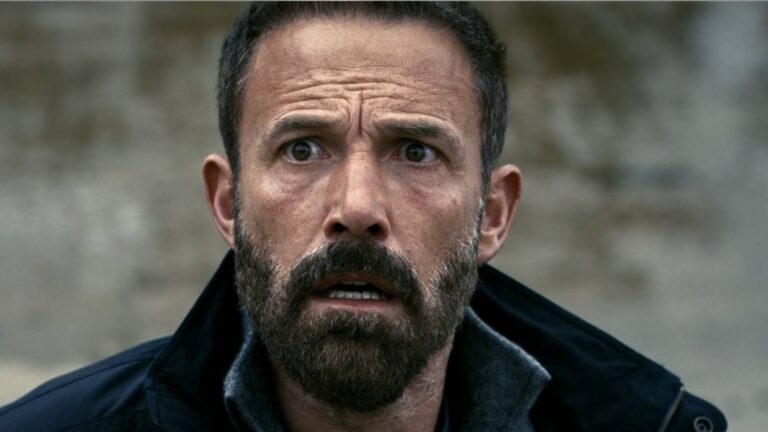
Ben Affleck has spent the past year becoming one of Hollywood’s more vocal proponents of artificial intelligence in entertainment. The actor and director moved past initial reservations about the technology to advocate for what he terms “ethical” AI implementation in filmmaking. This weekend, Netflix released Animals, his latest directorial effort starring Affleck, which appears constructed partly to validate his theories about responsible AI integration into major studio productions.
Animals: Plot and Critical Reception
The Story
Affleck both directs and stars in Animals as Mark Kimball, a mayoral candidate whose campaign trails in the polls. The central conflict involves a kidnapping: Kimball’s son is taken hostage, forcing Mark and his wife Abigail to pursue a ransom while simultaneously attempting to protect Kimball’s electoral viability. Kerry Washington, best known for her starring role in the series Scandal, plays Abigail alongside Affleck’s lead performance.
Critical Response
Affleck has established credibility as a thriller director through previous films including Gone Baby Gone and Argo, the latter earning Academy Award recognition for Best Picture. Animals, however, has not achieved comparable critical appreciation. Reviewers cited hollow characterization and awkward dialogue as primary weaknesses. The narrative setup of political corruption, family crisis, and ransom negotiation presents material that could support compelling drama, yet critics found the execution lacking in depth and nuance.
Audience Reaction
Viewers responding on social media identified unusual visual composition as a consistent distraction. Some compared the film’s shot choices to comedy segments, suggesting the cinematography felt incongruous with the thriller tone. The film currently registers below acceptable thresholds on Rotten Tomatoes for both critic and audience scores, indicating widespread dissatisfaction across both professional and casual viewers.
Affleck’s Public Philosophy on AI
The Ethical Framework
Affleck has framed his AI advocacy around three core principles: respecting creative intellectual property, protecting employment for industry professionals, and ensuring that technology benefits workers rather than solely reducing labor costs. At a recent Bloomberg event, Affleck articulated his vision directly: “I don’t believe that there will ever be ‘Just type it in and make a movie that people want to see.’ The whole effort behind it was to do something ethical, to do something that did not displace people, but that allowed people in this economy and this world to benefit from this technology.” This statement positions AI as a supplementary tool enhancing human creativity rather than replacing human workers wholesale.
Shifting from Skepticism
Affleck acknowledged that AI technology previously frightened him. However, he came to believe that responsible implementation represents the inevitable path forward for the industry. Rather than resist technological change, he advocates for structuring that change to protect creative professionals from displacement and preserve human authorship as central to entertainment production. His approach contrasts sharply with studio executives who view automation primarily as a mechanism for reducing payroll and operational costs.
The Unexplained Production Process
Affleck has remained strategically vague about which specific elements of Animals utilized AI technology. He has declined to provide detailed technical explanations about where, when, or how artificial intelligence participated in the production process, whether during filming, in editing, in visual effects, or in post-production color grading and sound design. This deliberate opacity creates uncertainty about whether Animals genuinely demonstrates his ethical AI philosophy or merely represents conventional filmmaking with philosophical framing attached retroactively.
Audience Appetite for Human-Made Entertainment
Despite industry concerns about AI replacing creative professionals, Hollywood studios have not yet experienced large-scale displacement of human workers. Major corporations have expressed enthusiasm for automation’s potential to reduce labor expenditures and headcount, yet audience behavior consistently demonstrates preference for entertainment with demonstrable human authorship. Films, television, and digital content perceived as authentically human-created routinely outperform projects audiences associate with algorithmic generation or heavy AI dependency.
When viewers encounter obvious artificial intelligence, when technological artifacts become perceptible to the audience, engagement typically declines. The inverse is equally true: audiences reward entertainment that displays craft, intentionality, and clear human creative decision-making. Market success across entertainment sectors validates this pattern repeatedly. Streaming platforms, studios, and independent creators have learned that audiences reliably choose content signaling human creation over content perceived as AI-assisted or AI-generated.
The Disconnect Between Philosophy and Execution
The critical and audience rejection of Animals demonstrates a fundamental principle: philosophical commitments around technology cannot compensate for deficiencies in the underlying creative work. Viewers do not consciously evaluate films based on the ethical framework governing their production process. Instead, audiences assess narrative quality, character development, performance, dialogue, cinematography, and overall technical execution.
Affleck’s stated intentions about implementing AI responsibly did not produce a film that resonated with viewers. The weakness in Animals exists at the fundamental creative level, characterization and dialogue, suggesting that if AI played a role, its deployment did not strengthen these core elements. Alternatively, if the production remained primarily human-driven, then Affleck’s ethical philosophy proved insufficient to overcome execution shortcomings.
Animals functions as a test case for AI integration into major studio film production. The film’s failure to gain critical or audience traction indicates that responsible deployment of artificial intelligence, however well-intentioned, cannot rescue a film lacking strength in narrative and character. For Affleck’s advocacy about ethical AI to gain wider acceptance in Hollywood, future projects would need to demonstrate that responsible AI integration can produce commercially successful and critically praised entertainment, not merely philosophically sound production practices.
Source: Kotaku
Frequently Asked Questions
What is the plot of Animals?
Animals follows mayoral candidate Mark Kimball, portrayed by Ben Affleck, whose son is kidnapped. Affleck's character and his wife Abigail, played by Kerry Washington, must attempt to secure a ransom while protecting Kimball's electoral prospects.
Why did Affleck make Animals as an AI project?
Affleck has not specified which elements of Animals used AI technology and has remained deliberately vague about the production methodology. His stated goal was to demonstrate how AI could be used responsibly without displacing creative workers or violating intellectual property.
How did critics and audiences respond to Animals?
Animals received poor scores on Rotten Tomatoes from both critics and audiences. Reviewers cited thin characterization and clunky dialogue, while viewers noted unusual shot composition. The film failed to match the critical success of Affleck's previous acclaimed thrillers like Argo and Gone Baby Gone.
