
Key takeaways
- The translucent green Xbox Series X25 costs $900, matching the PS5 Pro price but $100 more than the standard Xbox Series X despite identical performance.
- Microsoft attributes the premium pricing to component shortages for RAM and storage, driven by datacenter expansion investments for AI infrastructure.
- The console launches in November with its matching controller arriving in October, both at full retail price with no Black Friday discounts planned.
- The X25's $900 price positions it as luxury collectible hardware, costing only $150 more than original Halo Edition Xbox consoles sell for on the secondary market.
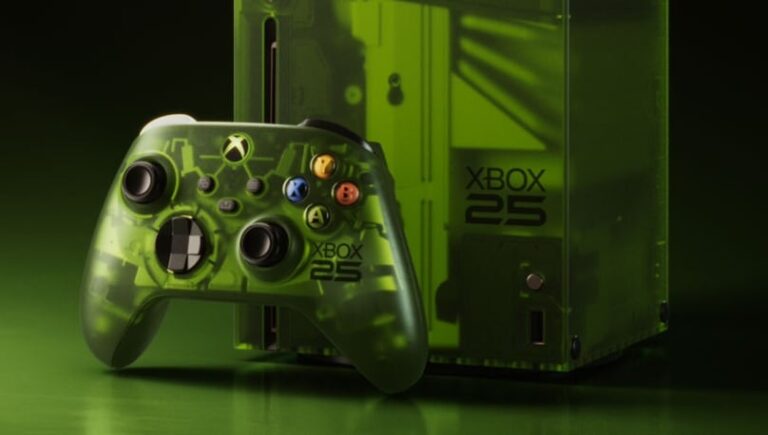
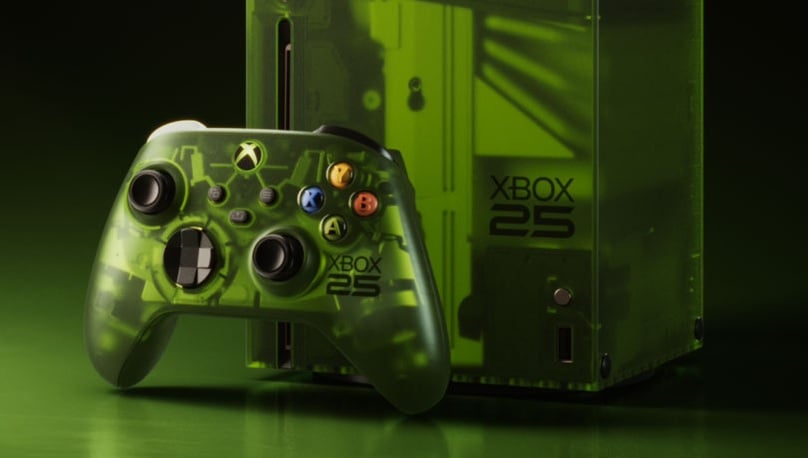
Microsoft’s translucent green Xbox Series X25 featured prominently upon its reveal at the company’s summer gaming showcase, reviving late-’90s hardware aesthetics with a clear plastic shell and vibrant coloring. The design resonates with players who grew up during the era when translucent hardware dominated consumer electronics. Yet this nostalgic appeal comes bundled with a contemporary price that will challenge most enthusiasts. According to Dealabs Magazine contributor Billbil-kun—who previously revealed accurate pricing for the matching $80 translucent green X25 controller—the console will cost €899.99 in Europe, translating to approximately $900 in the United States market.
The hardware arrives in stages. The X25 controller launches in October, followed by the console itself in November, positioning both products within the crucial holiday shopping season. No promotional pricing has been announced, indicating Microsoft intends to maintain full retail rates throughout the launch window and beyond.
How the X25 Compares to Alternatives
Against Current Generation Hardware
The $900 price point demands examination relative to existing console options. Microsoft’s standard 1TB Xbox Series X with disc drive currently retails for $800, placing the anniversary edition at a $100 premium despite offering identical internal specifications and computing performance. The PlayStation 5 Pro with 2TB storage carries the same $800 price, meaning the X25 costs more than a competitor offering superior storage capacity. Most significantly, the X25 delivers performance matching the original Xbox Series X that launched at $500 in 2020—a $400 price jump for five-year-old computing architecture wrapped in translucent plastic.
Against Retro Collector Pricing
Secondary markets offer perspective on what legacy hardware commands among enthusiasts and collectors. Original Halo Edition Xbox consoles in acceptable condition sell for approximately $750 on platforms like eBay, suggesting ongoing demand for classic gaming hardware. The X25, priced at $900, costs $150 more than authentic hardware released over two decades ago. This relatively modest premium compared to collector pricing suggests Microsoft views the translucent design as adding value, though not substantially more than decades-old original hardware commands.
Understanding Microsoft’s Price Strategy
The decision to price the X25 at such a level stems from legitimate industry pressures extending well beyond gaming. Microsoft, like other hyperscalers investing billions in artificial intelligence infrastructure, has committed enormous resources to datacenter expansion across multiple continents. This competitive race for computational capacity has created unprecedented scarcity in critical components, particularly RAM and storage hardware that manufacturers depend upon. These same shortages directly impact consumer electronics manufacturing costs, making memory and storage substantially more expensive than historical averages. GPU shortages, while less severe than during previous cycles, continue affecting production timelines.
Component Shortages and Datacenter Demands
The component shortage crisis shows no signs of abating despite analyst predictions. RAM and storage prices remain elevated above pre-pandemic baselines, and the technology industry’s continued datacenter expansion promises sustained pressure on available supplies. Manufacturers worldwide compete for the same limited inventory of critical components, driving up acquisition costs across industries. Rather than absorbing these higher manufacturing costs through reduced profit margins, Microsoft has chosen to pass the expense directly to consumers. This pricing decision suggests confidence that the X25’s aesthetic appeal justifies the premium for collectors and nostalgia-driven enthusiasts willing to invest in limited-edition hardware.
Release Timeline and Market Positioning
The October-to-November staggered release creates distinct shopping windows during the crucial holiday season when console and electronics sales traditionally peak. The October controller launch allows early adopters to secure the accessory before console availability, building brand affinity months ahead of the main hardware release. The November console launch positions the X25 directly within peak holiday purchasing periods, though the absence of discounting means consumers encounter identical retail rates regardless of purchase timing. This contrasts with typical console launch patterns where discounting usually accompanies extended market presence or seasonal promotional events.
The Nostalgia Collectible Premium
Translucent hardware defined consumer electronics aesthetics throughout the 1990s and into the early 2000s, creating nostalgic associations for gamers who grew up during those decades. Microsoft’s X25 capitalizes on that emotional connection while commemorating a company anniversary. The pricing reveals how the company quantifies nostalgia: a $900 investment for collectors and enthusiasts. The financial gap between the anniversary edition and standard hardware—nearly equivalent to purchasing an entire alternative gaming platform—positions the X25 as luxury collectible hardware. For mainstream consumers, the premium represents a discretionary purchase rather than a practical hardware upgrade or performance improvement.
This pricing arrives amid turbulence in the gaming industry. Xbox developers have organized rallies across North American territories protesting widespread studio layoffs, creating contrast with the company’s simultaneous rollout of premium-priced hardware. Microsoft’s next-generation Project Helix console, expected between 2027 and 2028, may further contextualize the X25’s premium depending on its eventual pricing structure and performance specifications.
Frequently Asked Questions
How much does the Xbox Series X25 cost?
According to leaks from Dealabs Magazine contributor Billbil-kun, the Xbox Series X25 costs €899.99 in Europe, approximately $900 in the United States market.
How does the X25's price compare to other current consoles?
The X25 costs $100 more than the standard 1TB Xbox Series X ($800) and $100 more than the PlayStation 5 Pro 2TB ($800), while delivering identical performance to the Xbox Series X that launched for $500 in 2020.
Why is the Xbox Series X25 priced so high?
Microsoft has raised hardware prices in response to component shortages for RAM and storage driven by datacenter expansion investments across the technology industry for artificial intelligence infrastructure.
