
Key takeaways
- Yankovic confirmed he rejected what he described as “a nice pile of money” to appear in an advertisement for an AI software company.
- Yankovic’s rejection of the AI deal reflects a long-standing principle regarding brand partnerships.
- Yankovic’s stance resonates strongly within his fan community.
- Yankovic’s resistance to AI sponsorship cannot be separated from the existential threat the technology poses to musicians and creators.
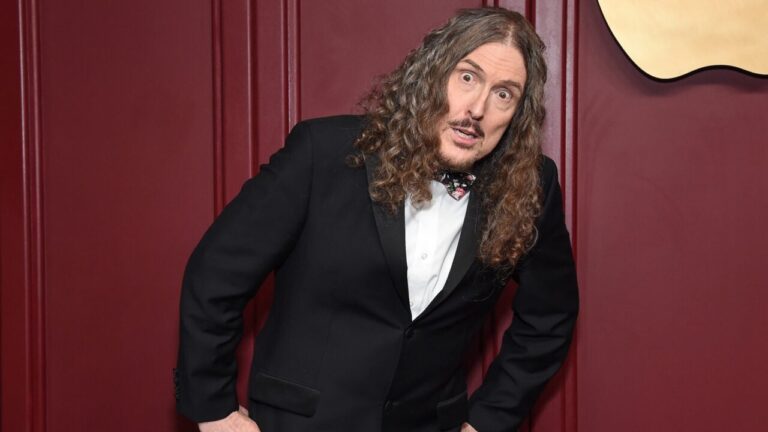
Weird Al Yankovic turned down a substantial sponsorship deal for an artificial intelligence service in early 2025, stating plainly that he cannot be “the poster boy for AI” because he is “not down with that.” The musician discovered the commercial was for generative AI only one week before the scheduled shoot, forcing a last-minute decision that prioritized ethical conviction over financial gain.
A Last-Minute Pivot Over Principle
Yankovic confirmed he rejected what he described as “a nice pile of money” to appear in an advertisement for an AI software company. He initially believed the commercial was for general business software, a misunderstanding that persisted until days before production. Upon learning the true nature of the product, Yankovic made the decision to walk away entirely, demonstrating a willingness to forfeit significant compensation rather than endorse the technology.
The rejection came ahead of Yankovic’s ambitious 2025 *Bigger & Weirder* tour, which featured 70 shows across North America with an expanded band and video displays—a marked escalation from his more minimalist 2022 tour. The timing placed the AI deal squarely in Yankovic’s public eye during one of his most visible periods in recent years, making the refusal a deliberate statement rather than a casual dismissal.
A Pattern of Ethical Boundaries in Endorsements
Yankovic’s rejection of the AI deal reflects a long-standing principle regarding brand partnerships. In the past, he turned down a $5 million endorsement deal with a beer company because he felt such an association was “ethically wrong” given his young and impressionable fan base. That same demographic sensitivity informed his decision to reject the AI sponsorship, as he weighed the message such an endorsement would send to his audience.
The musician addressed the irony directly, stating he is “aware of the ‘Al’/’AI’ jokes and he’s a fan of neither the jokes nor the tech.” This explicit clarification—distinguishing between his name and the acronym for Artificial Intelligence—underscores that his opposition extends beyond wordplay to the technology itself. Yankovic’s position reflects a broader concern about how AI threatens the creative landscape he has inhabited for decades.
Community Alignment and Grassroots Support
Yankovic’s stance resonates strongly within his fan community. A dedicated Weird Al Yankovic fan group on Facebook voted to implement a ban on all AI-related posts, with moderators explicitly stating, “We do not support Al in this group.” This policy demonstrates that the community’s support for Yankovic extends to actively policing AI content in shared spaces, creating a grassroots enforcement mechanism for the musician’s ethical position.
The fan group’s distinction between “AI” (the technology) and “Al” (the musician) reflects a broader understanding within the community. Rather than viewing Yankovic’s refusal as a personal quirk, fans have embraced it as a collective value, establishing no-AI zones in digital spaces dedicated to the artist. This alignment between creator and audience suggests that Yankovic’s position strengthens rather than alienates his core supporters.
The Deeper Threat: Voice Cloning and Creative Integrity
Yankovic’s resistance to AI sponsorship cannot be separated from the existential threat the technology poses to musicians and creators. The rise of AI voice cloning represents a direct challenge to the authenticity and copyright protections that have anchored Yankovic’s career. A detailed analysis of voice cloning dangers highlighted the specific risks posed by generative AI, noting how platforms like Discord have banned AI-focused communities due to copyright violations and creative theft.
Early in his career, Dr. Demento encouraged a young Yankovic to write original songs rather than rely solely on parodies—advice that shaped Yankovic’s approach to comedy music and creative ownership. That foundational emphasis on originality and human creativity stands in direct opposition to AI systems that generate content by synthesizing existing work. Yankovic’s refusal to promote AI reflects a commitment to the principles that defined his artistic development from the beginning.
Historical Echoes in Gaming and Popular Culture
Yankovic’s career has intersected with gaming culture before. A video game featuring “Weird Al” was released on the Nintendo Entertainment System during the late 1980s, with a sequel in development until 1989, when the developer’s employer, Ocean Software, pivoted to console gaming and shelved the project. That abandoned sequel serves as a historical parallel to how technology projects are frequently abandoned or reprioritized—a contrast to the human-made creativity that defined both Yankovic’s music and the original NES game.
The parallel underscores a key difference: the original Weird Al game was a product of deliberate human design and creative vision, not algorithmic generation. Yankovic’s current stance against AI reflects a preference for that kind of intentional, human-centered creativity over systems designed to automate or synthesize creative output.
What Comes Next for Yankovic and the Industry
The *Bigger & Weirder* tour will continue through 2025 without AI-related sponsorships, allowing Yankovic to maintain his stated ethical position throughout the extended campaign. Other artists and creators will be watching to see whether rejecting AI endorsements becomes a competitive advantage or a liability in an industry increasingly pressured to embrace the technology.
Yankovic’s decision signals that high-profile creators retain the power to set boundaries around AI integration in their professional lives. His willingness to walk away from substantial financial offers demonstrates that not every opportunity aligns with an artist’s values, and that some creators are prepared to make that choice visible and public. The musician’s stance will likely influence discussions within the entertainment industry about whether AI partnerships can coexist with authentic creative credibility.
