
Key takeaways
- The scale of Final Fantasy X’s production reflected Squaresoft’s commitment to fully realizing the PlayStation 2’s graphical potential.
- The PlayStation 2’s processing power represented a generational leap that allowed Final Fantasy X to abandon the visual compromises that had defined the series for three generations.
- Beyond hardware capabilities, Final Fantasy X drew significant narrative inspiration from Tolkien’s Lord of the Rings, particularly in its central thematic exploration of endings and the decline of magic.
- The Conditional Turn-Based (CTB) battle system introduced in Final Fantasy X represented a deliberate strategic shift away from the faster-paced Active Time Battle system that had dominated previous entries.
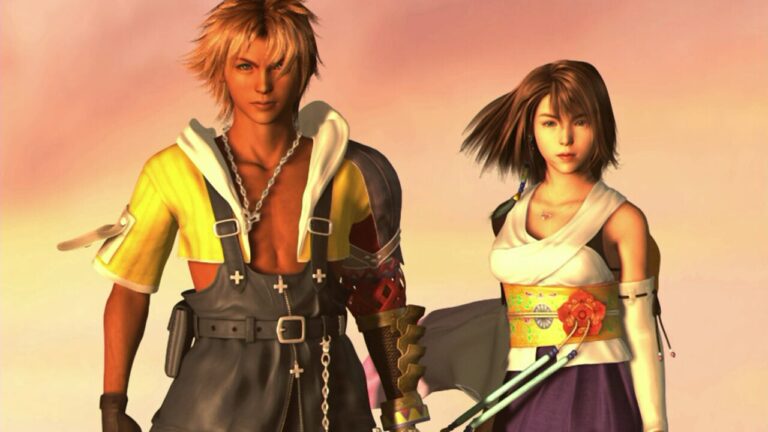
Squaresoft invested approximately ¥4 billion (roughly $32.3 million at the time, or $62.4 million adjusted for 2025 inflation) into Final Fantasy X beginning in 1999, assembling a team of over 100 developers to create what would become the franchise’s most technically ambitious entry to date. The game’s development represented a watershed moment for the series, as the PlayStation 2’s 64-bit MIPS R5900 CPU running at 291 MHz enabled fully three-dimensional environments and full voice acting for the first time in Final Fantasy history. This technological leap, combined with narrative inspiration drawn from J.R.R. Tolkien’s Lord of the Rings, fundamentally reshaped how the franchise approached storytelling and player engagement.
A Massive Investment to Leverage New Hardware
The scale of Final Fantasy X’s production reflected Squaresoft’s commitment to fully realizing the PlayStation 2’s graphical potential. The team of over 100 people, most of whom had worked on previous Final Fantasy titles, faced the unprecedented challenge of transitioning from the pre-rendered 2D backgrounds that defined Final Fantasy VII through IX into fully three-dimensional, real-time environments. This shift necessitated not only larger teams but also fundamentally different design philosophies and technical approaches across every department.
Development commenced in 1999, two years before the game’s announcement at the Square Millennium Event in 2000. The early build showcased at that announcement looked completely different from the final Japanese release in July 2001, as developers engaged in substantial re-engineering to leverage the PS2’s unique architecture and higher graphical fidelity. Producer Hironobu Sakaguchi noted that the PS2’s hardware evolution gave developers the space to implement full voice acting and real-time storytelling, capabilities that remained impossible on the original PlayStation.
From Pre-Rendered Backgrounds to Living Worlds
The PlayStation 2’s processing power represented a generational leap that allowed Final Fantasy X to abandon the visual compromises that had defined the series for three generations. The end of pre-rendered 2D backgrounds meant that environments could now be explored freely in three dimensions, with characters moving through spaces rendered in real-time rather than animated sequences. This transformation extended beyond mere aesthetics—it fundamentally changed how players experienced narrative moments, exploration, and combat within Spira.
The shift also enabled full voice acting across the entire game, a feature that reshaped player expectations for RPGs going forward. Sakaguchi’s vision emphasized that the series’ greatest success came from “constantly changing and trying out new content,” and the PS2’s capabilities provided the hardware foundation necessary to realize this philosophy. What had appeared technically impossible on the PS1 became standard practice on the PS2, establishing cinematic storytelling as the new baseline for ambitious RPGs.
Thematic Parallels with Tolkien’s Mythic Framework
Beyond hardware capabilities, Final Fantasy X drew significant narrative inspiration from Tolkien’s Lord of the Rings, particularly in its central thematic exploration of endings and the decline of magic. The game centers on the “conclusion of an era” and the decline of elder races—core concepts that Tolkien had established as defining elements of high fantasy literature. This philosophical alignment gave Final Fantasy X a mythic weight that resonated with players accustomed to the literary depth of Tolkien’s work.
The narrative structure surrounding protagonist Tidus and the world of Spira adopted this framework of fading magic and inevitable change, moving the Final Fantasy series toward more emotionally resonant, mythically informed storytelling. By grounding its plot in themes of sacrifice, the passage of time, and the necessity of endings, Final Fantasy X achieved a narrative maturity that elevated it beyond typical video game storytelling. The combination of Tolkien-inspired themes with the PS2’s cinematic presentation created a uniquely powerful experience for players.
Strategic Combat Evolution Through Hardware Advancement
The Conditional Turn-Based (CTB) battle system introduced in Final Fantasy X represented a deliberate strategic shift away from the faster-paced Active Time Battle system that had dominated previous entries. This new system removed the time-pressure element in favor of thoughtful, strategic decision-making, allowing players to carefully plan their approach to each encounter. The PS2’s enhanced processing power made this shift possible, enabling complex turn-order calculations and sophisticated visual indicators showing target connections and action sequences.
The CTB system exemplified how Final Fantasy X leveraged hardware capabilities not merely for graphical enhancement but for fundamental gameplay innovation. The red and blue lines indicating target connections and turn order represented a level of visual complexity and real-time calculation that the PS1 could not support. This combat evolution demonstrated Squaresoft’s understanding that the PS2’s advantages extended far beyond rendering capability into the realm of mechanical design and player information presentation.
Commercial Success in an Evolving Market
Final Fantasy X achieved 8.05 million copies in global sales, while its sequel FFX-2 sold 5.29 million copies, sustaining the series’ top-tier performance even during the PS2’s early adoption phase when universal console ownership remained incomplete. These figures proved that the PS2’s cinematic capabilities and the game’s mature, Tolkien-inspired narrative could drive mass-market success for a traditional RPG in an increasingly competitive landscape. The commercial performance validated Squaresoft’s massive investment and demonstrated player appetite for cinematic, story-driven experiences on the new hardware.
The PlayStation 2’s Dominance and Industry Transformation
The PlayStation 2 emerged as the undisputed leader in console sales, ultimately hosting an estimated 3,000 games and kick-starting franchises like God of War and Grand Theft Auto III. This dominance created the market environment where Final Fantasy X could push technical and narrative boundaries, establishing the cinematic storytelling standard that would define RPGs for the next generation. The PS2’s massive installed base and diverse library provided both the commercial incentive and the competitive pressure for developers to innovate.
Final Fantasy X’s success on the PS2 helped solidify the console’s position as the platform for ambitious, story-driven experiences. The game’s combination of technical achievement and narrative depth became the template that other developers sought to emulate, influencing RPG design across the industry throughout the 2000s.
Legacy and Lasting Impact on RPG Design
Final Fantasy X’s development journey from 1999 through 2001 captured a pivotal moment in gaming history where hardware capabilities aligned with artistic ambition and literary inspiration. The game’s success established that players valued cinematic presentation, voice acting, and mythically grounded narratives as essential components of the RPG experience. Sakaguchi’s emphasis on constant evolution, enabled by the PS2’s technological foundation, became a guiding principle for the franchise’s future direction.
The convergence of the PlayStation 2’s processing power, Squaresoft’s creative vision, and Tolkien-inspired narrative frameworks created a landmark title that redefined player expectations for interactive storytelling and technical presentation in RPGs for years to come.
