
Key takeaways
- Tactical depth exists beneath the surface, but Warhammer Survivors drains players through passive focus rather than rewarding strategic engagement.
- The game employs dark patterns and psychological exploitation: treasure chests dispense coins slot-machine style while upbeat music plays.
- Ultramarine fatigue from previous games and the absence of Horus Heresy content limit faction variety despite Warhammer's rich universe of options.
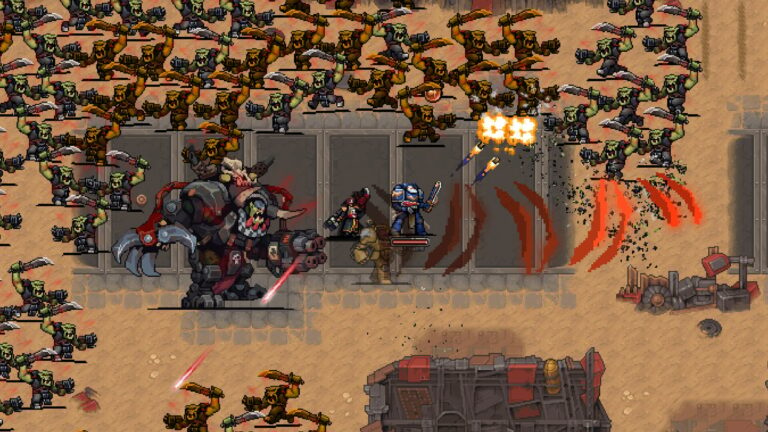
Kotaku approached Warhammer Survivors, a roguelike action game based on the formula that drives Vampire Survivors, with reasonable expectations. After observing someone else’s life absorbed by that title, the reviewer had a working understanding: select a character, fight an escalating enemy horde, obtain upgrades, repeat. The 40,000 universe setting promised thematic resonance. A game combining Warhammer’s grimdark aesthetic with the mindless loop of Vampire Survivors should align perfectly with her interests. Instead, she found the experience felt extractive, consuming time, mental energy, and focus without delivering equivalent engagement.
More Tactical Than It Appears
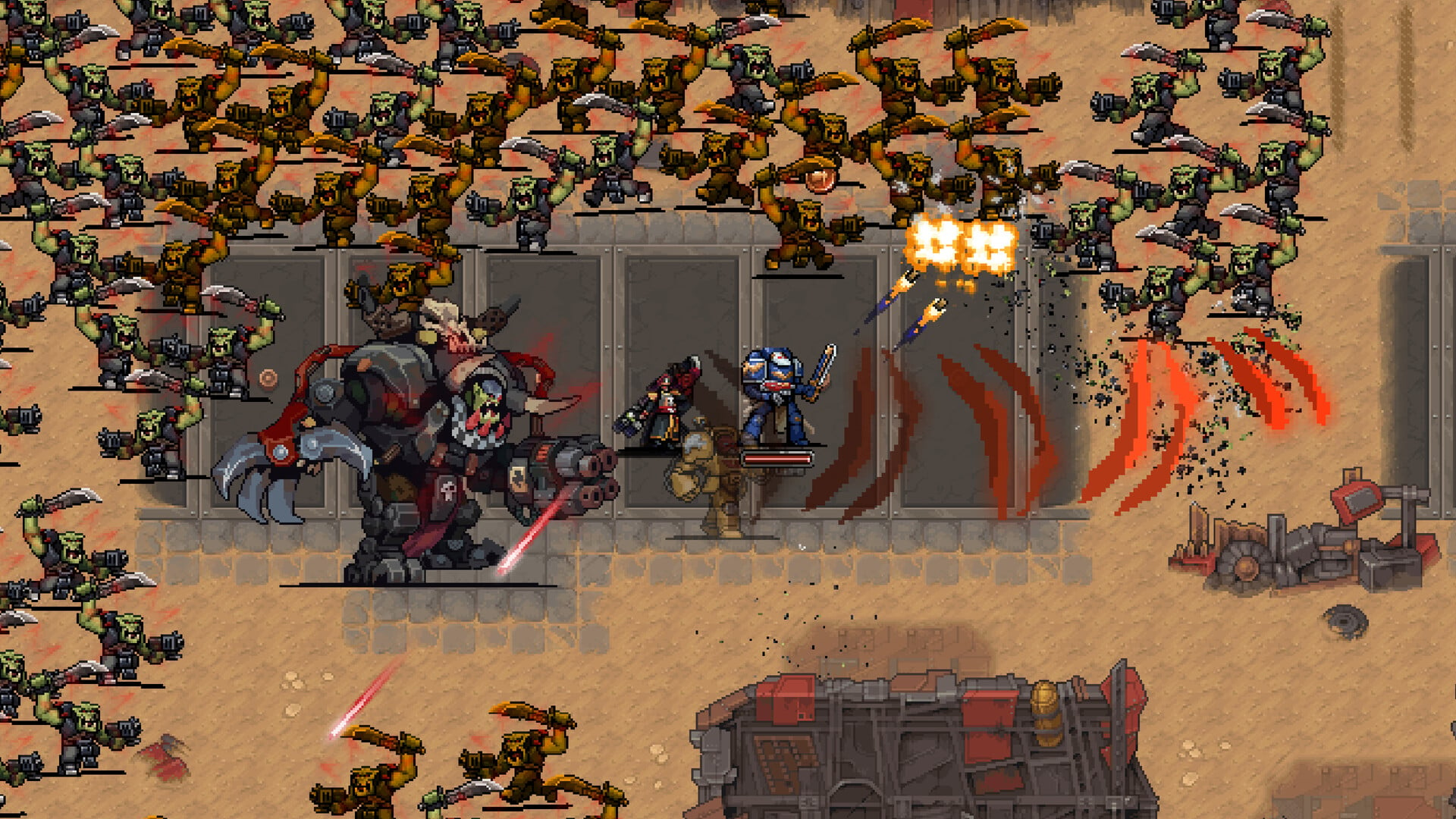
What stood out was an unexpected layer of strategy. Despite its marketing suggesting mindless action, Warhammer Survivors demands genuine decisions. The positioning of your character relative to structures shapes survival odds. Choosing when to deploy grenades or flamethrowers requires timing. Deciding which upgrades to prioritize during a run determines your power trajectory through later waves.
Item Discoveries Change Strategy
A weapon called vuln oil illustrated this depth. It randomly fires black sludge at regular intervals, and early assessment marked it as weak compared to a chainsword or bolter. The reviewer ignored it in her first runs. After a treasure chest forced the item into her loadout and several upgrades revealed its actual potential, she recognized it as essential. This kind of discovery, where apparent garbage becomes core strategy after interaction, typically marks solid roguelike design.
The Passive Focus Problem
Yet the attention demanded here differs from engaging strategy. Playing requires intense concentration, but the focus is passive. It resembles the awareness you maintain while driving: your brain is active but not genuinely problem-solving. You’re managing positions and tracking threats rather than making meaningful choices about tactics or approach. According to Kotaku, this combination leaves a particular sensation, like watching your mind atrophy in real time, consuming mental resources without exercising them.
Exploitation by Design
The game’s presentation amplifies this draining quality through deliberate psychological mechanics. When you open a treasure chest, coins spill out in a slot-machine rhythm while cheerful music plays. The design intent is transparent: these elements trigger the reward responses that keep players engaged. Understanding the mechanism intellectually does not reduce its effectiveness or its offensiveness to someone conscious of being manipulated.
The reviewer acknowledges her own susceptibility to these tactics. She intends to keep playing, pushing toward unlocking the Sister of Battle character. But the recognition that a game is deliberately designed to exploit psychological vulnerabilities for engagement—that it prioritizes retention hooks over genuine entertainment—creates friction. The experience becomes less about enjoying Warhammer and more about resisting designed compulsion.
Ultramarines, Endlessly
The roster includes options. The Age of Sigmar universe provides an alternative setting alongside Warhammer 40,000. You can eventually unlock different characters, including the Sister of Battle. But your default starting point is an Ultramarine, and the reviewer has reached her limit with that faction in video games.
Ultramarines dominate Warhammer’s gaming presence. Space Marine, Space Marine 2, both Boltgun games, and now Warhammer Survivors: the faction has become what the Yankees represent in baseball. Legendary, heavily supported, completely overwhelming other options worth attention. The comparison resonates because it captures the dynamic. Yes, Ultramarines have a legendary history and the loudest fanbase. But that dominance obscures dozens of more interesting factions across the Warhammer universe that deserve representation.
The Horus Heresy Opportunity
If Warhammer Survivors had included one additional faction option, the Horus Heresy, the entire proposition would have shifted. Imagine starting as a Salamander at Isstvan V, battling wave after wave of Death Guard, Emperor’s Children, and World Eaters. As you strengthen, progression would advance you through regular Space Marines to terminators, then to chaos-corrupted marines, then to legion officers, culminating in Horus himself. That progression carries narrative weight and faction variety the current roster lacks.
A Progression Worth Playing
The Salamander angle matters. They are the Horus Heresy’s noble underdogs, the legion of the supposedly benevolent Vulkan against the corruption of the Emperor’s favorites. Fighting across Isstvan V, a pivotal moment in the lore, with escalating enemy variety would give the game thematic depth beyond the simple loop of endless killing.
The Character Mix-Up
During play, the reviewer discovered a marine named Tor Garadon and thought she had found Tarik Torgaddon, a legendary Horus Heresy character and her personal favorite. The realization that it was a different marine entirely stung. She knows Horus Heresy has been well-served by novels, animated series, and audio dramas. But video game space for it remains scarce. A game where she could actually hunt Horus Lupercal himself would fulfill something the current title does not offer.
Not Built for This Player
The reviewer is willing to forgive much. She can accept the dark patterns and plans to play enough to unlock additional characters. She recognizes that Warhammer itself is broad enough that no single game needs to satisfy every taste or every faction preference.
But taste matters, and this game does not accommodate hers. It asks for serious mental investment while delivering minimal reward for problem-solving. It defaults to the exact faction in the exact corner of the Warhammer universe she has moved beyond. For players who love Vampire Survivors and want their roguelike action wrapped in grimdark aesthetics, Warhammer Survivors delivers. For those seeking a different angle on the IP, different faction representation, or gameplay that rewards strategic thinking over reactive attention, the game answers very little.
Source: Kotaku
Frequently Asked Questions
What is Warhammer Survivors?
A roguelike action game based on Vampire Survivors' formula, set in the Warhammer 40,000 universe with an Age of Sigmar variant, where you select a character, battle escalating enemy waves, collect upgrades, and progress through runs.
Does the game have strategic depth despite seeming mindless?
According to Kotaku, yes. Item interactions like the vuln oil weapon, upgrade prioritization, and positioning around structures require genuine decision-making, though the focus is passive rather than problem-solving.
What were the reviewer's main criticisms?
She objected to the heavy Ultramarine focus, which dominates Warhammer games across Space Marine, Space Marine 2, both Boltgun titles, and now this one. She also lamented the absence of Horus Heresy content as a faction option, particularly a Salamander campaign set at Isstvan V.
