
Key takeaways
- Every strange minor character from the original Ocarina of Time made it into the Nintendo Switch 2 remake, according to Kotaku's assessment, though many lost the unsettling polygon-era qualities that made them distinctive.
- Several redesigns improved upon the originals, particularly one that enhanced menacing qualities and another that deliberately pushed its weirdness further rather than smoothing it for broader appeal.
- Nintendo's redesign approach reveals tension between preserving the accidental uncanniness of the original's technology and the intentional design choices available on modern hardware.
When Nintendo announced a full remake of The Legend of Zelda: Ocarina of Time for Nintendo Switch 2 in June, the focus naturally fell on technical transformation. How would the N64 classic translate to new hardware? What would happen to the dungeons, the mechanics, the scale of Hyrule itself? According to Kotaku’s analysis, one approach stood apart from the typical remake coverage: examining what happened to the game’s collection of deliberately bizarre minor characters, the NPCs scattered throughout the world who existed at the margins of the plot but left outsized impressions on players who encountered them.
The verdict was encouraging on one front and deflating on another. According to Kotaku’s character-by-character assessment, every single one of these peculiar figures survived the transition to the remake. Many of their appearances, however, registered as visual downgrades from the original. A select few actually improved in the jump to the Switch 2, benefiting from more deliberate design choices and clearer technology.
Lost in Translation
The Downside of Polishing the Weird
Several bizarre characters took a hit during the visual refresh. One creature defined by unsettling polygonal geometry in the original lost much of its menace when rendered with modern clarity. In still screenshots the character now resembled a dorky Halloween costume, Kotaku noted, though in motion it retained enough uncanny energy to avoid becoming entirely inoffensive. The balance between those conflicting visual energies created what Kotaku termed “a Weird Dude.”
The Poe collectors endured what Kotaku called “a massive, massive downgrade.” Where the original design possessed an aggressively uncomfortable polygonal quality, the remake softened it considerably. More significantly, the character’s dialogue changed direction. In the original, the character repeatedly insisted that everyone encountered was “disgusting,” a word choice that apparently created uncomfortable comedy through its bluntness. The remake replaced this with more generic antisocial whining, a shift that according to Kotaku’s assessment lost something essential to what made the character function.
Subtle Losses
Cojiro the chicken experienced a more nuanced visual shift. The original featured distinctly beady eyes resembling the art style of games like Stardew Valley, giving the character unexpected charm despite its animal form. The remake redesigned those eyes away from that quality, prioritizing a different interpretation. According to Kotaku, the character remained effective as a Weird Little Guy, though the loss of that specific eye design registered as a step backward in what made the character visually distinctive.
Standout Improvements
Horror Enhanced and Menace Amplified
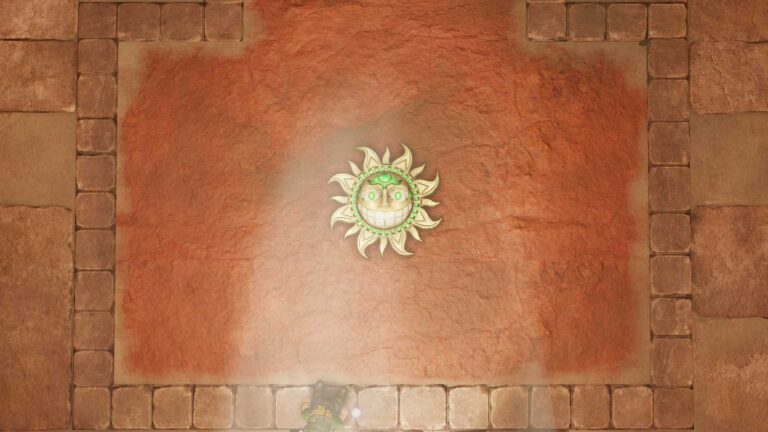
The wall-mounted face that speaks cryptic dialogue received significant praise from Kotaku for its redesign. The new version reads as genuinely menacing in a way that served the game’s darker atmospheric moments. The redesign also clarified an element of ambiguity: where the original left uncertain whether the statue itself spoke or merely delivered a message from the plaque below, the remake made clear the dialogue originated from the floor plaque itself. While some might argue this demystified the moment, Kotaku felt the menacing quality compensated for any loss of ambiguity.
One character redesign stood apart as exceptional. According to Kotaku, what already existed as a weird element was pushed deliberately further into horror territory. Kotaku called it “the best one, bar none,” describing an approach that took something already unsettling and amplified its freakish qualities rather than smoothing them toward mass appeal.
Visual Refinement That Worked
The eyeball frog received a redesign Kotaku judged as an improvement, primarily because the new version’s rounder proportions created a more visually appealing form than the original’s design offered. This case of optimization through new technology delivered better results than the source material.
Characters That Endured Unchanged
Some characters required no redesign to remain effective. Biggoron, standing as the oversized representative of his race, maintained its appeal without significant alteration. According to Kotaku, the character remained exactly what it always was: “the biggest little guy of them all,” a testament to designs that transcend hardware generations.
A female character deemed “perfect as she was in the original” required no changes at all. Kotaku expressed complete satisfaction with the character’s translation, offering “no notes” on the redesign.
A man wearing an elaborate outfit generated speculation about whether the outfit signaled news regarding Majora’s Mask, the original’s sequel. Kotaku suggested a simpler interpretation: the character simply dressed up for the occasion, with no particular significance to read into the stylistic choice.
Unexpected Discoveries
Mario’s appearance in the original made it into the remake, which relieved some fans who worried Nintendo might remove the cameo to avoid confusing new players encountering the crossover element for the first time. Kotaku confirmed the character’s presence, noting appreciation for keeping the detail intact.
A character named Pierre emerged as a delightful redesign, described as “cute as buttons” while maintaining its status as an unusual figure. The character says “Howdy” when engaged, delivering a small moment of personality that according to Kotaku worked well in the remake’s favor.
Rauru appeared in the remake unchanged, confirming the character’s continued role despite the comprehensive redesign cycle affecting other NPCs.
One character overlooked from Kotaku’s original assessment made the cut upon reflection, with dialogue suggesting deliberate weirdness beneath the surface. The character functions as a little troublemaker and snot, according to the assessment, despite bearing responsibility for crucial plot moments.
Philosophical Questions and Design Choices
Ganondorf received surprising consideration from Kotaku, not for any change to the character but for a philosophical question the original’s design raises. If Ganondorf possessed access to an organ during his seven-year occupation of Hyrule Castle, what choices did he make with that time? Did he spend years mastering organ performance instead of consolidating power across the remaining regions of Hyrule? Or was he always an organ virtuoso who had the instrument built as a deliberate display of dominance when Link arrived to challenge him? The redesign did not change these questions fundamentally, but it highlighted the oddness embedded in the original’s foundation.
Two undead characters maintained their peculiar status, their enduring quality suggesting certain character designs possess a durability that transcends technological eras.
One character had been demoted from the Weird Little Guy roster entirely by Kotaku’s reevaluation, having transformed into “just an owl” once the redesign became apparent.
What the Redesigns Reveal
The pattern across these character transformations suggests Nintendo approached the remake with considerable restraint regarding the game’s odder elements. Where the original benefited from N64-era polygon limitations that accidentally created unsettling effects, new hardware meant deliberate artistic choices rather than technical accidents. Some redesigns prioritized clarity and polish over the uncanny valley effects that the original’s technological limitations created unintentionally. The standouts, particularly the character whose redesign pushed horror further, recognized that doubling down on the weird rather than smoothing it toward mass appeal created more effective results.
According to Kotaku’s overall assessment, the remake respected its source material’s roster of bizarre characters while not always understanding exactly what made each one effective in its original form. Some losses came from polishing away the unintentional weirdness that gave the originals their distinctive appeal. But several standout redesigns proved that with deliberate intent toward weirdness rather than away from it, the remake could push certain characters further than their predecessors ever went.
Source: Kotaku
Frequently Asked Questions
Did all the strange characters from Ocarina of Time make it into the Nintendo Switch 2 remake?
Yes, according to Kotaku's assessment, every single unusual minor character from the original made it into the remake in some capacity, though the quality and effectiveness of individual redesigns varied significantly.
Which characters improved the most in the remake?
According to Kotaku, the wall-mounted face received a particularly effective menacing upgrade, and one character's redesign stood out as exceptional by deliberately amplifying its already unsettling design into horror territory rather than softening it.
Were there changes to characters' dialogue in the remake?
Yes, some characters had their dialogue altered. For example, the Poe collectors lost their repeated insistence that everyone encountered was "disgusting," which Kotaku felt was a loss from the original character's impact.
