
Key takeaways
- The Undertale Determination Symphony concert in Kansas City delivered well-arranged orchestral renderings but featured puzzling gaps in its setlist, excluding major thematic pieces while including novelty tracks.
- Hotland's primary theme 'Another Medium' and the basic battle theme—foundational to Undertale's gameplay identity—were notably absent despite their clear symphonic presentation potential.
- Programming constraints explain some omissions but not others; shorter tracks like a 32-second piece made the cut while longer thematically significant pieces did not, suggesting curator preferences rather than purely time-based decisions.
- A restructured program could have addressed narrative coherence by positioning 'Another Medium' as encore material alongside 'Megalovania' rather than replacing it entirely with lighter pieces.
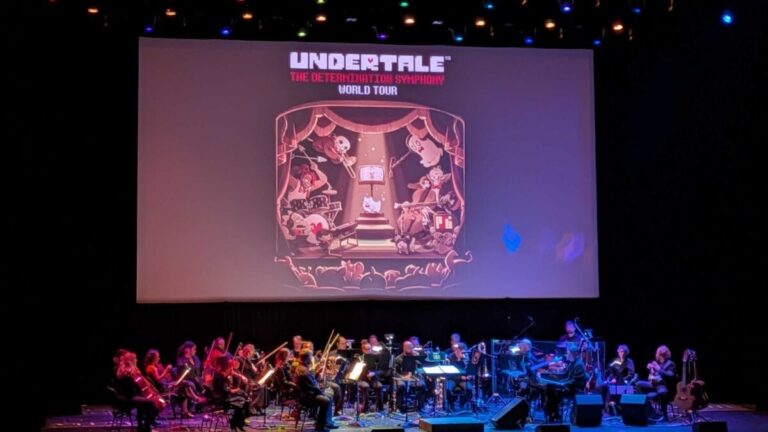
The Undertale Determination Symphony concert brought together passionate fans and strong orchestral arrangements at Kansas City’s Kauffman Center, creating an energetic evening despite some bewildering gaps in its track selection. Attendees showed up in impressive cosplay, maintained respectful enthusiasm throughout, and witnessed a conductor visibly delighted by pieces like “Megalovania”—someone apparently discovering the game’s music for the first time. The musicians performed well, though rehearsal time constraints showed at moments. Beneath the successful atmosphere, however, lay a fundamental question worth examining: why were so many standout pieces excluded from this symphony’s hour and a half runtime?
The Concert’s Structure and Initial Promise
The Undertale Determination Symphony opened with clear intent, moving through the game’s chronological arc. Tracks including “Once Upon a Time,” “Your Best Friend,” “Fallen Down,” “Ruins,” “Home,” “Heartache,” “sans,” and “Snowy” appeared in the order players encounter them during the game’s early moments. This early section demonstrated an understanding of narrative flow that suggested the entire evening would mirror the player’s journey through Undertale’s world.
The coherent approach dissolved quickly after the opening act. The concert jumped directly past Papyrus-related music into “Snowdin Town” and “Waterfall,” then inexplicably featured “Temmie Village” and “Spooktune”—two pieces that, regardless of their charm within the game, felt peculiarly suited to symphonic presentation. “Bird That Carries You Over A Disproportionately Small Gap” received a fantastic rendering, followed by “Dummy!,” but the logic governing inclusion remained opaque. The first act concluded with “ASGORE,” which, while serving as a powerful finale, required skipping entire sections of the game’s most pivotal areas. Act 2 repeated this pattern of backtracking and leaping, finally ending—appropriately—on “Megalovania.”
Understanding the Constraints
The Three-Hour Problem
Symphony concerts cannot simply recreate an entire game’s soundtrack in performance. Undertale contains dozens of tracks, many lengthy pieces that require proper development and execution. A complete rendition would stretch three hours or beyond, making it impractical for both performers and audiences. This reality means programmers face genuine constraints when deciding what to include.
The Finale Dilemma
Traditional concert structure demands satisfying climaxes between acts. Undertale’s soundtrack, composed primarily for a non-linear RPG experience, contains no natural “Act 1” conclusion that feels appropriately climactic without awkward narrative gaps. Programming “ASGORE” as the first act’s finale makes musical sense—it carries sufficient weight and emotional significance. However, this choice necessitated omitting everything from the Core section, an entire region’s worth of material.
The Notably Absent Tracks
Extended Map Themes and Atmospheric Pieces
“Another Medium,” Hotland’s primary theme, stood out as a glaring omission. This piece ranks among the soundtrack’s most substantial compositions and represents an entire game region. A symphonic orchestra could have rendered its distinctive qualities powerfully, yet the program skipped it entirely despite including lighter, shorter, or less thematically crucial pieces. The decision becomes more puzzling when considering that Hotland comprises a major portion of the game’s progression, making its musical identity essential to capturing Undertale’s scope.
Similarly absent was a haunting map theme that could have paired effectively with “Amalgam” for genuinely unsettling orchestral moments. These atmospheric pieces—foundational to player experience—were sacrificed despite their relatively straightforward orchestration needs.
Transitional and Structural Music
A 32-second track could have slotted seamlessly between “Bird That Carries You Over A Disproportionately Small Gap” and “Dummy!” without extending runtime substantially. The fact that shorter pieces were included elsewhere in the program suggests this track’s absence stemmed from programmers’ choices rather than time constraints. Additionally, menu theme progression—a piece that could have opened Act 2 with gradual orchestral buildup, adding instruments layer by layer until the full ensemble delivered the complete theme—would have created a sophisticated structural moment. Instead, the concert jumped directly into existing selections without this transition device.
The Long Undeniable Omissions
“Hopes and Dreams” paired with “SAVE the World” would have benefited from “His Theme,” “Reunited,” “Bring It In, Guys!,” and “Last Goodbye” as a unified sequence closing Act 2. While these pieces would extend runtime, removing them for “Temmie Village” and “Spooktune” represents a curious value judgment. The former set carries genuine emotional and narrative weight; the latter two exist more as novelty moments within the game.
Two credits themes, including a final piano melody originally performed live by Toby Fox for the game version, never appeared. Programmers presumably avoided them due to uncertainty about visual accompaniment, lacking desire to display the game’s credits or Kickstarter backer list. This reasoning explains the omission but doesn’t eliminate the loss—these pieces represent closure and reflection that orchestral presentation could have deepened considerably.
The Inexplicable Core Omission
The Undertale soundtrack’s normal battle theme—the fundamental encounter music players trigger in nearly every combat situation—did not appear at the concert. This basic framework of the game’s combat identity was completely absent, making the omission genuinely difficult to rationalize. It represents not an optional flavor piece but a foundational element of Undertale’s moment-to-moment gameplay audio landscape.
Context and Trade-offs
Several other absent tracks failed to make the cut despite legitimate artistic merit. A Hard Mode battle theme, composed specifically for the brief handful of Ruins encounters in that difficulty tier, remains minor enough to justify exclusion. A key-changed piano version of “Ruins” could have segued gracefully into finale material but competed with more essential pieces for programming space.
A jazzy remix sharing the main Undertale theme’s melody appears relatively expendable given its thematic redundancy, though its arrangement possesses charm warranting consideration in longer programs.
Reconsidering the Programming Approach
The Undertale Determination Symphony accomplished much with its orchestral arrangements and audience engagement. However, the selection process favored novelty moments and comedic pieces over thematic completeness. Including “Temmie Village” and “Spooktune” while excluding “Another Medium”—which represents an entire game region’s identity—suggests programmers weighted audience reaction to memorable novelties above narrative coherence and comprehensive regional representation.
A restructured program could have ended Act 2 with “Hopes and Dreams” flowing into “SAVE the World,” “His Theme,” and associated tracks, then offered “Another Medium” and “Megalovania” as encore material. This would have honored Undyne’s characterization through her primary theme while maintaining concert pacing and providing a satisfying resolution that emphasized the game’s most significant musical moments.
The concert’s overall experience remained positive, the orchestra performed admirably, and attendees clearly enjoyed themselves. Yet the setlist’s logic raises questions about how video game music selections get prioritized in symphonic contexts—whether popularity and novelty value supersede thematic importance and narrative completeness, and whether future game music concerts might benefit from more disciplined curation that balances accessibility with comprehensive artistic representation.
Frequently Asked Questions
Where was the Undertale Determination Symphony concert held?
The concert took place at Kauffman Center in Kansas City.
Which track opened the concert's first act?
The concert began with 'Once Upon a Time' and proceeded chronologically through early game music including 'Your Best Friend,' 'Fallen Down,' 'Ruins,' 'Home,' 'Heartache,' 'sans,' and 'Snowy' before departing from this structure.
What was the concert's closing track?
The symphony ended on 'Megalovania,' with the conductor demonstrating visible enthusiasm for the piece despite apparently having no prior familiarity with Undertale.
