
Key takeaways
- Paddle Paddle Paddle’s refund crisis stems directly from its design: the game is crafted to be completed in less than two hours, which places it squarely within Steam’s automatic refund window.
- Valve introduced its refund policy to address legitimate consumer concerns about shovelware and disappointing purchases, allowing players to try games risk-free within a two-week window.
- While Zoroarts framed the 55,000 refunds as evidence of the policy’s flaws, the gaming community has raised counterarguments about the game’s reception and quality.
- Steam Support maintains a manual review process for refund requests that fall outside the standard policy, allowing players who exceed the two-hour threshold to appeal for refunds on a case-by-case basis.
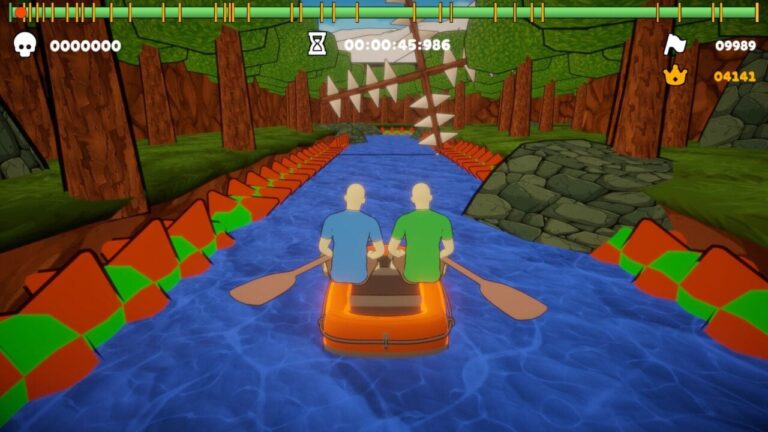
Solo developer Zoroarts claims that 55,000 players refunded Paddle Paddle Paddle on Steam after completing the game in under two hours, exploiting Valve’s consumer-friendly refund policy that allows returns within 14 days and under two hours of playtime. The case has reignited debate about whether Steam’s refund system, designed to protect consumers from poor purchases, inadvertently punishes developers who create short, focused gaming experiences. Zoroarts has publicly called on Valve to reconsider the policy, arguing that games designed to be completed quickly face structural vulnerability to mass refunds.
A Developer’s Financial Crisis Triggered by Player Completion Speed
Paddle Paddle Paddle’s refund crisis stems directly from its design: the game is crafted to be completed in less than two hours, which places it squarely within Steam’s automatic refund window. Any player who finishes the game and requests a refund within 14 days of purchase qualifies automatically under Valve’s policy, which explicitly states that refunds apply to games “with less than two hours of playtime” for “any reason.” This structural mismatch between game length and refund eligibility has created a financial catastrophe for Zoroarts.
The developer’s frustration reflects the emotional toll of watching 55,000 copies sold and then immediately returned without compensation. Zoroarts described the situation as deeply troubling, emphasizing that players are able to experience the complete game and then request their money back while staying within policy guidelines. The scale of the refunds suggests that a significant portion of Paddle Paddle Paddle’s player base used the refund system as intended by Valve’s policy, but in a way that devastates developers of short games.
Steam’s Refund Policy: Consumer Protection or Developer Liability?
Valve introduced its refund policy to address legitimate consumer concerns about shovelware and disappointing purchases, allowing players to try games risk-free within a two-week window. The policy states clearly: “You can request a refund for nearly any purchase on Steam—for any reason.” This generous approach has protected millions of players from bad purchases, but it creates an unintended consequence for games that succeed by being concise rather than lengthy.
The policy was never designed with short indie games in mind. Valve’s two-hour threshold works reasonably well for most games, where two hours represents a small fraction of total content and players cannot meaningfully complete the experience. However, for games explicitly designed to deliver their full narrative or gameplay loop in under 120 minutes, the policy becomes a refund mechanism rather than a consumer protection tool. Zoroarts’ situation represents the collision between consumer-friendly platform policy and the economic realities facing indie developers who work in shorter formats.
Industry Pattern: Short Games Face Systemic Disadvantage
Paddle Paddle Paddle is not an isolated incident. In 2021, developer Emika Games faced a similar crisis with their short horror title Summer of ’58, which generated such a high volume of refunds due to its sub-two-hour length that the lone developer decided to leave game development “for an indefinite time.” This historical precedent demonstrates that the refund policy has already driven developers out of the industry, and Zoroarts’ situation suggests the pattern continues.
Beyond the refund policy itself, industry analysis reveals that Steam’s algorithm actively disadvantages short games with limited pre-launch marketing periods. The platform’s discovery algorithm favors games with high sales volume and extended playtimes, restricting features like Steam Trading Cards and Daily Deals for games that don’t meet specific thresholds. This creates a market ecosystem where developers face pressure to artificially extend game length not just to avoid refunds, but to gain algorithmic visibility and marketing support.
Workarounds and Artistic Compromise
Facing the refund crisis, some developers have proposed adding artificial time extenders to their games—strategies like implementing a two-hour timer on the main menu or bundling bonus mini-games that take 30 minutes to complete before players access the main content. These workarounds aim to push players past the two-hour refund threshold while technically delivering the same core experience, though often padded with filler content.
The suggestion highlights a troubling trade-off between artistic integrity and financial survival. Developers argue they should be able to create quality short games without adding “garbage” padding, yet the refund policy effectively forces them to choose between financial viability and creative vision. This dynamic shifts the incentive structure away from concise, focused game design toward artificially elongated experiences.
Community Questions Game Quality Alongside Policy Critique
While Zoroarts framed the 55,000 refunds as evidence of the policy’s flaws, the gaming community has raised counterarguments about the game’s reception and quality. Reddit users debated whether the high refund count truly reflects players “Speedrunning” the game or instead indicates that players found the game unsatisfying and chose to return it. One user stated that complaints about the game itself, rather than refund policy mechanics, may better explain the mass returns.
This community debate adds nuance to the narrative: the refund policy may amplify problems with games that fail to engage players, rather than solely victimizing well-made short games. The distinction matters for understanding whether Paddle Paddle Paddle’s refund crisis is primarily a policy problem or a quality problem—or some combination of both.
The Manual Review Option Rarely Provides Relief
Steam Support maintains a manual review process for refund requests that fall outside the standard policy, allowing players who exceed the two-hour threshold to appeal for refunds on a case-by-case basis. However, this safety valve provides little protection for short games, since players completing them quickly trigger automatic approvals rather than manual review. The overwhelming majority of Paddle Paddle Paddle refunds likely processed automatically, bypassing any human judgment about whether the refunds were justified.
This distinction reveals a critical gap in Valve’s system: the two-hour threshold creates a bright-line rule that eliminates discretion precisely in cases where short games are most vulnerable. While Valve designed the manual review process to handle edge cases, it cannot address the structural problem that short games inherently fall within the automatic refund window.
What Comes Next for Short Games on Steam
Zoroarts’ public call for policy change has drawn attention from industry observers and players alike, but Valve has not indicated plans to modify the two-hour threshold or create exceptions for games under specific lengths. The question now is whether other developers will follow Emika Games’ path and exit the platform, or whether they will adopt artificial time-extension strategies to protect their work financially.
The Paddle Paddle Paddle case will likely influence how indie developers approach game length and design on Steam going forward. If the pattern holds, expect to see more short games padded with extended content, fewer genuinely concise gaming experiences published on the platform, and continued pressure on solo developers who work in shorter formats. The refund policy’s long-term effect may be to systematically eliminate short games from Steam’s ecosystem, regardless of their quality or artistic merit.
