
Key takeaways
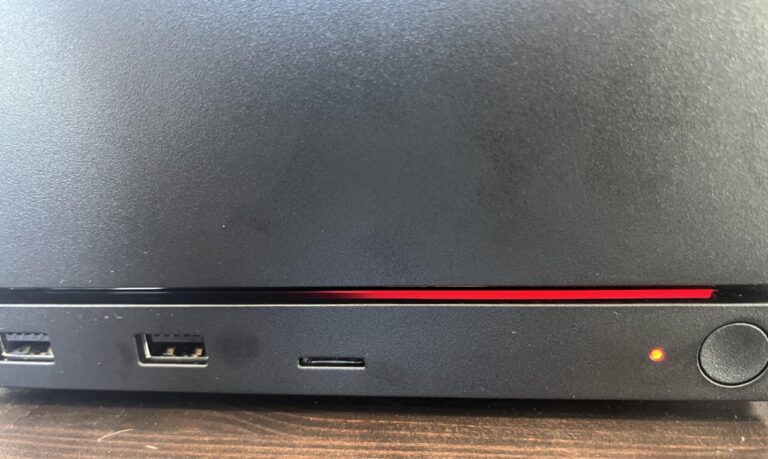
- The affected user experienced the system crash after only 5 minutes of actual gameplay, with the device refusing to boot and displaying a distinctive red LED pattern on the middle-to-right section of the front light bar.
- The Steam Machine’s premium pricing structure makes hardware failures especially damaging to brand perception.
- The Steam Machine features a semi-custom AMD chip paired with 16 GB of RAM and 8 GB of dedicated VRAM, designed to deliver 1080p gaming at 60 frames per second or higher without requiring manual graphics adjustments.
- The Steam Machine’s limited availability and elevated pricing stem directly from global supply chain disruptions affecting memory and storage components.
A Steam Machine owner has reported the first confirmed case of a “Red Line of Death” (RLOD)—a catastrophic GPU failure that rendered the $1,049 console completely non-functional after just 20 minutes of use. The incident, which occurred while playing No Man’s Sky following a firmware update, displays a red LED line on the device’s front light bar and represents the kind of launch-window hardware nightmare that can derail consumer confidence in new platforms.
GPU Failure Strikes Hours After Unboxing
The affected user experienced the system crash after only 5 minutes of actual gameplay, with the device refusing to boot and displaying a distinctive red LED pattern on the middle-to-right section of the front light bar. Valve’s support documentation confirms that this specific LED indicator signals a GPU hardware failure, a critical component failure that leaves the console completely unusable with no display output whatsoever.
The timing of the failure is particularly troubling: the crash occurred immediately following installation of the latest firmware update, suggesting a potential software-hardware interaction that warrants urgent investigation. Because the GPU is soldered directly into the motherboard rather than user-replaceable, the affected device must be returned to Valve for repair or replacement under warranty, a process that raises immediate reliability concerns for early adopters of the new console-PC hybrid.
The Price Problem Amplifies Consumer Risk
The Steam Machine’s premium pricing structure makes hardware failures especially damaging to brand perception. The base-level 512 GB model retails for $1,049 without a controller, while the version bundled with the Steam Controller costs $1,128—prices that Valve explicitly stated it is not subsidizing due to rising DDR5 memory and storage costs, which the company refers to as the “RAMpocalypse.”
The higher-capacity 2 TB models push the price even further, reaching $1,349 without a controller or $1,428 with one included. Industry analysts have noted that these odd price points—$1,049 rather than a round $999—create a psychological barrier for consumers already hesitant about investing in a new gaming platform, and a hardware failure at this price point during the launch window carries significantly greater reputational risk than similar issues on more affordably priced devices.
Hardware Specifications Meet Real-World Performance Questions
The Steam Machine features a semi-custom AMD chip paired with 16 GB of RAM and 8 GB of dedicated VRAM, designed to deliver 1080p gaming at 60 frames per second or higher without requiring manual graphics adjustments. Valve positioned the hardware as equal to or superior to approximately 70 percent of existing gaming hardware based on Steam’s hardware survey data.
However, independent testing reveals significant performance limitations at higher resolutions. While 1080p performance is described as fantastic, native 4K gaming remains playable only with lighter titles, and 1440p gaming with high texture settings produces rough, inconsistent frame rates. These performance parameters make the premium pricing particularly contentious, especially when hardware failures emerge within hours of purchase.
Historical Echoes of the Xbox 360 Disaster
The “Red Line of Death” invokes immediate memories of the Xbox 360’s infamous “Red Ring of Death” (RROD), the notorious hardware failure that plagued Microsoft’s console during its 2005 launch and damaged the brand’s reputation for years. While the Xbox 360 displayed a full red ring of LEDs, the Steam Machine displays a red line pattern, but the psychological impact on consumers is identical: a high-profile hardware failure during the critical launch window that threatens the platform’s credibility.
The 2015 Steam Machine launch, Valve’s previous attempt to enter the living room console market, failed partly due to software compatibility issues rather than hardware problems. At launch, only 21.5 percent of Steam’s catalog was compatible with SteamOS, with support limited primarily to indie titles and single-player AAA games, ultimately leading to the product’s discontinuation by mid-April 2019.
Supply Constraints and Component Shortages Compound the Challenge
The Steam Machine’s limited availability and elevated pricing stem directly from global supply chain disruptions affecting memory and storage components. Rising DDR5 memory costs and storage shortages prevent Valve from securing sufficient parts for mass production, mirroring the supply constraints that plagued the Steam Deck OLED launch, where certain regions experienced intermittent stock-outs.
Industry observers note that these supply limitations may prevent Valve from meeting demand even if the hardware proves reliable, creating a situation where the company cannot capitalize on early momentum or address customer concerns through rapid replacement programs. The combination of high prices, limited stock, and emerging hardware failures creates a perfect storm of negative conditions during the platform’s most critical market window.
What Happens Next for Valve and Early Adopters
Valve’s engineering team faces immediate pressure to determine whether the RLOD represents an isolated defect or a systemic design flaw affecting broader production batches. The firmware update that preceded the failure suggests the possibility of a software-hardware interaction issue, though Valve has not yet issued official statements addressing the root cause or whether additional units face similar risks.
Early adopters and industry analysts are monitoring whether additional RLOD reports surface in coming weeks, as such reports could trigger wider warranty claim waves and force Valve into expensive recall or replacement operations. The Steam Machine’s success or failure as a platform may ultimately depend on how swiftly and transparently Valve addresses this hardware crisis and whether the company can restore consumer confidence in the device’s reliability and long-term viability.
