
Key takeaways
- Rockstar used Red Dead Redemption 2 assets and locations to create the Chacey's fast-food commercial in GTA 6's gameplay reveal, a discovery confirmed by Reddit users who pinpointed the exact in-game location.
- The studio has been embedding references between its games since GTA IV in 2008, with GTA V featuring Red Dead Redemption footage in a black-and-white arthouse parody film.
- This technique reduces production costs by repurposing finished games as filming locations while the new game remains in development, while simultaneously creating Easter eggs for engaged fans.
- GTA 6 launches in November on PlayStation 5 and Xbox Series X/S, likely continuing the pattern of cross-game references throughout its television programming.
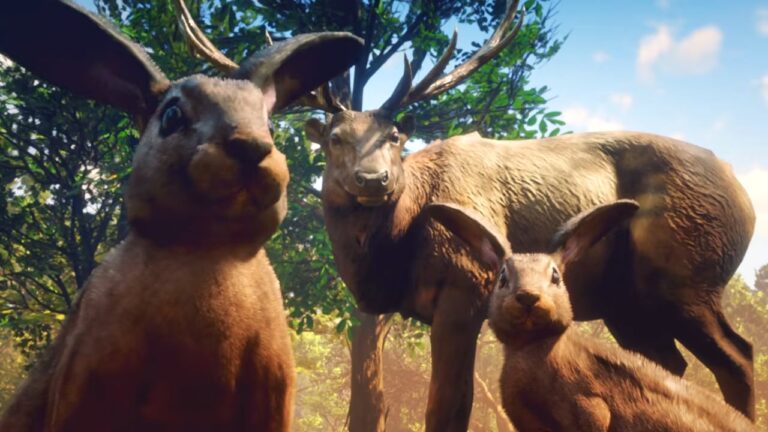
After years of speculation and leaked footage, Rockstar Games delivered its first official gameplay reveal of Grand Theft Auto 6 on Thursday, a nearly 30-minute video that offered an extended look at the next chapter in the open-world series. Among the scenes was a commercial break featuring Chacey’s, a fictional fast-food chain parodying Arby’s, advertising a comically oversized sandwich constructed from multiple animal meats—deer, warthogs, and rabbits. What appeared to be a throwaway gag, however, concealed something more revealing about Rockstar’s development process.
The Chacey’s Commercial and Its Hidden Origins
During the nearly 30-minute reveal, the commercial for the fictional restaurant aired like any other piece of in-game television satire typical of the Grand Theft Auto franchise. The scene showcased the massive sandwich with various animal components in a style consistent with Rockstar’s approach to parody advertising. Players familiar with Red Dead Redemption 2, however, began noticing details that seemed far too specific to be coincidental. The animal models, fur textures, and environmental details matched assets from the cowboy simulator.
Reddit Users Connect the Dots
Community investigation quickly confirmed what some players suspected. A Reddit user in the Red Dead Redemption subreddit located the exact in-game area where Rockstar captured the footage for the Chacey’s spot. The warthogs, deer, and vegetation all corresponded to a specific location within Red Dead Redemption 2’s open world, meaning Rockstar had literally filmed the commercial inside the finished game rather than creating new assets from scratch.
A Practical Approach to Production
This method offers straightforward advantages for a studio managing multiple projects simultaneously. Rather than modeling, rigging, and animating separate wildlife specifically for a 30-second advertisement, Rockstar leveraged assets already completed and tested in a released game. The animals were fully animated, the terrain was textured, and the lighting systems were already in place. Rockstar could generate supplementary content without allocating development resources away from Grand Theft Auto 6’s ongoing optimization. The approach also created a natural opportunity to embed references and connections between different properties in Rockstar’s portfolio—a way to reward players aware of the studio’s complete catalog.
A Technique Established Since GTA IV
This is not the first time Rockstar has recycled existing games to populate television content in newer titles. The studio has employed this strategy consistently since 2008, when Grand Theft Auto IV shipped with functional television programming accessible throughout the game world. Attentive players spotted imagery from GTA San Andreas woven into that content, including shots of the fictional city Las Venturas captured during a televised poker tournament. The same game also featured Bullworth Academy, the setting from Rockstar’s Bully, embedded within advertisements or programming accessible through in-game televisions.
Grand Theft Auto V Expanded the Cross-Reference Strategy
The pattern deepened with Grand Theft Auto V. One cinema sequence featured a movie designed to parody arthouse and independent filmmaking, rendered entirely in black and white. Rockstar integrated recorded footage from Red Dead Redemption’s open world directly into that film. The sequence also included a visual Easter egg referencing the Statue of Happiness, a hidden structure from GTA IV. By stacking references across three separate games across multiple console generations, Rockstar demonstrated a deliberate long-term strategy of weaving its library of worlds into each new entry.
The Strategic Value of Internal Cross-Promotion
Each Rockstar open-world game requires enormous investment in environmental art, character rigging, and animation systems. These assets represent years of specialized labor. Repurposing that work for television content or movie sequences transforms sunk costs into ongoing creative resources. Additionally, the practice supports two categories of player engagement: casual viewers who enjoy the advertisements on their surface level, and dedicated fans who invest time hunting for references and connections as a form of extended interaction with the universe.
The Mechanics Behind Rockstar’s Technique
The cost-efficiency extends beyond simple asset reuse. Because a game like Red Dead Redemption 2 reaches completion and ships before Grand Theft Auto 6 launches, Rockstar’s production teams can access it as a filming location while the main game undergoes final optimization and polish. Television and commercial content can be produced without competing for developer attention on the primary project’s critical path. This allows Rockstar to generate hours of supplementary media using existing infrastructure.
Development Timelines and Concurrent Production
A finished game becomes a stable, unchanging environment suitable for filming and recording. Developers can set specific camera angles, modify weather or time-of-day conditions, and capture multiple takes without affecting the main game’s development pipeline. The workflow resembles traditional film production more than game development—location scouting, shot composition, and multiple takes all become possible within an already-completed game engine.
Building Worlds as Creative Infrastructure
This approach treats Rockstar’s back catalog not merely as finished products to be shelved, but as ongoing creative resources. Rather than discarding these worlds after launch, Rockstar views them as persistent archives that can feed into new projects. The same technology that populated San Andreas or the Red Dead frontier can become scenery for future television programming, indefinitely extending the productive life of development assets.
What to Expect from GTA 6’s Television Content
Grand Theft Auto 6 launches in November on PlayStation 5 and Xbox Series X/S. Given this established pattern spanning GTA IV, GTA V, and now GTA 6, multiple Rockstar properties could plausibly appear throughout its television programming. The in-game television systems in Grand Theft Auto titles remain unusual among video games—players sit and watch fictional shows and advertisements as a form of leisure rather than cutscenes advancing a plot. This creates an ideal space for Rockstar to showcase other worlds and franchises.
Likely Candidates for Hidden Appearances
Grand Theft Auto V’s city of Los Santos remains a probable source given its continued popularity and relatively recent development. Red Dead Redemption’s Undead Nightmare DLC, which introduced zombie content to the Western setting, offers thematic possibilities for horror-adjacent advertisements. Both properties align with the kind of satirical commercial breaks GTA 6’s television likely features.
The Television System as Storytelling Framework
In-game television distinguishes the Grand Theft Auto franchise from other open-world games. Rather than treating screens as mere decoration, Rockstar invests in creating actual programming worthy of extended viewing. This framework transforms television breaks into storytelling opportunities—each advertisement or film could subtly reinforce connections across the Rockstar universe. Players who pay attention during idle moments in the game world may find themselves playing a retrospective of everything Rockstar has built over multiple console generations.
Frequently Asked Questions
How did Rockstar use Red Dead Redemption 2 to create the GTA 6 commercial?
Rockstar filmed the Chacey's burger advertisement entirely within Red Dead Redemption 2's open world, using the game's already-completed animal models, terrain, and environments rather than creating new assets specifically for the commercial.
Has Rockstar used this technique before?
Yes. Since GTA IV in 2008, Rockstar has embedded references to other games in its television content. GTA IV featured GTA San Andreas imagery, and GTA V included footage from Red Dead Redemption in an in-game black-and-white film.
When does Grand Theft Auto 6 release?
Grand Theft Auto 6 launches in November on PlayStation 5 and Xbox Series X/S.
