

Key takeaways
- Resident Evil achieves 96 on Rotten Tomatoes by translating game mechanics like puzzles and progression into cinema rather than recreating story moments from the franchise.
- Austin Abrams anchors the film across its runtime, playing medical courier Bryan navigating puzzles and creatures in Raccoon City Hospital.
- The first half succeeds at converting game navigation into effective horror, while the second act's scope and expanding comedy test the approach's coherence.
Critical reception for director Zach Cregger’s Resident Evil has arrived ahead of the September 18 theatrical release, and the response has been overwhelmingly favorable. The film currently holds a 96 score on Rotten Tomatoes, with critics across major outlets converging on the view that Cregger has crafted an adaptation capturing the essence of Capcom’s franchise while avoiding the trap of slavish fidelity to source material minutiae.
Understanding the Adaptation Approach
The consensus centers on a fundamental insight: rather than reconstructing specific game moments or plot threads, Cregger has instead absorbed the tone and mechanics that define what it feels like to play a Resident Evil title. David Ehrlich, writing for IndieWire, articulated this approach: “This is I.P. cinema with vision and verve… This is how movies and video games can merge in a way that makes them stronger for sharing their DNA rather than disfiguring them both.” That framing—where the adaptation succeeds by understanding source material’s emotional and structural DNA rather than its literal details—has emerged as the defining thread across reviews.
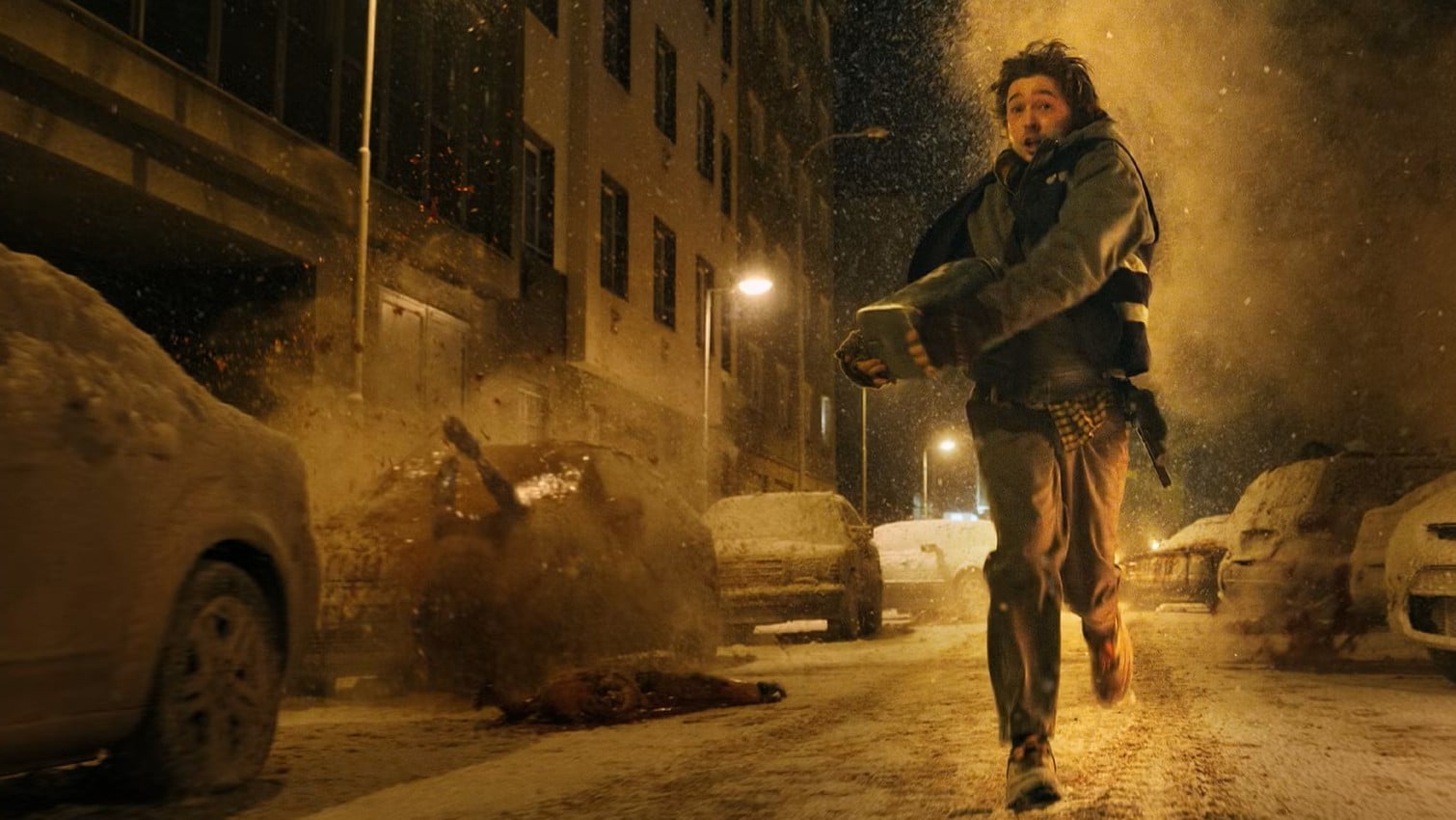
The story follows Bryan, a medical courier played by Austin Abrams of Euphoria and Wolfs, who finds himself trapped in a zombie outbreak while making a delivery to Raccoon City General Hospital. From there, the film operates as a continuous nightmarish gauntlet, with Bryan pushed through increasingly hostile and grotesque obstacles. The supporting cast includes Zach Cherry, Paul Walter Hauser, and Kali Reis, known from True Detective: Night Country, though the film remains largely anchored to Abrams’ perspective.
Cregger made deliberate choices regarding tone during the filmmaking process. The original cut contained significantly more comedic material, but after screening for test audiences, Cregger elected to trim some jokes from the theatrical version. In discussing the decision, Cregger noted that he appreciated the film more following the audience feedback and does not miss the removed comedic beats. This calibration—finding the right ratio of horror and humor—appears to have been crucial to the film’s reception.
Austin Abrams as the Central Performance
Carrying the Entire Frame
Austin Abrams emerges as the film’s linchpin across multiple critical readings. Liz Shannon Miller highlights that while other cast members appear in the film, Abrams occupies nearly every frame and commands that screen time entirely. She describes his character, Bryan, as flawed—someone who makes poor decisions driven by fear or frustration—yet fundamentally sympathetic. From the opening, Bryan projects a genuine desire to do right by others, which anchors audience investment in his survival across the ninety-plus-minute runtime.
Vulnerability and Charm
Tom Jorgensen’s assessment reinforces this view, praising Abrams as “exceedingly charming as the woefully outmatched medical courier.” Cregger’s direction of the performance leverages Abrams’ ability to register both vulnerability and determination while navigating Cregger’s creature effects and mounting dread. The combination of Abrams’ magnetism and Cregger’s signature dark humor—evident in his prior work on Barbarians and Weapons—gives Resident Evil a tonal anchor that critics note consistently.
Translating Game Logic to Film
The Invisible Mini-Map
The film’s most distinctive element involves how thoroughly it translates video game logic into cinematic language. David Ehrlich describes a subtle but crucial detail: Cregger constructs an “invisible mini-map” for the audience in real-time, ensuring viewers understand Bryan’s location relative to his destination and whatever threat pursues him. This geographical clarity allows the film to derive scares from navigation and progression rather than sudden shocks. Bryan’s path forward becomes the primary suspense engine—he must solve puzzles, find keys, and unlock gates to advance, which Ehrlich identifies as quintessentially Resident Evil.
Mechanics as Character Development
Harry Stainer reinforces this by noting how Cregger translates specific game mechanics directly. Gun upgrades and Bryan’s growing confidence manifest as a literal video game-esque skill tree, making the protagonist’s progression feel like actual character leveling. This approach grants the film a structural integrity borrowed from gaming rather than invented for cinema, creating a bridge between mediums that feels organic rather than forced.
Creature Design and Tonal Shift
William Bibbiani frames the achievement differently: “It’s not a faithful adaptation of a classic Resident Evil storyline but it’s a faithful adaptation of what it feels like to play a classic Resident Evil game.” He emphasizes that the film captures the strange duality of the franchise—starting terrifying, gradually becoming ridiculous, and executing that tonal pivot successfully. The creature design supports this through visual escalation: effects begin as “sinewy, Thing-adjacent organic messes” and evolve into more elaborate, surreal designs. Ehrlich notes that padlocks preventing Bryan’s progress sometimes constitute his most genuine nemesis—a detail that speaks to how thoroughly Cregger understood game design’s puzzle-based tension.
The First Half’s Success
Where critics converge most consistently is on the film’s opening sequences and their creature effects. The initial house sequence Bryan encounters draws specific praise for outstanding setpieces. The monster designs are described as “some of the grossest you’ll ever see on screen,” and the practical effects work registers strongly. These early moments demonstrate how effectively the film’s foundational logic—translating game mechanics into visceral cinema—operates when held in focus.
Second Act Coherence and Scope
The second act proves more divisive. Jesse Hassenger observes that “the momentum hitches and idles, making too much time for extended riffing, unearned emotion, and embodied sub-Cronenbergian themes.” As the scope expands, the tonal clarity that defined the opening begins to fragment. The camera work, initially confident in shifting between third-person perspective and bodycam-like angles, loses coherence amid expanding effects sequences. Abrams’ magnetism and Cregger’s wit persist, but occupy less screen space as the film’s ambitions expand. Harry Stainer notes that this expansion sees the second act “lean heavily into horror-comedy—weighted more to the comedy—while getting a little too meta for its own good.” This shift toward emphasizing the joke rather than earning it represents the point where some critics felt the film’s adaptation logic begins to unravel. The game-to-film translation works brilliantly when rooted in specific mechanics or character progression, but falters when the film calls attention to its own playfulness.
Jesse Hassenger also raises an observation about narrative completion. Despite successfully making viewers care about Bryan for over ninety minutes, Cregger appears to abandon his character arc steps before genuine resolution. Whether this reflects intentional ambiguity or incomplete character work remains unclear, though Hassenger suggests that translating game sensibility to screen while avoiding gamer clichés might constitute a sufficient journey in itself.
The Comedy-Horror Balance
Matthew Orozco voices a separate concern: the unrelenting humor interrupts moments of tension with zingers that both break immersion and frequently miss their comedic target. He suggests that while the early house setpieces deliver genuine scares, the film’s escalation toward absurdity overwhelms its narrative coherence. Without explanation for what audiences witness, and having already abandoned fidelity to game narrative, the film risks losing its internal logic when humor takes priority over world-building clarity.
Despite these reservations from a vocal minority, the overwhelming consensus treats Resident Evil as a successful film independent of its source material. That a video game adaptation achieves genuine critical respect and can be discussed as cinema rather than merely as IP exploitation represents a notable achievement. Cregger’s willingness to abstract game mechanics into visual and narrative language rather than literalize them, combined with Abrams’ committed performance, appears to have created something that functions for game enthusiasts and general audiences alike.
Frequently Asked Questions
What is the Rotten Tomatoes score for Resident Evil?
The film currently holds a 96 score on Rotten Tomatoes ahead of its September 18 theatrical release.
Who stars in Zach Cregger's Resident Evil adaptation?
Austin Abrams plays the lead role of Bryan, a medical courier, with supporting performances from Zach Cherry, Paul Walter Hauser, and Kali Reis.
How does the film approach adapting the video game for cinema?
Rather than recreating specific game storylines, director Zach Cregger translates game mechanics like puzzles, progression, and navigation directly into film language, with elements like gun upgrades visualized as a character skill tree.
