
Key takeaways
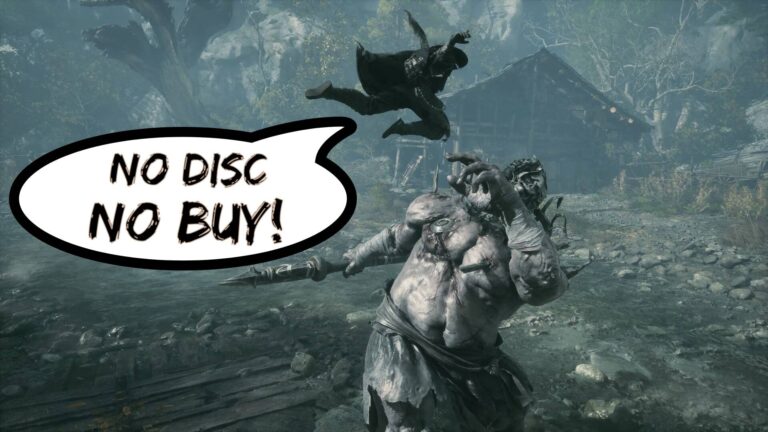
- Sony's State of Play for Phantom Blade Zero was dominated by 'no disc' protesters unhappy with the game's digital-only pre-orders and absence of any physical release announcement.
- Physical game sales remain at 51–58 percent in major markets like Germany, France, and Japan, contradicting the narrative that discs are obsolete outside the United States.
- The shift to all-digital removes consumer ownership and eliminates secondary resale markets, fundamentally altering the relationship between players and their purchases.
- Sony shows no indication that social media backlash will influence its strategy to eliminate physical media consoles entirely by 2028.
Last night’s State of Play presentation featuring Phantom Blade Zero transformed into an unexpected battleground over gaming’s physical versus digital divide. Sony’s decision to enable live chat during the showcase of this action-RPG from Chinese developer S-Game proved either naïve or deliberately provocative, depending on one’s interpretation. Within moments, thousands of viewers seized the opportunity to bombard the livestream with complaints about the game’s digital-only pre-orders, rendering the chat essentially unusable for any discussion of actual gameplay features, story details, or technical specifications.
The scale of the backlash caught many observers’ attention, with multiple clips circulating across Twitter and gaming forums documenting the relentless flood of “no disc no buy” messages. This represented merely the latest chapter in an escalating campaign that has dominated PlayStation’s social media presence for weeks, transforming nearly every major announcement into an exercise in enduring complaints about the absence of physical media options.
S-Game’s All-Digital Approach
Phantom Blade Zero’s position as an entirely digital pre-order release carries significant implications beyond a single game. The action-RPG is slated to launch on October 29, 2026, and at no point has S-Game or its publishing partners suggested that a physical disc version will accompany the release. The absence of any clarification regarding a potential later physical launch has led industry observers to speculate that the game may never receive a disc-based release at all.
This stands in contrast to historical patterns where games initially released digitally sometimes received physical versions months later. The silence from both S-Game and Sony regarding any future physical availability suggests a more definitive commitment to digital-only distribution.
Alignment With Sony’s Broader Strategy
The timing of Phantom Blade Zero’s digital-only announcement intersects directly with Sony’s publicly disclosed goal to eliminate disc-based PlayStation consoles entirely by 2028. While the company has not formally unveiled a PlayStation 6 design, industry consensus holds that this next-generation hardware will be entirely digital, rendering backward compatibility with physical PS5 discs impossible. Each title released exclusively in digital format serves as a building block in this transition.
International Developer and Market Implications
Phantom Blade Zero’s position as a Chinese-developed title amplifies the significance of its digital-only status. Rather than representing an internal Sony publishing decision, it demonstrates how third-party developers and publishers operating within Sony’s ecosystem are adopting all-digital distribution approaches. This pattern may establish precedent for how international studios approach PlayStation console releases going forward.
The Livestream Chat Phenomenon
YouTube’s live chat during last night’s State of Play devolved into what can only be described as organized chaos. User-submitted clips captured chat windows that contained almost no substantive discussion whatsoever—instead presenting an endless stream of “no disc,” “no buy,” and related variations. The sheer volume and apparent coordination of the protest demonstrated significant planning or, alternatively, spontaneous alignment among thousands of viewers sharing identical frustrations.
Sony’s response involved disabling the “Top chat replay” feature on the archived version of the presentation, presumably to prevent new viewers from witnessing the extent of the backlash. This proved a purely cosmetic solution. Protesters quickly migrated to the video’s YouTube comment section, where variations on “Phantom Disc Zero” attracted hundreds of upvotes, establishing themselves as the dominant visible commentary on the broadcast. The intensity of this particular protest pales only in comparison to a recent Wolverine game trailer, which accumulated approximately 10,000 comments focused exclusively on disc availability rather than the game itself.
The Chat Strategy Backfire
Sony’s choice to enable live chat during a Phantom Blade Zero presentation seems, in retrospect, extraordinarily poor judgment. The company possessed ample evidence from months of PlayStation social media activity that any announcement touching on digital-only releases would trigger immediate, overwhelming backlash. Leaving chat enabled appeared almost designed to create negative viral moments.
Global Physical Media Markets Tell a Completely Different Story
The justification frequently provided for digital-exclusive strategies relies almost exclusively on North American sales data. Industry figures consistently cite that only 15 percent of PlayStation games in the United States are purchased on physical discs—a statistic that, on its surface, appears to validate Sony’s digital strategy. However, examining this figure in isolation while ignoring global market realities fundamentally misrepresents the actual state of physical gaming media worldwide.
Germany and France Remain Disc-Dominant Markets
A recently published German market analysis revealed that 58 percent of all games purchased in Germany are still bought in physical format. This figure represents nearly four times the American physical games percentage. France exhibits virtually identical market behavior, with 55 percent of game purchases occurring through physical discs. These numbers encompass major AAA releases, indie titles, and everything in between, suggesting fundamental consumer preferences rather than niche behavior. The implications are stark: if Sony’s digital-only strategy proceeds according to current plans, German and French consumers will face a substantially reduced ability to purchase games in their preferred format.
Asia Maintains Substantial Physical Footprint
Japan, which ranks among the world’s most significant gaming markets, reported that 51 percent of game sales occurred in physical format, as measured through sales data for titles including Resident Evil Requiem. The United Kingdom reports that between 40 to 45 percent of game sales remain physical purchases. Australia and other developed gaming territories show comparable percentages, collectively demonstrating that physical media remains either dominant or nearly equivalent to digital sales across major gaming regions.
Consumer Ownership Versus Licensing Models
The movement away from physical media encodes a more fundamental shift than mere distribution methodology. Purchasing a physical disc grants consumers an actual product they possess outright—they can sell it, trade it, gift it, or resell it on secondary markets. Switching to all-digital purchases means consumers are not buying games; they are licensing access to games. Upon purchasing a digital title, resale becomes impossible, and resale markets that currently exist for physical games will evaporate.
This represents a significant financial advantage for Sony and publishers. Digital manufacturing costs are negligible compared to physical production, disc pressing, packaging, and shipping, yet digital and physical games typically sell for identical prices. Additionally, the elimination of secondary markets ensures that revenue from resale flows entirely away from creators and toward individual consumers—a revenue stream the industry has always resented. For consumers in regions where physical purchasing dominates—Germany, France, and others—this shift imposes a tangible reduction in purchasing power and long-term product value.
The Path Forward
Sony has provided absolutely no indication that public backlash, however sustained or coordinated, will influence its digital-first trajectory. The company has weathered comparable controversies regarding pricing practices, consumer-unfriendly policies, and controversial business decisions without reversing course. Phantom Blade Zero, absent any surprise announcement, will almost certainly release either with digital-only availability or with physical copies arriving substantially later than digital launch, if at all.
The fundamental reality is that corporate strategic decisions involving hundreds of millions of dollars in projected revenue rarely reverse based on social media campaigns. Sony’s cost structure, profit margin calculations, and competitive positioning all strongly favor accelerating the elimination of physical media. Whether consumers appreciate that direction appears largely irrelevant to the company’s planning.
Frequently Asked Questions
Why did protesters flood the Phantom Blade Zero livestream with 'no disc no buy' comments?
Phantom Blade Zero pre-orders are exclusively digital with no disc-based version offered, leading frustrated consumers to express their strong preference for physical game media.
What percentage of PlayStation games are sold on physical discs in the United States?
Only 15 percent of PlayStation games sold in the United States are purchased on physical discs, though this varies significantly in other regions.
How popular is physical game media in Europe and Asia compared to the United States?
Germany reports 58 percent of games sold physically, France 55 percent, Japan 51 percent, and the United Kingdom between 40–45 percent, all substantially higher than the 15 percent U.S. figure.
