
Key takeaways
- Ocarina of Time's Switch 2 remaster removes survival mechanics, weapon durability, and consumable management that defined Breath of the Wild and Tears of the Kingdom.
- The simplified design appeals to goal-oriented players who want clear progression over navigating open-world systems that don't match their playstyle.
- The remaster demonstrates that streamlined design remains valuable in an industry increasingly built around complexity and systems-based gameplay.
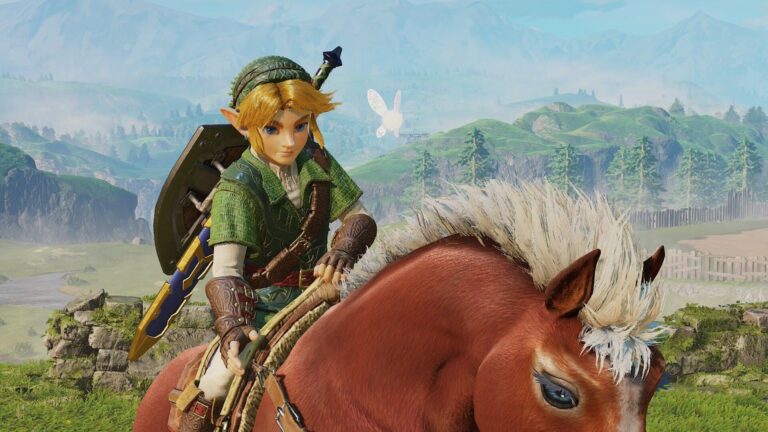
After more than a decade shaped by the vast sandbox of Breath of the Wild and the elaborate building tools of Tears of the Kingdom, revisiting The Legend of Zelda: Ocarina of Time on Switch 2 represents something unexpected: relief through simplification. The developers have streamlined this remaster across dozens of small adjustments, each reduction acting as a deliberate choice about what actually matters in a Zelda game.
Gone is the survival-simulation framework that defined the last two entries. Where Breath of the Wild and Tears of the Kingdom required you to manage consumables, monitor weapon durability, prepare your inventory before venturing into hostile territory, and sometimes spend significant time simply moving across the map, Ocarina of Time offers a different proposition entirely. Puzzle-solving and combat remain central, but they’re no longer wrapped in systems designed to create friction. For players currently occupying their remaining Nintendo Switch 2 library space while waiting for Grand Theft Auto 6 to launch next week, that structural difference reads as genuine relief.
A Return to Directed Progression
The original 1998 game established the template for 3D action-adventure design that still holds influence today. This Switch 2 remaster preserves what made that formula work: the temple-based progression that creates a sense of purpose and momentum. Each play session can close with a concrete achievement. Finish a temple. Complete a story chapter. Solve a multi-room puzzle challenge. That sense of visible progression appears to be what keeps players returning to the game multiple times across the week, even in relatively short play windows.
The streamlined design eliminates most obstacles between you and the content you actually engage with. No sprawling map demanding traversal for its own sake. No weather system that forces you to seek shelter or manage Link’s temperature. No durability mechanics that turn every battle into a resource calculation where weapons gradually chip away. The game operates under the assumption that the puzzles, the swordplay, and the story momentum are sufficient hooks on their own.
The Open-World Preference Question
Why Traversal Matters
Modern gaming offers enough entertainment options that time spent on non-core activities functions as an actual cost. Whether an open-world game remains appealing hinges largely on how movement through space feels. A horse or car alone rarely cuts it. The Infamous series demonstrated that giving players superpowered traversal mechanics and rewarding environmental interactions can make a large map feel genuinely fun to navigate. Cyberpunk 2077’s Night City worked because the city itself justified exploration—the atmosphere, the visual density, the sheer detail created reasons to wander that had nothing to do with following a waypoint.
When Open Worlds Fail
Most open-world map traversal fails this test. For players whose gaming time is genuinely scarce—those whose priority is seeing where a story goes, finishing quest lines before real life demands redirect their attention, pushing toward conclusions—meaningless travel across a large space becomes a barrier rather than content. The friction compounds when you’re also managing resources and fighting against systems meant to slow you down.
Breath of the Wild and Tears of the Kingdom tried to solve this problem by making movement itself part of the game’s mechanical vocabulary. Survival systems, the ability to construct gadgets, and the constant possibility of discovery were designed to make the journey meaningful. It worked for many players. But for others, those systems created rather than eliminated friction, transforming the act of reaching a goal into a slog against resource management and environmental calculation.
What Changed Between BotW and Now
The Evolution of Zelda’s Design
The last two mainline Zelda games represented an evolution so comprehensive that returning to Ocarina of Time’s structure can feel almost regressive. Nintendo took a franchise with nearly 40 years of history and fundamentally reimagined what a Zelda game could be. It embraced player freedom, environmental puzzles, and emergent gameplay in ways earlier entries never attempted. The top-down games that followed Ocarina maintained the linear template but in 2D. The 3D sequels that came after—Wind Waker, Twilight Princess—kept dungeons at the heart of progression but within a more guided structure.
Removing Hierarchy
Breath of the Wild removed that hierarchy entirely. Tears of the Kingdom refined the approach further. Both games gave players choices about what to do and when to do it, respecting their agency in ways the original Ocarina of Time simply didn’t attempt. That freedom came bundled with systems and mechanics that transformed how players approached exploration and combat.
The Paradox of Simplification
Transparency as Strength
What makes this remaster feel remarkably approachable is precisely what would have been considered its greatest strength in 1998. The game is transparent about its purpose. Solve this puzzle room. Defeat this dungeon boss. Progress forward. The Switch 2 version doubles down on this clarity, making the experience demonstrably easier through countless minor refinements.
When Systems Serve the Game
This isn’t a statement that the series took a wrong turn. The shrine-based puzzles of Breath and Tears, the cast of memorable characters scattered through the worlds, the survival mechanics and building systems, the tools for environmental manipulation—these are genuine expansions of what a Zelda game could accomplish. But something existed in Ocarina that hasn’t quite returned in the same form since: a game that wanted you to reach your objective without the systems meant to facilitate that objective getting in your way. Weapon durability and consumable management add stakes, but they also add friction that doesn’t serve every player equally.
What Lies Ahead
The remaster’s underlying code apparently contains hints that harder dungeon variants may arrive in updates. The changes separating this version from the N64 original run deep enough that difficulty adjustments would make sense as post-launch content. But the core shift is philosophical, not just numerical. The original game retained operational friction—limited supplies, weapon conditions, consumables that depleted—that created stakes. This remaster strips away or minimizes many of those pressures, betting that players would rather control their challenge level than navigate systems they find distracting.
How this philosophy lands with players who spent the last decade mastering Breath and Tears’ layered complexity remains to be seen. But for those whose gaming preferences have always pointed elsewhere—players who want narrative progression, quest completion, and minimal time spent on logistics—Ocarina of Time’s streamlined approach suggests that video games may have collectively forgotten the value of simplicity.
Source: Kotaku
Frequently Asked Questions
Why does Ocarina of Time feel different from Breath of the Wild and Tears of the Kingdom?
The remaster removes or reduces survival mechanics, weapon durability, and consumable management. Instead of managing resources to traverse the map, you move from puzzle to puzzle and temple to temple with clear progression. The game is also made demonstrably easier in dozens of small ways compared to the original N64 version.
What does goal-oriented gameplay mean in this context?
It means prioritizing narrative progression and reaching quest conclusions over exploration for its own sake. Players with limited gaming time prefer games that don't waste time on traversal between destinations and that don't require managing complex systems to accomplish their objectives.
Could harder difficulty options arrive in the future?
Yes. The remaster's underlying code contains hints that harder dungeon variants may arrive in updates. The core difference between this version and the original N64 game is philosophical—the remaster removes operational friction like limited supplies and weapon conditions that created stakes in the original.
