
Key takeaways
- The Ascendance expansion returns Master Rank difficulty to address base game criticism about streamlined challenge and limited endgame content.
- A new Boost Bracer ability enables hunters to unleash super attacks with temporary combat amplification, creating anime-inspired moments in combat.
- The expansion introduces the Skybound Eyrie location featuring vertical, visually complex terrain alongside legendary monsters Teostra and Khezu.
- Arriving in 2027, Ascendance represents Capcom's systematic recalibration based on two years of community feedback about Monster Hunter Wilds' direction.
Monster Hunter Wilds launched nearly two years ago facing significant headwinds. The PC version suffered from poor optimization, and the game’s design direction drew criticism for streamlining the difficulty and resource economy in ways that diverged from Monster Hunter traditions. These decisions made certain encounters feel trivial to experienced players, a stark departure from the franchise’s reputation for demanding combat.
Despite these stumbles, Capcom has worked steadily to improve the game through updates and quality-of-life patches. Commercially and critically, Monster Hunter Wilds has recovered substantially, though questions about the endgame experience and overall challenge level continued to surface in community feedback.
Ascendance Announced at Tokyo Game Show 2026
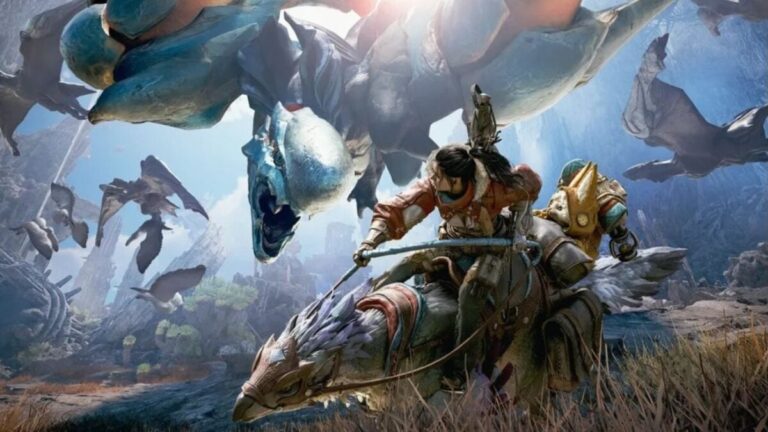
Capcom unveiled Monster Hunter Wilds: Ascendance at Tokyo Game Show 2026 as an ambitious expansion designed to recalibrate the game’s direction. The expansion arrives in 2027 and was developed with explicit attention to two years of community feedback and internal analysis.
Ryozo Tsujimoto, series producer, explained the team’s approach during the announcement: “With Monster Hunter Wilds, we received a lot of feedback from a wide range of players—this includes those who started their Monster Hunter journey with Wilds as well as longtime, dedicated fans of the series. The entire development team has been reviewing that feedback and working hard to meet the community’s expectations for the future of Monster Hunter Wilds. We’re applying the experience and insights we’ve gained not only to updates for Wilds, but also to our upcoming expansion, Monster Hunter Wilds: Ascendance.”
The Story Continues
Lao-Shan Lung’s Return
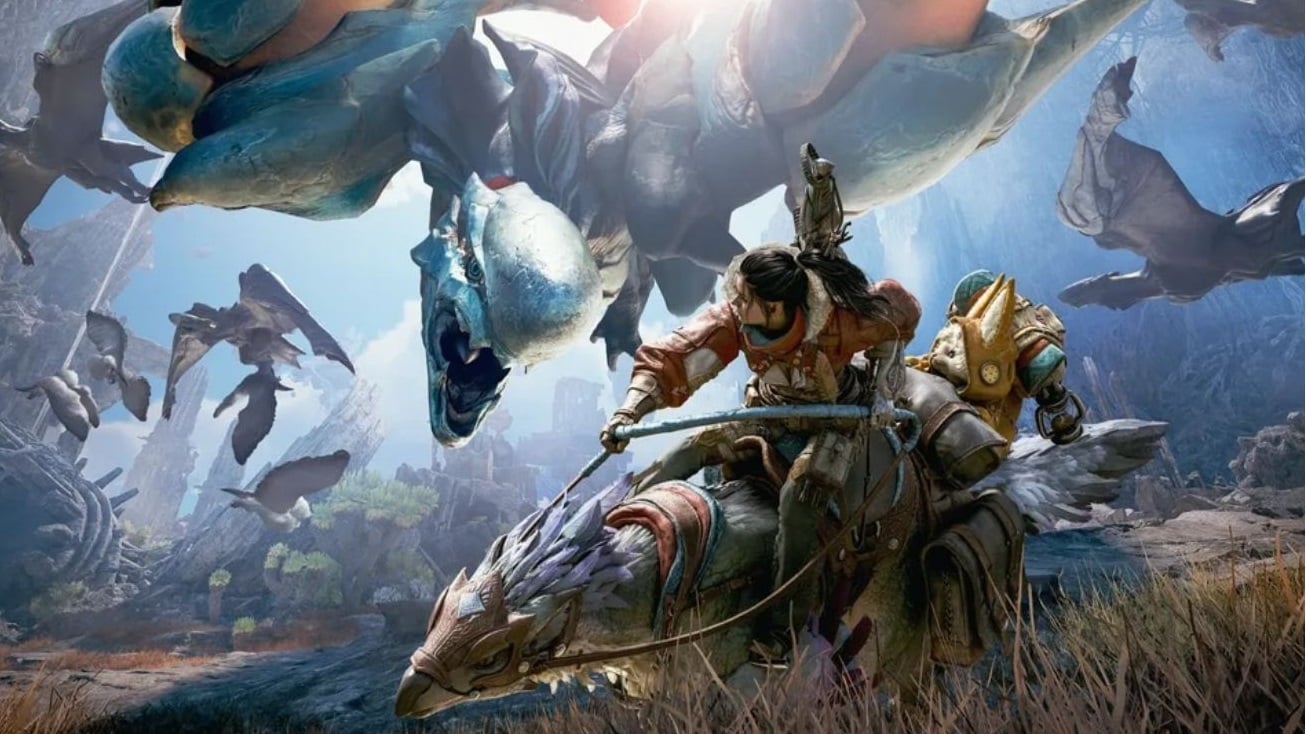
Ascendance’s narrative picks up several years after the base game concludes. The hunters’ guild had made progress restoring the Windward Plains following the main campaign. That recovery effort faces a devastating setback when the elder dragon Lao-Shan Lung returns and destroys the guild base. The hunters, now more experienced and better equipped, venture out again to confront fresh threats.
Exploring the Skybound Eyrie
The primary setting for the expansion is the Skybound Eyrie, a vast aerial territory unexplored in the base game. Kotaku noted that this location features more vertical and visually complex terrain compared to established areas like the Windward Plains and Scarlett Forest, creating a distinct exploration and combat experience.
New hunts populate the expansion alongside fresh monsters. Araketa appears among the threats, characterized by coordinated attacks alongside minions that require adaptive strategies. New gear to craft and weapons to forge support different playstyles for confronting these dangers.
The Boost Bracer
The most discussed addition to Ascendance is the Boost Bracer, a new ability that transforms how combat flows. Unlocked through the campaign, the Boost Bracer enables hunters to trigger a super attack with their chosen weapon and activate a limited-time boost phase that amplifies combos and strikes. The mechanic shares conceptual ground with Devil Trigger from Devil May Cry—a temporary combat enhancement that escalates action sequences. Coordinated Boost Bracer activations from a full squad create anime-inspired spectacle that stands apart from Monster Hunter’s typically grounded tone. This addition will inevitably spark community debate about whether it represents desirable evolution or unwanted departure from series identity.
Master Rank Returns to Address Difficulty
Endgame Philosophy
One of the base game’s most prominent criticisms centered on its streamlined difficulty and generous resource availability, which allowed certain encounters to feel undemanding for veterans. This feedback directly shaped Ascendance’s design direction. Game director Takuro Hiraoka described the expansion’s core concept: “To put it simply, the concept behind Ascendance is a true evolution of Monster Hunter Wilds. While Wilds serves as the foundation, we want to build on what worked well, while thoroughly improving and raising the overall quality of areas that we felt could or should be improved, as well as aspects where we’ve received requests for improvement from our players. Our goal is to make the overall experience, including both Wilds and Ascendance, something that even more players can enjoy.”
The primary solution is the return of Master Rank, the franchise’s highest quest difficulty tier. Hiraoka elaborated on the implementation: “We’re aware that we’ve received a wide range of feedback regarding areas such as streamlining, difficulty, and endgame content. With Ascendance, we’re introducing a new quest rank, Master Rank, and first and foremost, we want to make sure it delivers the level of challenge and depth that players would expect from Master Rank.”
Gear Progression and Strategy
Master Rank is designed to restore meaningful progression loops where crafting decisions carry strategic weight. Hiraoka described the target experience: “As players progress and quests become more difficult, we want to create that desire to think, ‘I want to craft that armor,’ or ‘I want to make a set with this element,’ then craft and use it to take on the next level of difficulty. We want players to fully experience and enjoy that core Monster Hunter gameplay loop. Of course, we also plan to offer endgame content and opportunities for players to really delve into. Once players have obtained the equipment they’ve been working toward, we aim to provide challenging quests where they can put them to use and truly test their skills.”
Legendary Monsters and the Road to 2027
Ascendance reintroduces legendary monsters from Monster Hunter history, grounding the expansion in the franchise’s legacy. Elder dragons Teostra and Khezu return as formidable adversaries, providing familiar threats that players will confront under Master Rank parameters.
Compared to prior expansions like Iceborne for Monster Hunter: World and Sunbreak for Monster Hunter Rise, Ascendance prioritizes systematic recalibration alongside new content. The expansion targets foundational systems that players found limiting in the base game rather than simply extending the story with additional hunts and monsters. Capcom’s commitment to endgame depth and challenge recalibration suggests the company views 2027 as an opportunity to rebalance Monster Hunter Wilds’ long-term direction. If Ascendance delivers the difficulty and progression depth that veteran players expect, it could meaningfully reshape the game’s reception among the franchise’s most dedicated audience.
Source: Kotaku
Frequently Asked Questions
When does Monster Hunter Wilds: Ascendance launch?
The expansion launches in 2027. It was announced at Tokyo Game Show 2026.
What is the Boost Bracer and how does it work?
The Boost Bracer is a new ability that allows hunters to trigger a super attack with their chosen weapon and enter a limited-time boost phase that amplifies combos and strikes.
Why is Master Rank returning in Ascendance?
Master Rank returns to address widespread criticism that the base Monster Hunter Wilds had streamlined difficulty and insufficient endgame content. It aims to restore meaningful progression loops where gear crafting decisions carry strategic weight.
