
Key takeaways
- Ace Combat 8: Wings of Theve launches October 2 as the first mainline entry in seven years, featuring a three-mission tutorial designed to make the series more accessible than ever.
- The game features 100-player multiplayer lobbies including competitive modes and co-op missions with squad roles, supported by a live-service model with two-month seasonal updates and a battle pass.
- The series has revived from years of waning popularity by focusing on its dedicated fanbase, with brand director Kazutoki Kono stating the franchise is now bigger than ever.
Seven years have passed since Ace Combat 7: Skies Unknown took flight, and the franchise returns on October 2 with Ace Combat 8: Wings of Theve. The gap between entries stands as the longest in the modern era of the series, but what awaits players who step back into the cockpit is a game shaped squarely around making the experience accessible to newcomers while still delivering the high-speed dogfighting veterans expect. Kazutoki Kono, the brand director, frames the series’ core appeal in simple terms: “The idea of flying freely through these vast skies. I think that’s a universal desire.”
Immersion Through Clouds and Cockpits
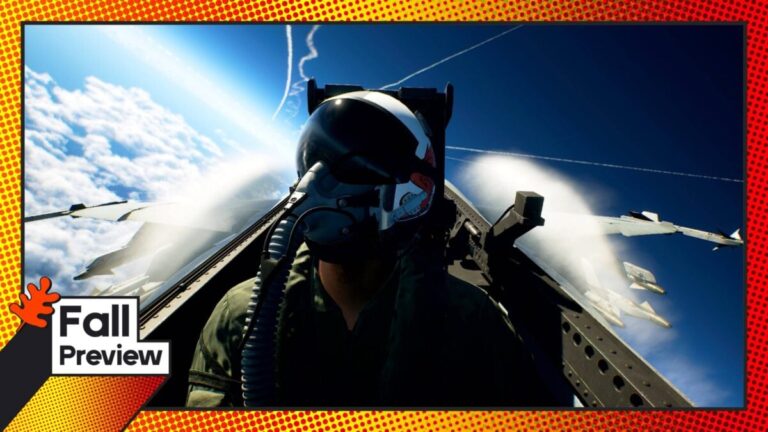
The demo begins not with clouds as background texture but as the primary hook. Ace Combat 8 renders them with enough visual fidelity that a player banking through a cloud formation encounters something close to real turbulence—the disorientation of emerging from white nothingness into clear sky where an enemy fighter awaits. It’s a deliberate choice to ground the fantasy in something tangible. Rather than abstractions, Kono’s team traded on the sensation of looking through a plane’s window during a storm, seeing nothing but water droplets streaking across glass, then breaking through into daylight and immediate danger.
The first-person cockpit perspective dominates Ace Combat 8’s visual design. Buttons, switches, and instrument panels surround the player’s view, transforming the cockpit from backdrop to environment. After a brief tutorial opening, the player’s target appears on the horizon, a lock-on system bleeds familiar tones into the soundtrack as the crosshair tracks the enemy fighter, and within minutes the player experiences the core loop: pursuit, evasion, missile lock, direct hit. For someone who had never played an Ace Combat title before, the session produced a physical response—leaning with the jet as it banked, flinching as altitude dropped toward water, involuntary movements that blurred the boundary between controller input and muscle memory.
Campaign Structure and Accessibility
A Three-Mission Tutorial
Three levels precede the campaign proper. Producer Manabu Shimomoto admits this extended tutorial is a conscious bid to make Ace Combat 8 the most accessible the series has ever been. The protagonist steps into the flight suit of a legendary pilot killed in action, earning their wings through initial sorties that teach the fundamentals without overwhelming new players. Mission four marks the transition into what the developers call the “first real mission,” where the training wheels come off and the full scope of what Ace Combat offers becomes apparent.
Dual Gameplay: Tactics and Dogfighting
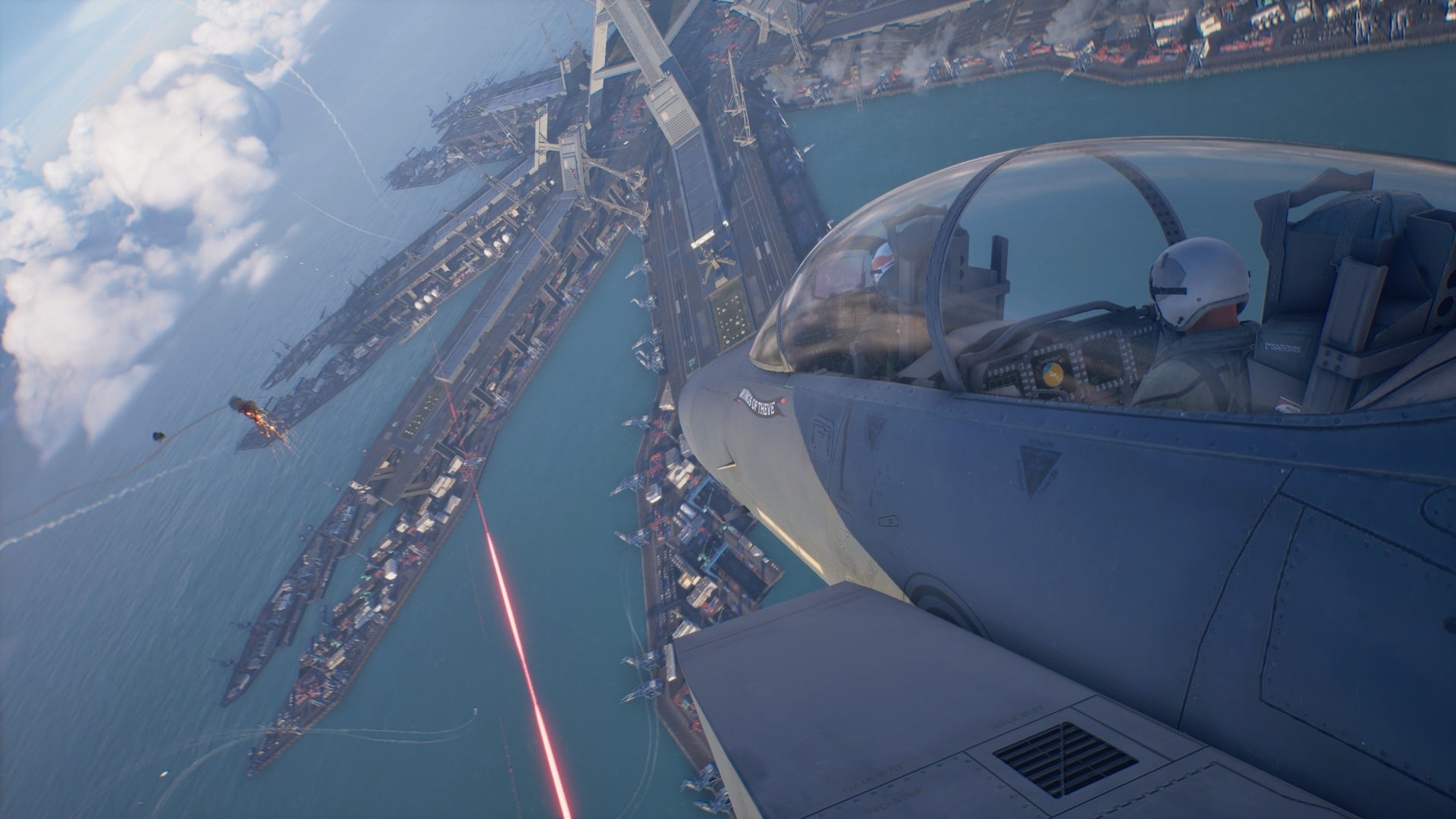
The fourth mission revealed how Ace Combat 8 operates as two games layered atop each other. A mission briefing explains the strategic situation, providing context that the gameplay then contextualizes. Each mission opening presents customization options: not just the player’s jet and weapons, but squadmates’ loadouts as well, allowing players to theorize and tailor their approach before launch. The demo favored air-to-surface missiles for striking naval targets, turning what could have been a simple patrol into a coordinated strike that required timing and positioning.
Customization and Mission Design
The ability to outfit squad members’ jets and armaments suggests a planning layer that sets Ace Combat apart from straightforward action games. A player intent on anti-ship operations can load a wingman with matching weaponry, while another squadmate carries air-to-air missiles for escort duties. During the demo’s fourth mission, this planning translated into a sequence where the player dove toward naval targets, fired air-to-surface missiles in quick succession, then climbed away as enemy interceptors closed in—a moment that mixed the tactical considerations of target selection with the reflexive adrenaline of evasion. A loop executed too aggressively sent the player spiraling toward the ocean, recovery mere meters from the water’s surface, a close call that produced the involuntary smile that most players recognize as a sign a game has genuinely held their attention.
Multiplayer’s Broader Ambitions
The campaign represents a comfortable continuation of what Ace Combat does well, but the series’ multiplayer presence carries more experimental weight. Ace Combat 8 promises 100-player lobbies—a departure from the smaller-scale matches players know—alongside cooperative missions where squad roles matter. One multiplayer mode frames itself as a free-for-all where mercenary pilots start at the bottom and climb in acumen and prestige; another leans into the cooperative angle, letting squads of players tackle shared objectives against both environmental hazards and AI bosses. Ace Combat 7 included co-op missions; their return suggests the developers believe players want alternatives to pure PvP competition.
That multiplayer ambition arrives wrapped in a live-service framework. Seasonal content drops every two months, supported by a battle pass system. The structure mirrors what countless studios have adopted in pursuit of recurring player engagement and revenue, a model whose track record in 2026 remains mixed at best. Studio layoffs and franchise failures tied to live-service underperformance weigh on the industry’s collective consciousness, making Ace Combat 8’s commitment to this model a calculated risk rather than a safe bet.
Revival of a Frozen Franchise
Kazutoki Kono acknowledged that the series’ path to this point was not linear. “I would say it wasn’t always growth and it wasn’t always solid iterations,” he noted, a candid admission that Ace Combat spent years in the shadows of more prominent franchises. The strategy that revived it involved a narrower focus: serving the dedicated core of players who had never abandoned the series, even during its fallow periods. That loyalty compounded over time, transforming a once frozen franchise into something with momentum. Kono states plainly that Ace Combat is “now as big as it’s ever been,” a claim backed by the scale of Ace Combat 8’s ambitions and the investment required to realize them.
The skies have belonged to many franchises over the years, but Ace Combat 8 arrives with a clearer sense of who it is and who it serves. Whether its multiplayer reaches the scale the developers envision, whether its live-service model sustains engagement beyond the launch window, and whether Ace Combat finally claims its place among the industry’s flagship franchises all remain open questions. What remains certain is that the series has clawed back from obscurity to a position where its return merits serious attention.
Frequently Asked Questions
When does Ace Combat 8: Wings of Theve release?
The game launches on October 2, marking the first mainline entry in seven years following Ace Combat 7: Skies Unknown in 2019.
What multiplayer features are in Ace Combat 8?
The game offers 100-player lobbies, co-op missions with different squad roles, and multiple multiplayer modes, all supported by a live-service structure featuring two-month seasons and a battle pass.
Why is Ace Combat 8 designed with a three-mission tutorial?
Producer Manabu Shimomoto states the extended tutorial is a conscious effort to make Ace Combat 8 the most accessible the series has ever been, welcoming new players to the franchise.
