
Key takeaways
- Flanagan adds mythology about organized networks of supernaturally gifted women throughout history, expanding far beyond King's original novel.
- Samantha Sloyan's Margaret White is a complex antagonist driven by love rather than hate, fundamentally recontextualizing King's original character.
- The series has strong ensemble performances and contemporary setting but stumbles with character Emaline, whose twist undermines the emotional tragedy.
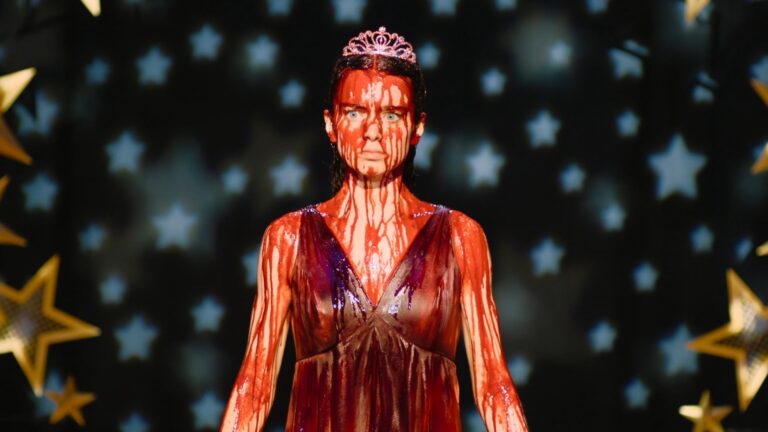
Amazon Prime’s adaptation of Stephen King’s Carrie, directed by Mike Flanagan, launches as an eight-episode series featuring Summer H. Howell as Carrie White and Samantha Sloyan as her mother Margaret. According to Kotaku’s review, Flanagan has justified revisiting the material despite multiple previous adaptations and Brian De Palma’s 1976 film, which many consider definitive.
Why Revisit Carrie?
Stephen King’s 1974 novel received its film adaptation two years later with De Palma’s masterpiece. Subsequent attempts became uniformly dismissed: The Rage: Carrie 2 (1999) included clips from the original film as cruel reminders of what viewers should be watching instead. Bryan Fuller directed an NBC TV movie in 2002 that doubled as a failed backdoor pilot. Kimberly Peirce’s 2013 remake prompted the same frustrated response: why bother? Kotaku’s reviewer initially shared this skepticism, but watching Flanagan’s version changed that view. The adaptation justifies itself by expanding beyond King’s story rather than simply retelling it. Flanagan adds broader explorations of misogyny, organized supernatural networks, and women with hidden telekinetic abilities throughout history.
A New Mythology
Opening with the Ending
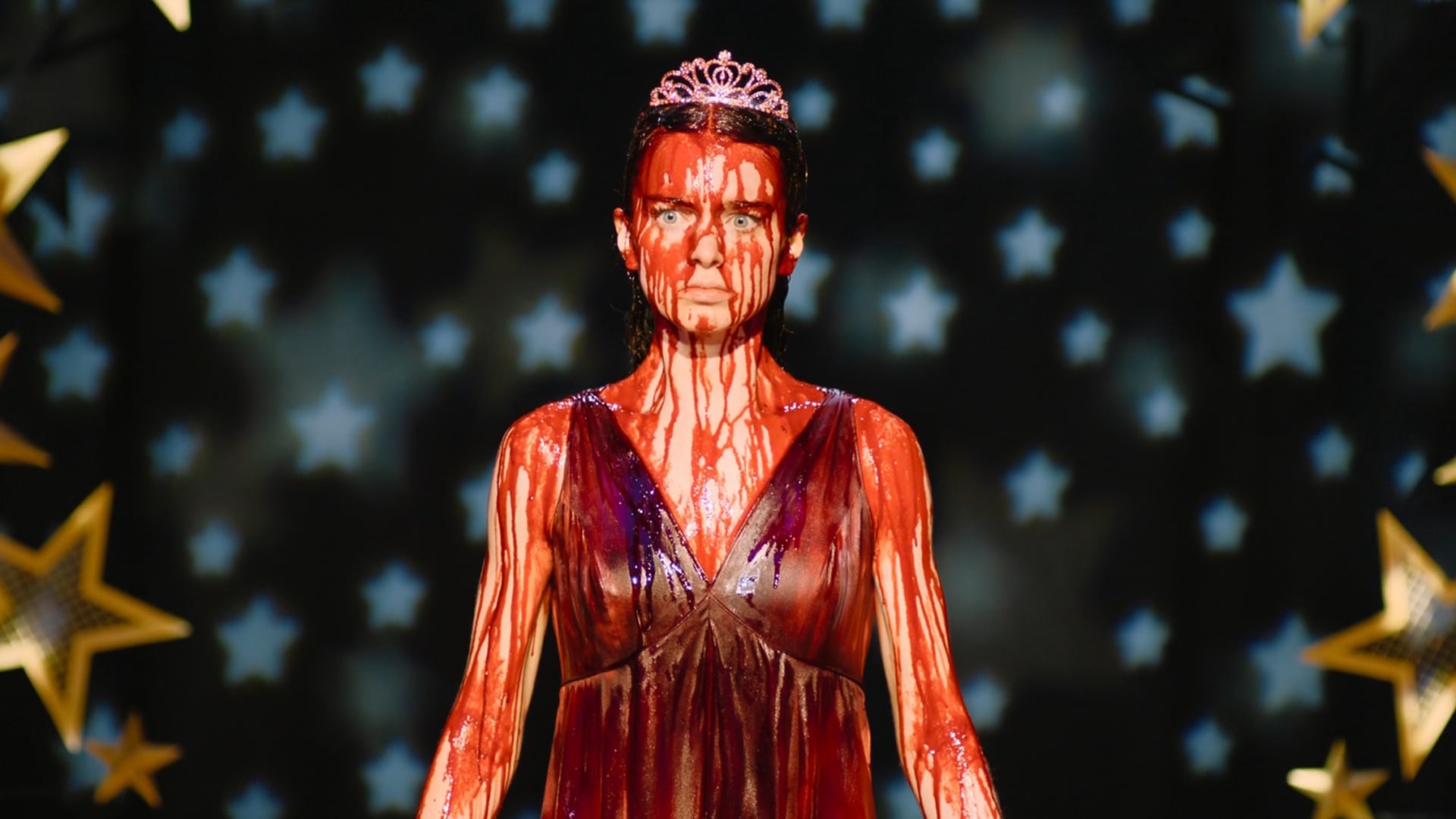
The series begins where audiences already know the story ends: a news report of the prom aftermath shows a burning school, mass death, and Carrie covered in blood. Flanagan doesn’t pretend viewers haven’t encountered this material before. Instead, he acknowledges existing knowledge and shifts perspective from there.
Narration and Supernatural Framework
Each episode opens with narration from Kate Siegel delivering sardonic essays about centuries of misogyny directed at women with telekinetic powers—women branded as frauds and witches throughout history. This frame establishes an organized network of supernaturally gifted women somehow aware of Carrie. Kotaku noted this mythology is entirely absent from King’s novel and transforms the narrative scope into something larger.
Contemporary Reimagining
The story updates to the present day in ways Kotaku found less crude than previous adaptations. Carrie’s father, who dies in the opening scene, kept his wife and daughter completely off the grid to protect them from anti-government conspiracies he believed threatened them. Margaret White’s Christianity shifts from dogmatic Catholicism to what Kotaku described as “MAGA-coded individualistic solipsism.” This modernization makes the material feel more insidious because it’s less overtly heavy-handed than King’s original religious fanaticism.
Margaret White Reimagined
Samantha Sloyan delivers what Kotaku called the most compelling character reimagining. While known for playing cold, cruel Bev Keane in Midnight Mass, her Margaret is fundamentally different. She is cruel, but her cruelty hides beneath disguised support and performed maternal care that controls rather than overtly restricts. Most critically, this Margaret loves Carrie. King’s Margaret believed she loved her daughter but actually hated her for becoming a woman, for desiring independence, for maturing. Flanagan’s Margaret does none of this. She never utters King’s “dirty pillows” line or screams that puberty is sinful. Instead, her abuse operates through subtlety and undermining. Kotaku found this reinterpretation to be the emotional heart of why Flanagan’s version works, transforming the mother from a one-dimensional zealot into a complex figure driven by love expressed through control.
Recontextualized Characters
Chris Hargensen receives similar depth treatment. Rather than simply “the school bitch,” her cruelty now stems from background story that provides context for her viciousness. Kotaku identified moments where viewers might sympathize with Chris, even as she ensures genuine connection remains impossible. Sue Snell’s kindness no longer seems imposed by narrative convenience but flows naturally from having a safe, loving home with an unconditionally supportive mother. This makes her position between Chris and Carrie more meaningful and tangible. Amber Midthunder (Prey) plays teacher Rita Desjardin with her own arc involving fellow teacher Seth Peist. The ensemble includes Flanagan regulars Michael Trucco, Tahmoh Penikett, Rahul Kohli, Kate Siegel, Ruth Codd, and Katee Sackhoff, plus Tim Bagley as school counselor and Matthew Lillard as the school principal. Kotaku praised the cast, noting the eight episodes allow meaningful development for everyone.
A Problematic Twist
Despite its strengths, Kotaku identified a significant flaw with the character Emaline, played by Thalia Dudek. Introduced as a rebel with punky hair and smoky mascara, Emaline appears when Carrie screams in the school bathrooms. The character is obviously telegraphed as nonphysical: no one else interacts with them, their dialogue generates no reactions, and a third-episode party scene makes their nature unmistakable to attentive viewers. The eventual reveal arrives with montage of “aha!” moments showing people seeing Carrie talk to herself, supposed to be surprising but easily anticipated. Kotaku felt this undercuts the terror and meaning of the prom climax. The reviewer understood Flanagan might be questioning whether women must become monsters to achieve power, but the execution damaged the tragedy that made the rest of the series compelling. Carrie’s power partly stems from audiences desperately wanting her to catch a small break before everything shatters. This choice strips that emotional foundation.
Building Toward a Larger Universe
Despite the Emaline stumble, Kotaku called Carrie a wonderful piece of television with mostly intriguing new ideas. Amazon has commissioned a second season. The show contains potential connections to other Stephen King properties, with overt references to The Shining and structural openings for Firestarter and The Institute. Some viewers see links to The Dark Tower. Kotaku’s reviewer, despite disliking the final episode’s direction, concluded that Flanagan ultimately justified making Carrie again. There are now reasons to revisit the material, and potential exists for expanding into a wider adaptation universe drawing from King’s most famous works.
Source: Kotaku
Frequently Asked Questions
How does Flanagan's Carrie expand beyond Stephen King's novel?
Flanagan adds narration about organized networks of supernaturally gifted women throughout history, updates the setting to contemporary times with modern conspiracy culture, and transforms Margaret White from a one-dimensional zealot into a complex figure driven by love rather than hate. According to Kotaku, these additions transform the narrative scope beyond the original story.
What does Kotaku identify as the main problem with the series?
Kotaku criticizes the character Emaline, whose nonphysical nature is obviously telegraphed and whose twist is overly predictable. The reviewer felt this undermined the emotional tragedy of the prom climax and damaged the meaning of events the rest of the series had carefully built.
Has Amazon greenlit more episodes?
Yes, Amazon has commissioned a second season. Kotaku noted the show contains potential connections to other Stephen King properties including Firestarter, The Institute, and The Shining, suggesting the universe could expand.
