
Key takeaways
- Square Enix's Kingdom Hearts Collection [I~III] for Switch 2 featured box art with Donald Duck rendered with mismatched finger counts on each hand.
- The company denied using generative AI, attributing the error to human mistakes during the redesign process that separated characters from the original Tetsuya Nomura composition.
- Corrected artwork was implemented across promotional materials ahead of the October 8 release, though the original flawed version remains visible on social media.
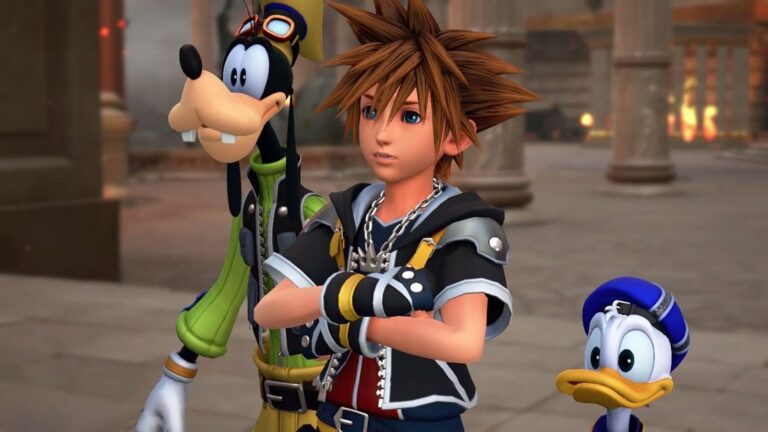
When Square Enix officially unveiled the upcoming Kingdom Hearts Collection [I~III] for Nintendo Switch 2 last month, the company intended to celebrate a milestone for the series: bringing the entire foundational trilogy to Nintendo’s handheld ecosystem for the first time. Instead, the North American box art sparked immediate debate across social media, with players and observers zeroing in on a peculiar detail that seemed out of place. Donald Duck’s hand appeared to have inconsistent finger counts between his two hands, a visual anomaly that immediately raised questions about the production process behind the artwork.
The discrepancy was significant enough to generate sustained discussion online, with fans and industry observers speculating about what might have caused such an error. Given the rising prominence of generative AI tools in creative industries, some suspected that artificial intelligence may have been deployed to generate or fill in portions of the revised artwork. The possibility seemed plausible given the specific nature of the compositional changes Square Enix had implemented for this new release.
The Redesign That Sparked the Controversy
Understanding the context of the box art revision helps clarify how the error occurred. The original Kingdom Hearts artwork, created by character designer Tetsuya Nomura, featured the main cast arranged closely together near the center of the composition. For the new collection release, Square Enix opted for a different visual approach, spacing the characters further apart across the box art surface.
Compositional Shift and Hidden Details
This deliberate spacing meant that previously hidden or partially obscured character elements became visible in the new layout. Donald Duck’s hand, which had been positioned out of frame or partially covered in the original design, now needed to be fully rendered and integrated into the new arrangement. This requirement to extend or complete character details that hadn’t been fully illustrated before created the conditions for the error to occur.
The Specific Problem
The result was visibly inconsistent: one of Donald’s hands displayed a different finger count than the other, a mistake that stood out immediately to observant fans. The error was glaring enough to fuel speculation that an automated process, specifically an AI art generation or enhancement tool, might have been responsible for filling in these newly visible spaces.
Square Enix’s Response and Denial
After several weeks of discussion and fan scrutiny, Square Enix finally addressed the controversy head-on. A company PR representative issued a statement to GameSpot that directly disputed the genAI speculation. âWeâre aware of feedback regarding recent Kingdom Hearts visuals,â the representative explained. âThese assets were created by our development team without the use of generative AI, and the issues resulted from human error.â
The company provided no additional technical details about how the error was introduced or what specific step in the workflow led to the finger inconsistency. However, the statement was unambiguous on one central point: no artificial intelligence tools were involved in the creation or modification of the artwork. Instead, Square Enix attributed the problem entirely to mistakes made during the manual redesign process.
Corrective Action and Updated Materials
Rather than leaving the problematic artwork in circulation, Square Enix took swift action to remedy the situation. The corrected version of the box art, featuring Donald Duck with anatomically consistent hand rendering, was implemented across the company’s promotional materials in advance of the game’s October 8 launch date. The update ensured that all new marketing collateral would display the corrected artwork moving forward.
Notably, the original social media post that ignited the controversy remains visible on X (formerly Twitter), serving as a permanent record of the initial error before the correction was made. Square Enix acknowledged the importance of quality in its follow-up statement, noting that âQuality is extremely important to us, and updated assets have been implemented where appropriate.â
The Broader Context of AI in Game Development
The timing of this controversy is significant given Square Enix’s broader corporate positioning on artificial intelligence. While the publisher firmly denied using genAI for this specific artwork, the company has been vocal elsewhere about its strategic interest in leveraging AI tools to improve operational efficiency across its divisions. This somewhat contradictory stance—embracing AI as a business tool while distancing specific projects from AI assistance—reflects the complex relationship many major publishers currently maintain with generative technology.
Industry Skepticism and Public Perception
The public’s immediate suspicion that AI was involved reflects wider uncertainty about how AI is being integrated into game development pipelines. As genAI tools become more prevalent in creative workflows, consumers and observers have become more attuned to potential signs of algorithmic involvement, from unusual anatomical errors to compositional inconsistencies. The finger error was exactly the type of detail that commonly appears in AI-generated or AI-enhanced imagery, making the speculation understandable even if ultimately incorrect.
Kingdom Hearts Collection and the October Release
Beyond the box art controversy, the Kingdom Hearts Collection represents a significant release for Square Enix and Nintendo alike. The compilation brings the original Kingdom Hearts, Kingdom Hearts: Re:Chain of Memories, and Kingdom Hearts II to Switch 2, making the entire core trilogy accessible to Nintendo players for the first time. This consolidation of the series’ foundational entries onto a single platform addresses a long-standing request from the franchise’s fanbase.
The October 8 release date gives Square Enix roughly three months to finalize all aspects of the collection and ensure that additional quality checks are thorough. Given the attention the box art error received, the publisher will likely apply heightened scrutiny to all remaining promotional and packaging materials to prevent similar oversights.
The incident ultimately serves as a reminder that even major publishers with extensive quality assurance processes can overlook details, and that in the current environment, any unusual artistic element risks speculation about AI involvement. For Square Enix, the swift acknowledgment of the error and implementation of corrections appears to have resolved the immediate controversy, though the original problematic artwork will remain documented in online archives as a footnote to the Kingdom Hearts Collection’s launch narrative.
Frequently Asked Questions
Why did the Kingdom Hearts Collection box art have an error with Donald Duck's fingers?
The box art was redesigned to space characters apart rather than keep them centered as in Tetsuya Nomura's original design. This required Donald Duck's hand to be fully rendered and visible for the first time, and human error during this process resulted in the finger count inconsistency.
Did Square Enix use AI to create or touch up the Kingdom Hearts Collection box art?
No. Square Enix stated that the assets were created by their development team without the use of generative AI, and that the issues resulted from human error.
When does Kingdom Hearts Collection release and what platforms will it be available on?
Kingdom Hearts Collection [I~III] releases on October 8 for Nintendo Switch 2, marking the first time the core trilogy appears on a Nintendo platform.
