
Key takeaways
- Paralives is redesigning baby characters that players found disproportionate and aged-looking, with updates launching August 10.
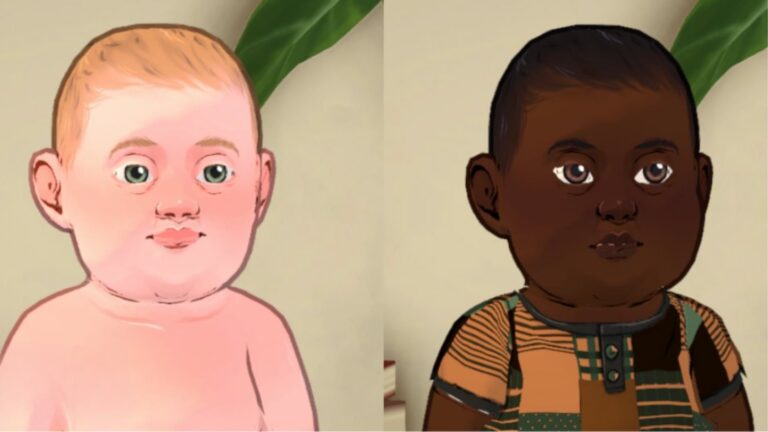
- The original babies had small facial features positioned in oversized heads, creating an appearance too adult for infants.
- Some players expressed nostalgia for the original designs, having grown fond of the unusual aesthetic despite issues.
- The redesign reflects the early-access game's responsiveness to community feedback as it challenges The Sims' market dominance.
Paralives, the early-access life simulation game positioned as a player-friendly alternative to The Sims franchise, is addressing a persistent issue that has been troubling its community: the appearance of newborn characters. Since entering early access, players building families within the game have encountered infants with distinctly unsettling facial proportions and expressions, prompting the development team to overhaul the baby character models entirely.
The Baby Problem That Couldn’t Be Ignored
When players first started creating families and having children in Paralives, they quickly discovered something disturbing about their virtual offspring. The babies exhibited an array of unflattering characteristics that made them appear aged, exhausted, and generally misaligned with what an infant should look like.
The issues manifested in several ways. Players noted that the babies possessed dark circles under their eyes, lending them the appearance of adult professionals bearing the weight of financial responsibility. One particularly memorable example saw a newborn character develop facial hair reminiscent of filmmaker John Waters, creating an uncanny and deeply inappropriate look for a three-month-old. The overall aesthetic became something of an internet talking point, with comparisons drawn to medieval artistic depictions of infants—historically known for their anatomically dubious and unsettling quality.
The core problem, from a design perspective, stemmed from proportional inaccuracy. Babies in real life feature disproportionately large heads relative to their bodies, with correspondingly oversized eyes positioned naturally across the face. The Paralives babies had been modeled with features too small for their overall head size, with eyes and facial details clustered toward the center of the face. This combination created an appearance far more adult than infantile, stripping away any sense of vulnerability or cuteness that typically accompanies newborn characters in simulation games.
Understanding the Design Challenge
Creating believable baby characters in video games presents a unique technical challenge that developers do not always prioritize.
Proportion and Perception
The fundamental issue lies in achieving proper proportional relationships. In real infants, the head comprises approximately one-quarter of total body length, eyes are proportionally larger, and facial features occupy more space relative to the head itself. When these relationships are inverted or compressed, even slightly, the result reads as wrong to the human brain. Players immediately sense something amiss, even if they cannot articulate precisely why.
Animation and Expression
Beyond static proportions, babies require specific animation states that differentiate them from other age groups. Newborns move differently, rest differently, and express emotion through limited but distinct facial movements. Getting these details right demands additional art and animation resources that not all studios allocate to characters who may only appear on screen for a limited game duration.
Cultural Expectations
Players approaching a life simulation game bring specific expectations about how life stages should appear. The Sims franchise has established certain visual conventions for infants and toddlers over multiple game generations. When Paralives deviated noticeably from these expectations, the disconnect became immediately apparent to an audience familiar with how babies should look in games of this genre.
Developer Response and Commitment to Change
The team at Paralives demonstrated awareness of the issue and moved quickly to address it. Rather than dismissing community feedback, the developers acknowledged the problematic baby designs and began working on replacement character models. The updated designs bring the infants into more realistic proportions, with properly scaled facial features and age-appropriate expressions.
The redesigned babies present a marked improvement in visual believability. The new models feature larger eyes positioned more naturally within the face, improved head-to-body proportions, and facial expressions that actually convey the vulnerability and softness associated with real newborns. These changes represent not just aesthetic preference but a fundamental shift in how the character models represent this crucial life stage.
The developers committed to rolling out these updated baby designs with Paralives’ next patch, scheduled for August 10. This timeline indicates that the issue received sufficient priority to accelerate the development and implementation of new character models, rather than relegating it to a future update or leaving it unaddressed.
The Unexpected Nostalgia Factor
Interestingly, not all community members welcomed the announcement of baby redesigns. Some players who had grown accustomed to—or even fond of—the original baby aesthetic expressed reluctance to see them changed. A portion of the playerbase found the unusual appearance oddly charming or memorable, with some comparisons to historical artistic styles lending the original babies a strange cultured quality.
This reaction reflects how gaming communities can develop attachments to even objectively flawed design elements. The original babies, despite their strangeness, had become part of Paralives’ early-access identity. For some players, the weird baby faces represented the game in its raw, early state—a kind of historical artifact of the development process. The redesign, while improving the game’s overall quality, also erases something that had briefly defined the community’s shared experience.
The August 10 Patch and Beyond
The baby redesign arrives as part of Paralives’ broader early-access development cycle. This patch represents just one element of the team’s continuing efforts to polish and refine the life simulation experience.
Paralives remains in early access, meaning the game still contains various systems and mechanics requiring development attention. Character design represents just one facet of ongoing refinement, alongside gameplay systems, interface improvements, and feature additions. The decision to prioritize baby character redesign suggests the team recognizes that presentation and visual believability rank among early access priorities, not something to defer until later stages of development.
The August 10 timeline also comes during a period when life simulation games continue gaining cultural relevance. With The Sims franchise facing ongoing criticism from its playerbase regarding monetization practices and development priorities, Paralives’ positioning as a community-focused alternative carries added significance. Addressing issues like baby character design demonstrates responsiveness to player feedback—a quality that distinguishes it in a market where players have grown frustrated with larger franchises.
What This Means for Life Simulation Games
The baby redesign situation illustrates broader truths about character design in simulation games. Every element of character appearance matters to player immersion and emotional investment. When creating life stages from infancy through old age, developers must consider not just the technical aspects of modeling and animation but also the psychological impact on players who see these characters as representations of their virtual families.
Paralives’ willingness to acknowledge the problem and implement substantial changes demonstrates a commitment to building a game that respects its community’s standards and expectations. As the game continues development toward full release, similar attention to detail across other character models and life stages will prove essential to establishing itself as a viable alternative in a space currently dominated by The Sims franchise.
Frequently Asked Questions
When will the updated baby characters arrive in Paralives?
The redesigned baby characters will launch with Paralives' next patch on August 10.
What specific problems did the original baby characters have?
The babies had small facial features positioned in the center of oversized heads, dark circles under their eyes, and unusual facial hair, making them appear aged rather than infantile.
Are there any players who preferred the original baby designs?
Yes, some players expressed nostalgia for the original babies, finding the unusual aesthetic oddly charming or comparable to medieval artistic depictions of infants.
