
Key takeaways
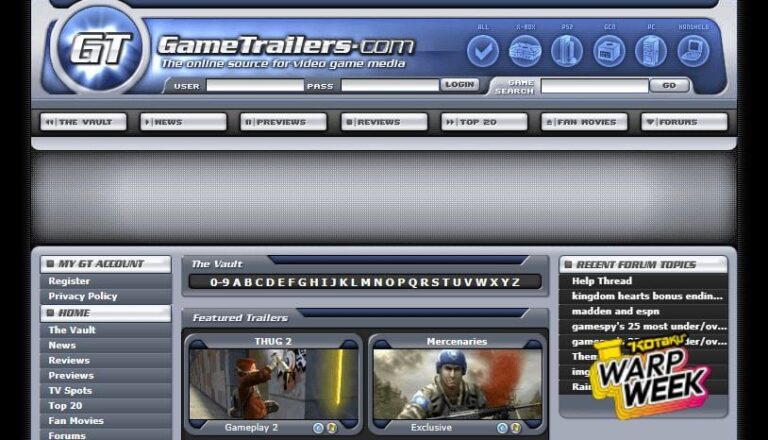
- GameTrailers.com was founded in 2002 by Brandon Jones and Geoff Grotz using a TiVo to record game commercials and resourcefully sourcing footage to centralize video game trailers.
- After Viacom's 2005 acquisition, professional editors like Daniel Bloodworth and Shane Satterfield elevated GameTrailers into an industry-leading publication covering reviews, previews, and retrospectives.
- Viacom's refusal to let GameTrailers join YouTube and its 2007 billion-dollar lawsuit against the platform sealed the site's fate, causing traffic to standalone sites to plummet.
- GameTrailers closed in 2014, with its brand sold to IGN in 2016, but Jones and the original staff launched Easy Allies that same year, demonstrating how corporate decisions can destroy revolutionary media institutions.
The Question That Started It All
A Film Graduate’s Evening Ritual
In 2002, Brandon Jones was a recent film school graduate living in Los Angeles whose evening routine centered on a simple ritual: macaroni and cheese, Final Fantasy, and checking Apple’s movie trailers hub. Before YouTube existed, Apple was the destination for quality film trailers in 720×480 QuickTime. Video game trailers, by contrast, existed only as crude television commercials or locked behind IGN’s paywall and demo discs. This disparity sparked an idea that would reshape gaming culture: “Why can I get movie trailers for free, but I have to pay money for video games?”
The Birth of GameTrailers.com
Jones and co-founder Geoff Grotz answered that question by launching GameTrailers.com. Their early operation was resourceful and aggressively unlicensed. “Unapologetically stealing from IGN and GameSpot,” Jones recalled. “If it was widescreen enough we would crop out the watermark. Yoink.” They weren’t trying to build an empire—they were solving a problem they saw themselves.
Building from Nothing
The TiVo Era and Early Sourcing
Sourcing footage required genuine creativity. Beyond ripping clips from competitors, Jones programmed his TiVo to record television broadcasts featuring game commercials. The early 2000s were still the Wild West for digital media rights, with the specter of Napster influencing how aggressively corporations policed content. Cease-and-desists arrived regularly. Nintendo specifically objected to their Super Smash Bros. commercial online—the one featuring The Turtles’ “Happy Together.” Publishers viewed television and internet distribution as separate ecosystems.
From Aggregation to Creation
Jones contributed more than just republishing existing material. With video editing expertise, he began creating original trailers, including an unauthorized mashup for Enter the Matrix that spliced audio from The Matrix Reloaded over assembled gameplay footage. The result looked official enough to fool viewers, with people contacting developer Shiny Entertainment directly to praise what they assumed was genuine promotional material. That single video generated 5,000 views—substantial for 2002.
The operation had no grand financial ambitions. Jones and Grotz worked regular day jobs, manually maintained their server at a local hosting facility, and rendered trailers after-hours while playing Battlefront II. “We would do our video editing jobs, wait for all of our coworkers to go home, render trailers and play Battlefront II overnight.” Jones added a banner linking to his employer, Hornet Animation, without asking permission. The resulting traffic crashed Hornet’s website, forcing an unexpected lunch meeting with his boss, Jon Slusser, who saw opportunity rather than reason to fire him. Slusser proposed transforming GameTrailers into a legitimate business. Jones watched filmmaker friends spend thousands on projects that went nowhere, while his homemade website accumulated steady traffic.

The Viacom Investment
As the site grew, it attracted bigger suitors. Blizzard’s sophisticated animated cinematics and The Legend of Zelda: Wind Waker’s visual departure convinced fans that GameTrailers was worth visiting regularly. Ziff Davis expressed interest, but Viacom—owner of MTV, Spike, and Nickelodeon—became the actual buyer in 2005.
Viacom’s acquisition proved unusually hands-off. GameTrailers remained a standalone digital-first project, Viacom’s only one of its kind. The executives knew they needed digital presence but weren’t sure how to build it. As Jones understood it, Viacom was “looking for someone to do the job so they didn’t have to.” The company assembled a professional editorial team: Daniel Bloodworth, Justin Speer, Ryan Stevens, and Shane Satterfield as first editor-in-chief. These professionals brought film editing and animation backgrounds that immediately elevated production quality. Jones, with stage acting experience, became the site’s voice and face, recording reviews with professionalism that distinguished GameTrailers from rougher internet content.
An Institution Takes Shape
With Viacom’s resources, GameTrailers evolved beyond a trailer aggregator. The team produced original video reviews regarded as industry-leading, created extensive previews, and published retrospectives. The site gave equal attention to major releases and emerging indie titles like Dear Esther. It hosted the Angry Video Game Nerd temporarily and took over Geoff Keighley’s Game Head, transforming it into a GameTrailers production that ran for seven seasons—a rebrand Keighley welcomed.
Friends reported having to physically remove children from the site. GameTrailers joined the cultural pantheon of computer lab destinations alongside Newgrounds and Candystand. Viacom’s investment had created something genuinely special.
YouTube and the Downfall
A Refusal That Would Cost Everything
This success masked a critical vulnerability: YouTube was growing with velocity and cultural presence rivaling Facebook. The social media era had arrived, and GameTrailers pressed Viacom to establish a YouTube presence. The conglomerate refused.
To Viacom’s leadership, YouTube wasn’t merely a rival—it was a thief plundering SpongeBob, South Park, and The Daily Show without permission. In 2007, Viacom sued YouTube for a billion dollars. The lawsuit settled seven years later, but Viacom maintained its prohibition against participating in the platform becoming the internet’s dominant video destination.
The Inevitable Decline
As YouTube’s gravitational pull became irresistible throughout the 2010s, Jones watched traffic to standalone websites plummet. There were discussions about GameTrailers Plus, a subscription tier, but someone within Viacom pulled Jones aside with a warning: the site was being shuttered regardless.
The End and What Came After
In 2014, Viacom sold GameTrailers. Staff was terminated and branding passed to IGN in 2016. What remained was a header atop a YouTube channel, where bombastic influencers now dominated gaming discourse. That same year, Jones and the original staff founded Easy Allies, a subscriber-supported venture continuing today, though Jones retired from games media in 2022.
Viacom had once demonstrated Shadow of the Colossus to president Tom Freston as evidence of gaming’s artistic potential. Freston, pushing 60 and visibly bored, didn’t grasp the message. Grotz intervened: “We look at our major rivals online, like IGN and GameSpot, and what we really want to do is crush them.”
Today, game trailers carry unprecedented cultural weight. Grand Theft Auto announcements generate conspiracy theories about release dates. Netflix broadcasts Grand Theft Auto trailers with Super Bowl-level significance. Geoff Keighley now presides over the Game Awards, where a single trailer placement can send a game to millions of wishlists—or crush it entirely.
Yet the underlying principle remains unchanged: the hunger to witness what games are becoming. GameTrailers understood that hunger before anyone else. Though the platform is gone, its shadow continues shaping how we anticipate and celebrate interactive entertainment.
“That’s the sad reality that I’ve come to terms with over the years,” Jones reflected. “The advancements in technology and entertainment always involve loss.”
Frequently Asked Questions
Who founded GameTrailers.com and what inspired the idea?
Brandon Jones and Geoff Grotz founded GameTrailers.com in 2002. Jones, a film school graduate, came up with the idea while noticing that movie trailers were freely available on Apple's site while video game trailers were locked behind paywalls or tied to physical demo discs. He asked himself: "Why can I get movie trailers for free, but I have to pay money for video games?"
Why was Viacom's refusal to let GameTrailers join YouTube so significant?
YouTube was rapidly becoming the internet's dominant video platform throughout the 2010s. By refusing to allow GameTrailers to establish a YouTube presence due to a 2007 billion-dollar lawsuit against the company, Viacom forced GameTrailers to compete only on its standalone website. When traffic to independent sites plummeted, GameTrailers had no alternative distribution channel to fall back on.
What happened to GameTrailers and its creators after the shutdown?
Viacom sold GameTrailers in 2014, terminating its staff, and the branding was passed to IGN in 2016, becoming just a header on IGN's YouTube channel. That same year, Brandon Jones and the original GameTrailers staff founded Easy Allies, a subscriber-supported venture that continues operating today, though Jones retired from games media in 2022.
