
Key takeaways
- David Perry is auctioning a rare 1973 two-player Computer Space arcade cabinet with an estimated sale price exceeding $20,000, nearly triple the current bid.
- Created in 1971 by Nolan Bushnell and Ted Dabney, Computer Space was the first commercially distributed arcade game, though it failed commercially while Pong succeeded.
- The two-player variant is considered practically unobtainable outside of museums, making Perry's decision to sell a rare opportunity for serious collectors worldwide.
- The arcade collecting market often prioritizes popular nostalgia over historical significance, leaving pioneering games like Computer Space undervalued compared to mainstream franchises.
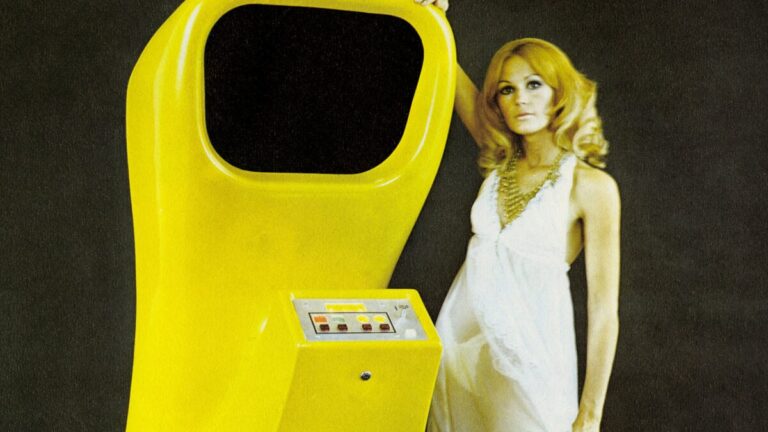
David Perry, founder of Shiny Entertainment and creator of Earthworm Jim, is parting with one of gaming’s most historically significant artifacts. Perry is auctioning a rare two-player version of Computer Space, widely recognized as the first arcade game ever commercially distributed. According to the auction page, this unit remains in full working condition and represents what experts call a “practically unobtainable” piece of gaming history—so rare that most examples exist only in museum collections or as background props in science fiction films like Soylent Green.
Computer Space: The First Commercial Arcade Game
In 1971, Nolan Bushnell and Ted Dabney, the engineers who would go on to found Atari, created Computer Space. The game represented a groundbreaking moment in interactive entertainment: the first time a video game appeared in an arcade cabinet available to paying customers. Rather than requiring expensive computer lab access, players could now insert coins and engage with digital gameplay in public spaces.
From University Experiment to Commercial Reality
Computer Space adapted the earlier 1962 computer game Spacewar!, bringing that academic exercise to commercial audiences. The gameplay was straightforward by modern standards—players controlled a rocket ship engaged in combat against a UFO. This simplicity belied the significance of the concept: Bushnell and Dabney had translated what required room-sized computers at universities into a cabinet small enough to occupy an amusement arcade.
Why a Pioneer Failed Where Others Succeeded
Despite its historical importance, Computer Space was not a commercial success. The general public in 1971 was not prepared for what early arcade gaming offered. Few people grasped the appeal of steering a spaceship to fire at an alien vessel. This failure explains why so few original units survived—manufacturers produced limited quantities of a machine that arcade operators did not want to stock. The irony is profound: Computer Space proved that commercial arcade gaming was possible, yet Pong, released the following year, would be the game that actually convinced the world to love quarters and arcade cabinets.
The Scarcity That Followed
This lack of popularity created the conditions for modern rarity. Arcade cabinets were not precious artifacts in 1971—they were disposable entertainment machines. When Computer Space failed to attract customers, operators junked them or used the wood cabinets for other purposes. The few machines that survived typically ended up in museums or private collections decades later, making any original Computer Space cabinet an extraordinary find.
The Two-Player Variant: Even Rarer Still
The specific machine Perry is auctioning is the two-player follow-up from 1973. This variant is even rarer than the original single-player cabinet. According to Perry, the market has already demonstrated this gap in rarity—the single-player version sold at auction for $69,000. Perry noted on social media: “It’s probably the rarest arcade game in existence, found in museums. Crazy, they sold the (more common) single-player version for $69K.”
The cabinet features a striking sparkling green finish, making it immediately recognizable as a premium piece from arcade history. Its presence at auction is so infrequent that many collectors have never seen one in person outside of curated museum exhibits. The working condition of this unit adds another layer of significance—a machine that is not only scarce but also fully functional represents an even more unusual discovery.

Perry’s Motivation and Market Timing
Perry has accumulated significant artifacts from video game history throughout his career in the industry. His decision to auction this Computer Space unit stems from a straightforward consideration: he has run out of space in his home. This casual explanation belies the machine’s extraordinary value—most individuals with such pieces donate them to institutions rather than sell them privately.
The decision to sell now means collectors worldwide have a rare opportunity. Computer Space cabinets appear so infrequently on the open market that dedicated enthusiasts may wait years between sightings. The choice to auction rather than donate suggests Perry wanted to offer serious collectors a chance to acquire the piece while pricing it for market value rather than tax deduction purposes.
The Auction and Current Valuation
At the time of reporting, the top bid on the two-player Computer Space cabinet stood around $10,000. However, the auctioneers estimate the final sale price will exceed $20,000—more than twice the current leading bid. This projection reflects confidence in collector demand and the precedent set by the single-player cabinet’s $69,000 sale.
The gap between current bids and estimated final price reflects how high-profile retro gaming auctions typically escalate in their final hours. Collectors and institutions monitor listings carefully, and a machine this rare attracts late bidders willing to pay premium prices. The final figure will likely establish a new data point for Computer Space valuations in the collector market and inform future sales of extremely rare arcade hardware.
The Broader Collecting Market: Hype Versus History
The Computer Space auction occurs within a wider context of video game collecting that has become increasingly speculative and trend-driven. As video games have become mainstream collectible assets, auction houses have noticed a pattern: certain games command extraordinary prices while genuinely historical pieces sometimes struggle for attention.
Popular Games Dominate Market Attention
Mario games, particularly rare or sealed variants, regularly achieve headlines and astronomical prices at major auctions. These sales attract significant media attention and drive speculation in the broader retro game market. Yet Computer Space—an actual milestone in the medium’s history, the literal first arcade game sold commercially—commands a fraction of what sealed copies of common Nintendo releases fetch.
This disconnect reflects broader trends in collectible markets: hype and popularity often drive value more than scarcity or historical significance. A game millions remember fondly generates more bidding competition than a pioneering artifact that most people have never seen. The Computer Space auction demonstrates that genuine historical importance can still command serious money, but it also highlights how speculative markets sometimes overlook the actual milestones of gaming history.
Museum-Quality Hardware Becomes Increasingly Scarce
Computer Space cabinets have effectively become museum pieces rather than arcade fixtures. The vast majority of remaining examples live in institutional collections, climate-controlled and displayed to educated audiences. Games such as these are so rarely seen outside of museums that their appearance at auction represents a significant event for the preservation and collecting community.
Frequently Asked Questions
What is Computer Space?
Computer Space is the first arcade game ever commercially distributed, created in 1971 by Nolan Bushnell and Ted Dabney, who later founded Atari. Players controlled a rocket ship fighting a UFO, adapting the 1962 computer game Spacewar! for arcade cabinets.
Why is the two-player version so rare?
Computer Space was not commercially successful when released, so manufacturers produced few units. Most were discarded as disposable machines rather than preserved. The 1973 two-player follow-up is even rarer than the original single-player version, with the single-player cabinet having sold for $69,000 at a previous auction.
How much is the Computer Space cabinet expected to sell for?
The top bid as of reporting was around $10,000, but auctioneers estimate the final sale price will exceed $20,000—more than twice the current bid. The estimate is based on the $69,000 sale of the less rare single-player version.
