
Key takeaways
- Xbox CEO Asha Sharma confirmed Elder Scrolls VI is in active development with strong progress on scale and story, revealing a cryptic eight-letter censored subtitle during an August 11 Bethesda office visit.
- The announcement came amid CWA union protests outside Bethesda, with workers demonstrating against recent layoffs of 1,600 employees and announced plans for 1,600 additional job cuts before year's end.
- An id Software developer publicly questioned whether Xbox leadership understands game development and art, claiming entire departments have been gutted by the reduction efforts.
- The union plans coordinated rallies across the U.S. and Canada on August 18 to demand fair contracts with layoff protections for unionized workers affected by Xbox's restructuring.
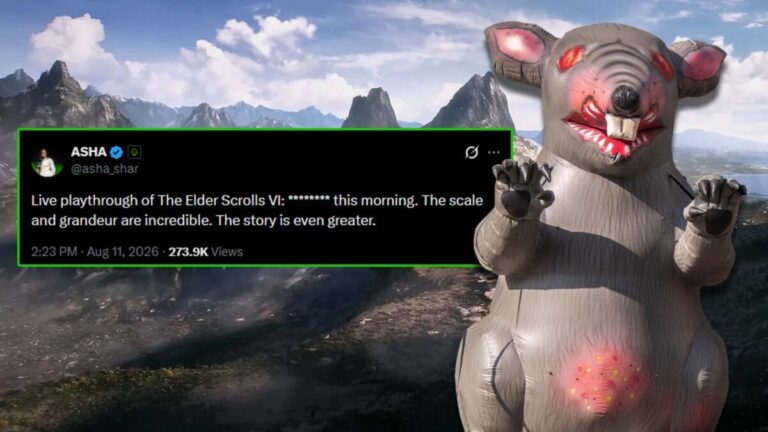
On August 11, Xbox leadership made an unannounced visit to Bethesda’s Rockville, Maryland headquarters, and what transpired during that visit has sent shockwaves through both the gaming media and labor advocacy communities. CEO Asha Sharma posted on social media about witnessing a live demonstration of The Elder Scrolls VI, the fantasy RPG that has been in development since its formal announcement in 2018. Yet the visit proved far more complex than a simple progress update, occurring against the backdrop of ongoing union protests and the company’s massive workforce reduction.
A Glimpse of Tamriel’s Future
Sharma’s social media post contained substance alongside spectacle. She reported that the game’s “scale and grandeur are incredible,” followed by an assertion that “the story is even greater.” The post included a live playthrough moment, suggesting Sharma observed gameplay in real time rather than engaging with a hands-on demo—though the exact nature of her involvement remains ambiguous. What captured the attention of the entire Elder Scrolls fanbase, however, was the deliberately censored subtitle accompanying her message: eight asterisks standing where the game’s actual title should appear.
The cryptic reveal triggered immediate speculation within gaming communities. Fans began assembling lists of eight-letter words that could define the next Elder Scrolls installment. Whether Sharma was genuinely teasing the game’s name or simply padding her post with masked characters for theatrical effect remains uncertain. The ambiguity itself became the story, ensuring that whatever Bethesda plans to call this sequel will meet audiences already primed by weeks of guessing games.
Waiting for the Sixth Installment
The Elder Scrolls VI has occupied a peculiar space in gaming culture for nearly a decade. Announced in 2018 with minimal fanfare—just a teaser establishing that development had officially begun—the game has remained largely out of the public eye. Each passing year without substantial updates has fed speculation, with fans dissecting every possibility from studio consolidations to technical obstacles that might explain the prolonged development timeline. Sharma’s glimpse into current progress, however vague, represents one of the most concrete updates players have received since that initial announcement.
Context of the August 11 Visit
The timing and nature of Sharma’s visit carried significance beyond typical studio oversight. Xbox leadership descended on Bethesda’s offices just weeks after initiating layoffs that would ultimately eliminate 1,600 positions across the company’s development studios. The visit appeared designed, at least in part, to assess ongoing projects and demonstrate executive engagement with development progress—particularly on flagship titles like The Elder Scrolls VI.
Labor Unrest Colors the Announcement
What made August 11 distinctive was not merely Sharma’s presence or her comments about Elder Scrolls VI, but the circumstances surrounding her arrival. Members of the Communications Workers of America union, including representatives from Bethesda’s workforce, had organized a protest outside the company’s Maryland headquarters. The demonstration featured Scabby, a giant inflatable rat commonly deployed by labor unions to draw attention to labor disputes, alongside walls of red flags representing workers who had lost their positions.
The union had clearly timed the action to coincide with Sharma’s visit, ensuring that Xbox leadership could not ignore the presence of organized workers demanding accountability. The protest represented more than symbolic gesture—it channeled worker grievances about compensation, working conditions, and the company’s planned reduction strategy directly into a moment when high-ranking executives would be physically present at company premises.
The Apparent Distraction Strategy
Critics and observers quickly noted the juxtaposition of Sharma’s Elder Scrolls VI post and the union activities occurring simultaneously outside Bethesda’s building. Many interpreted the timing as deliberate: by releasing exciting news about a long-awaited game, Sharma may have sought to redirect media coverage and fan attention away from the labor dispute and ongoing job cuts. Whether intentional or coincidental, the Elder Scrolls announcement proved effective at dominating gaming news cycles on a day when union workers were seeking attention for far different reasons.
Broader Context of the Layoffs
The August 11 visit occurred within a larger pattern of workforce reductions. Xbox had already eliminated 1,600 positions across its studios in recent weeks, and the company had publicly announced plans to reduce its headcount by an additional 1,600 workers before the calendar year concluded. This phased approach to layoffs suggested ongoing organizational restructuring rather than a single traumatic event, with multiple rounds of job cuts stretching into the final months of 2026.

What Developers Are Saying
Despite assurances from Xbox and Bethesda leadership that The Elder Scrolls VI would not face development disruptions due to the layoffs, voices within the industry painted a more complicated picture. A developer at id Software, speaking during a recent podcast interview, expressed skepticism about Xbox’s leadership understanding of game development and artistic vision. The id Software developer specifically claimed that Xbox “doesn’t understand art,” suggesting that recent management decisions had not been informed by deep comprehension of creative processes or industry realities.
This critique carried weight given id Software’s standing in the industry and its recent history under Xbox ownership. The studio’s developer also claimed that entire departments had been “gutted” by the reduction efforts, indicating that the layoffs had not been surgical or carefully targeted but rather had affected organizational structures broadly. Such comments contradicted the official narrative that layoffs would be managed without impacting development trajectories of major projects.
Union Action and Worker Solidarity
The CWA union made clear that the August 11 protest represented just the opening move in a broader campaign. The organization announced that union members would coordinate rallies across the United States and Canada on August 18, one week following Sharma’s Bethesda visit. These demonstrations would serve multiple purposes: expressing opposition to the announced layoffs, demanding improved contract terms for union members, and pushing for layoff protections that would provide workers greater security amid corporate restructuring.
The union’s statement acknowledged that the August 11 action had been timed deliberately to make worker concerns visible during leadership’s office visit. Union representatives emphasized that the decision to stage protests reflected the seriousness with which organized labor viewed Xbox’s reduction strategy and the need to ensure that company decision-makers understood worker perspectives before implementing further cuts.
The Road Ahead
The Elder Scrolls VI announcement will likely dominate gaming conversation for weeks as fans continue dissecting the eight-letter subtitle clue. Yet the broader narrative of August 11 encompasses more than a single game reveal. The day crystallized tensions within the gaming industry between executive decision-making, labor advocacy, and creative development. Whether The Elder Scrolls VI ultimately benefits or suffers from the organizational upheaval at Xbox remains to be determined, but the experience of Bethesda and id Software developers suggests that the path to completion will be navigated amid ongoing workplace uncertainty.
For now, fans of the Elder Scrolls franchise have confirmation that their long wait continues, though Sharma’s testimony to the game’s scope and narrative quality may provide some reassurance. The union workers outside Bethesda’s doors, however, pursued concerns far more immediate than fictional worlds—securing their own futures and those of their colleagues as Xbox executes its transformation strategy.
Frequently Asked Questions
What did Asha Sharma reveal about Elder Scrolls VI?
Sharma reported that the game's scale and grandeur are incredible and the story is even greater, following a live playthrough viewing on August 11. She also posted a cryptic eight-letter censored subtitle for the game.
Why were workers protesting outside Bethesda during the August 11 visit?
The CWA union organized a protest featuring a giant inflatable rat and red flags representing laid-off workers to oppose Xbox's recent 1,600 layoffs and demand fair contracts with layoff protections.
What did the id Software developer claim about Xbox leadership?
An id Software developer stated in a podcast interview that Xbox doesn't understand art or games and that entire departments have been gutted by the layoffs.
