
Key takeaways
- YouTube's AI detection systems mistakenly flagged Kurzgesagt's human-created video about microscopic organisms as artificial slop, significantly suppressing viewership.
- The channel's minimalist 'Corporate Memphis' animation style became so common across digital platforms that it entered AI training datasets, causing detection systems to misidentify legitimate human animation.
- Multiple YouTube creators have reported similar suppression since the platform deployed enhanced AI detection protocols, revealing a broader precision problem.
- The incident exposes a fundamental contradiction: Google simultaneously invests heavily in AI while attempting to prevent AI-generated content from degrading YouTube.
YouTube’s automated content moderation systems have become increasingly aggressive in their campaign against low-quality, algorithmically-generated material. Yet in executing this purge, the platform has caught an unexpected target: Kurzgesagt, a German-language science education channel that has spent thirteen years building a reputation for thoughtful, accessible explainers rather than sensationalist content.
The Mistaken Penalty
The channel, whose name translates to “in short,” discovered the problem gradually. View counts on recent uploads began fluctuating in unusual patterns. Their second-to-last video underperformed compared to historical norms. Then came their most recent upload, a deep dive into microscopic organisms that function as cellular predators. The viewership numbers were among the lowest in the channel’s entire publishing history.
Investigation revealed YouTube’s AI detection systems had flagged the video as artificially-generated content. The platform had classified it as “slop”—a term denoting low-effort, machine-produced material. When Kurzgesagt reached out to YouTube for clarification, the platform’s human representatives confirmed the suppression and acknowledged the mistake. The creators reported that YouTube’s contacts were “amazingly helpful and transparent” in addressing the error, with indications that the underlying algorithmic bug triggering the misidentification has been corrected. The creators plan to reupload the video with modifications intended to prevent recurrence.
Understanding YouTube’s Detection Infrastructure
YouTube has rolled out increasingly stringent AI detection protocols over the past year. The platform introduced automated flagging systems and tools allowing users to report channels that inundate the service with low-quality material. The motivation is straightforward: as AI image synthesis and video generation tools proliferate, the internet faces genuine risks of being overwhelmed with cheap, mass-produced content that degrades the quality and trustworthiness of information ecosystems.
Yet the automatic systems designed to distinguish human-created content from machine-generated material remain notoriously inadequate. These algorithms struggle to accurately assess originality versus replication. Distinguishing legitimate creative work from artificial forgery—what one might term the Voight-Kampff test of content moderation—has proven extraordinarily difficult for computational approaches. Both false positives, where legitimate content gets flagged, and false negatives, where actual AI slop evades detection, plague these systems.
The Role of Visual Style in Misidentification
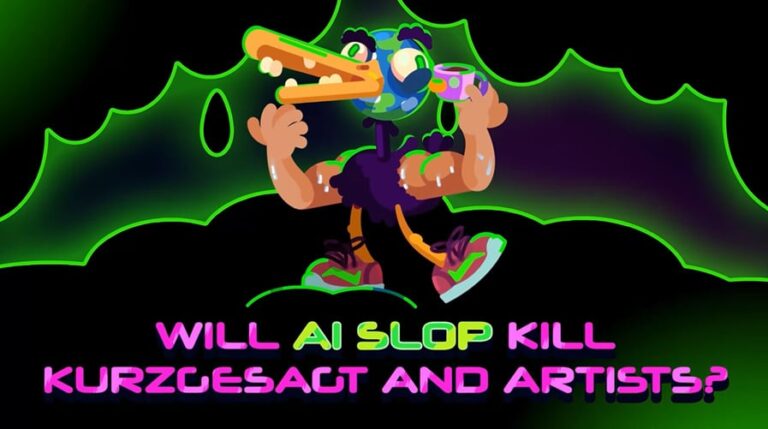
Kurzgesagt’s aesthetic represents a particular vulnerability to algorithmic misclassification. The channel employs what designers call “Corporate Memphis” style: minimalist design featuring rounded forms, simplified characters, geometric shapes, and a playful color palette. This visual language has become ubiquitous across digital platforms in recent years—so prevalent that it now permeates numerous AI training datasets used to teach machine learning models what synthetically-generated imagery looks like.
When YouTube’s detection systems encountered the microbiology video, they likely matched its visual characteristics against learned patterns associated with AI-generated material. The algorithm failed to account for a crucial reality: human animators had been producing work in this exact style for years, before these aesthetic patterns became common in machine learning training sets. The popularity of Kurzgesagt’s own design language may have inadvertently made their work vulnerable to false accusation.
The Documentary Context
The timing adds another layer of irony. Just the previous year, Kurzgesagt had produced content explicitly examining how AI-generated material threatens to degrade internet quality and trustworthiness. The channel’s documentary exploration detailed mechanisms through which automated systems flood networks with derivative, low-value content that gradually atrophies platform usefulness.
Yet the very platform hosting that critical analysis turned its algorithmic instruments on the creators themselves. Kurzgesagt confronted a direct collision between two simultaneous corporate priorities at Google: massive investment in artificial intelligence capabilities on one hand, and commitment to preventing AI-generated content from overwhelming YouTube on the other.

The Contradiction in YouTube’s Strategy
This tension reveals a fundamental logical paradox. A technology company attempting both to aggressively expand AI integration while preventing AI-generated content from degrading its own platforms operates under contradictory mandates. Google’s dual commitment creates inherent instability: as the company develops increasingly sophisticated AI tools, detection systems meant to police them must somehow distinguish legitimate applications from exploitative ones. Yet this distinction depends less on technological capability and more on editorial judgment—precisely the kind of nuanced decision-making that automated systems struggle to execute.
Broader Pattern of False Positives
Kurzgesagt’s suppression did not occur in isolation. Since YouTube deployed enhanced AI detection protocols, multiple channels have come forward reporting similar experiences: sudden viewership drops, algorithmic demotion, and platform-wide suppression triggered by false positives.
These reports indicate the problem extends beyond a single algorithmic error. They suggest YouTube’s detection infrastructure may be operating at insufficient precision to handle real-world deployment at scale. When systems are designed to be aggressive—to err on the side of removing suspected violations—false positive percentages necessarily increase, particularly when applied to content sharing aesthetic characteristics with known AI-generated material.
Implications for Smaller Creators
For established channels like Kurzgesagt with substantial audiences and platform relationships, recourse exists: direct communication with YouTube representatives who can reverse penalties. Yet for smaller creators, independent producers, and nascent channels still building initial audiences, no such safety valve may be available. A false positive could effectively prevent channel growth, with no human review available to correct the error.
The Path Forward
Kurzgesagt’s decision to reupload with modifications reflects an uncomfortable reality: creators must now optimize not just for human viewers and traditional search algorithms, but for a third layer of automated systems designed to classify their work. Artistic choices have acquired an additional constraint—ensuring that output passes through artificial scrutiny.
The incident raises fundamental questions about platform governance in an AI-saturated environment. YouTube faces genuine challenges moderating content at its operational scale. Yet outsourcing moderation entirely to unreliable systems produces outcomes harming legitimate creators while allowing exploitative operations to thrive through optimization. Whether YouTube ultimately reconciles these contradictions—maintaining AI integration while preventing degradation, protecting creators while excluding slop, operating transparently while keeping methodologies proprietary—will shape how digital platforms navigate the intersection of content moderation and artificial intelligence for years ahead.
Frequently Asked Questions
When was Kurzgesagt founded and what types of videos does it produce?
Kurzgesagt was founded in 2013 and creates animated explainers on scientific topics ranging from astronomy and microbiology to medicine, physics, and strange technology.
Why did YouTube's detection system misidentify Kurzgesagt's content as AI-generated?
The channel uses 'Corporate Memphis' design style featuring minimalist, rounded forms and geometric shapes. This visual language became so ubiquitous across digital platforms that it now exists in AI training datasets, causing detection systems to mistake legitimate human animation for machine-generated work.
Has this problem affected other YouTube creators?
Yes, multiple channels have reported similar suppression—sudden viewership drops and algorithmic demotion—since YouTube deployed its enhanced AI detection protocols, suggesting the system has insufficient precision at scale.
