
Key takeaways
- The erosion of physical game retail accelerated dramatically over the past five years as digital distribution and subscription services fundamentally reshaped how players access games.
- The transition to digital distribution occurred faster than most industry observers predicted, fundamentally altering how both publishers and retailers operate.
- For generations of gamers, bargain bins represented more than just a way to save money—they embodied discovery, adventure, and the thrill of finding hidden gems at rock-bottom prices.
- While traditional bargain bins have disappeared, new digital resale platforms have emerged to fill the void left by physical retail’s collapse.
Physical video game sales in the United States collapsed to $1.5 billion in 2025, marking an all-time low since tracking began in 1995. This represents an 11% decline from 2024 and an 87% plunge from the 2008 peak of $11.6 billion, effectively erasing three decades of retail growth. The decline signals the near-complete disappearance of bargain bins and used game sections that once defined gaming retail culture.
The Death of Physical Game Retail
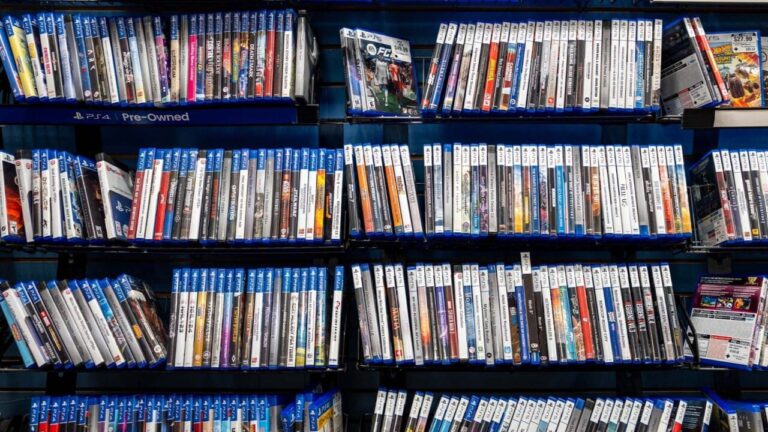
The erosion of physical game retail accelerated dramatically over the past five years as digital distribution and subscription services fundamentally reshaped how players access games. Major retailers that once dominated the landscape have either vanished entirely or abandoned physical game sales altogether. The shift represents not merely a change in purchasing habits but the wholesale dismantling of an entire retail ecosystem.
GameStop, the industry’s largest dedicated video game retailer, announced plans to close up to 200 stores by early 2020 following a $415 million net loss in Q2 and a 14.3% year-over-year sales decline. That announcement foreshadowed the broader collapse to come. In the United Kingdom, Game—once a retail powerhouse with over 300 locations—entered administration for the second time in a decade and is now closing its final three standalone stores in 2025, a stark reminder of physical retail’s vulnerability in an increasingly digital marketplace.
The Digital Shift Reshapes Consumer Behavior
The transition to digital distribution occurred faster than most industry observers predicted, fundamentally altering how both publishers and retailers operate. In 2023, an estimated 83% of console games sold as digital copies, leaving only 17% on physical discs. When PC games are included in the calculation, digital sales account for 95% of all games sold, leaving physical media as a marginal product category.
Sony’s decision to end physical disc support for PlayStation games starting January 2028 represents the most significant institutional acknowledgment of this shift yet. The company explicitly stated that eliminating physical media would cut costs, remove the used game resale market, and funnel 100% of revenue through the PlayStation Store. This policy move signals that major platform holders no longer view physical games as strategically important to their business models.
The Disappearance of a Cultural Institution
For generations of gamers, bargain bins represented more than just a way to save money—they embodied discovery, adventure, and the thrill of finding hidden gems at rock-bottom prices. The 1996 Sears Funtronics bargain bin, overflowing with Sega Saturn games marked down to $5 each, captured a specific moment when retailers aggressively discounted inventory to clear shelves of underperforming titles. That bin symbolized the era when physical retail controlled the distribution pipeline and surplus inventory had nowhere else to go.
The loss of these spaces means an entire discovery mechanism has vanished. Young gamers no longer stumble upon obscure titles or previous-generation games while browsing brick-and-mortar stores. Instead, they encounter algorithmic recommendations on digital storefronts, a fundamentally different experience that prioritizes new releases and high-margin products over deep back catalogs.
New Markets Emerge From the Ashes
While traditional bargain bins have disappeared, new digital resale platforms have emerged to fill the void left by physical retail’s collapse. The global second-hand game platform market was valued at $7.2 billion in 2025 and is projected to reach $13.8 billion by 2034, growing at a compound annual growth rate of 7.5%. Platforms like eBay and Backmarket now serve the cost-conscious gamers who once hunted through bargain bins.
This shift reflects a broader transformation in how used games are bought and sold. Rather than digging through bins at local retailers, gamers now navigate digital marketplaces where used digital licenses and physical copies of older games command premium prices. The democratization of the resale market through online platforms has created new opportunities but eliminated the serendipitous browsing experience that defined physical retail.
Tracking the Three-Decade Decline
The arc of physical game sales tells a story of technological disruption and consumer preference evolution. From 2008 to 2025, physical game spending in the United States fell 87%, a decline that mirrors similar shifts in movies, music, and other media categories. The trajectory began with the rise of digital distribution through services like Steam in the mid-2000s and accelerated with the launch of subscription services like Xbox Game Pass.
By 2024, physical game sales had already dropped 28% year-over-year, setting the stage for the record lows of 2025. This represents not a temporary adjustment but a permanent structural change in how the industry operates and how consumers engage with gaming products.
The Road Ahead for Gaming Retail
As Sony’s 2028 deadline approaches, expect additional platform holders and publishers to announce similar transitions away from physical media. The remaining physical game retail footprint will continue to shrink, with stores that survive likely focusing on collectibles, merchandise, and retro games rather than new releases. The economics of physical retail no longer support the infrastructure that once made bargain bins possible.
The disappearance of bargain bins represents the end of an era in gaming culture, one defined by physical media, retail discovery, and the thrill of finding unexpected treasures at clearance prices. What once filled entire sections of electronics stores now exists primarily in digital form, accessible through algorithms and storefronts that bear no resemblance to the chaotic, wonderful bins that defined gaming retail for decades.
