
Key takeaways
- McDonald's is piloting third-party advertising on drive-thru menu boards at select company-operated locations, displaying ads to customers waiting after they have ordered.
- The initiative stems from stagnant sales as consumers reduce fast-food visits due to high prices, wage stagnation, and quality concerns.
- The company plans to simultaneously invest in menu and quality improvements, positioning advertising as a supplementary revenue stream rather than a core strategy.
- Implementation details like ad frequency and visibility will determine whether customers perceive the ads as helpful content or intrusive commercialization.
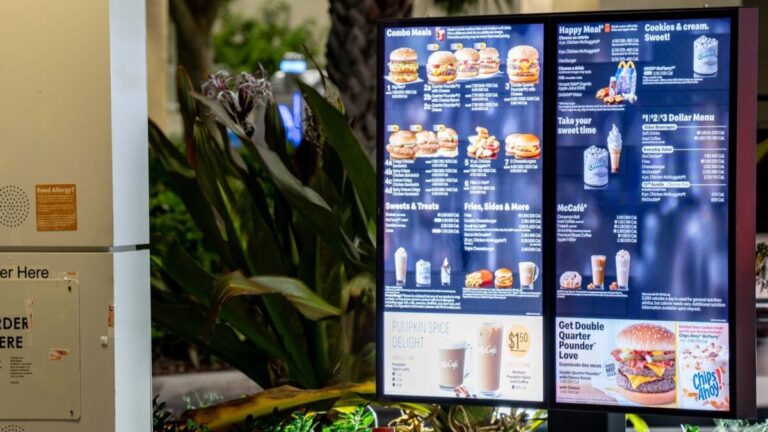
McDonald’s is testing a new system that would inject third-party advertisements into the customer experience during drive-thru visits. The company has begun a pilot program at select company-operated locations, with promotional content from other brands displaying on digital menu boards positioned outside the restaurant. These advertisements appear specifically after customers have placed their orders and are waiting in the queue for pickup—a moment when customers are stationary and cannot immediately disengage.
The Drive-Thru Advertising Model
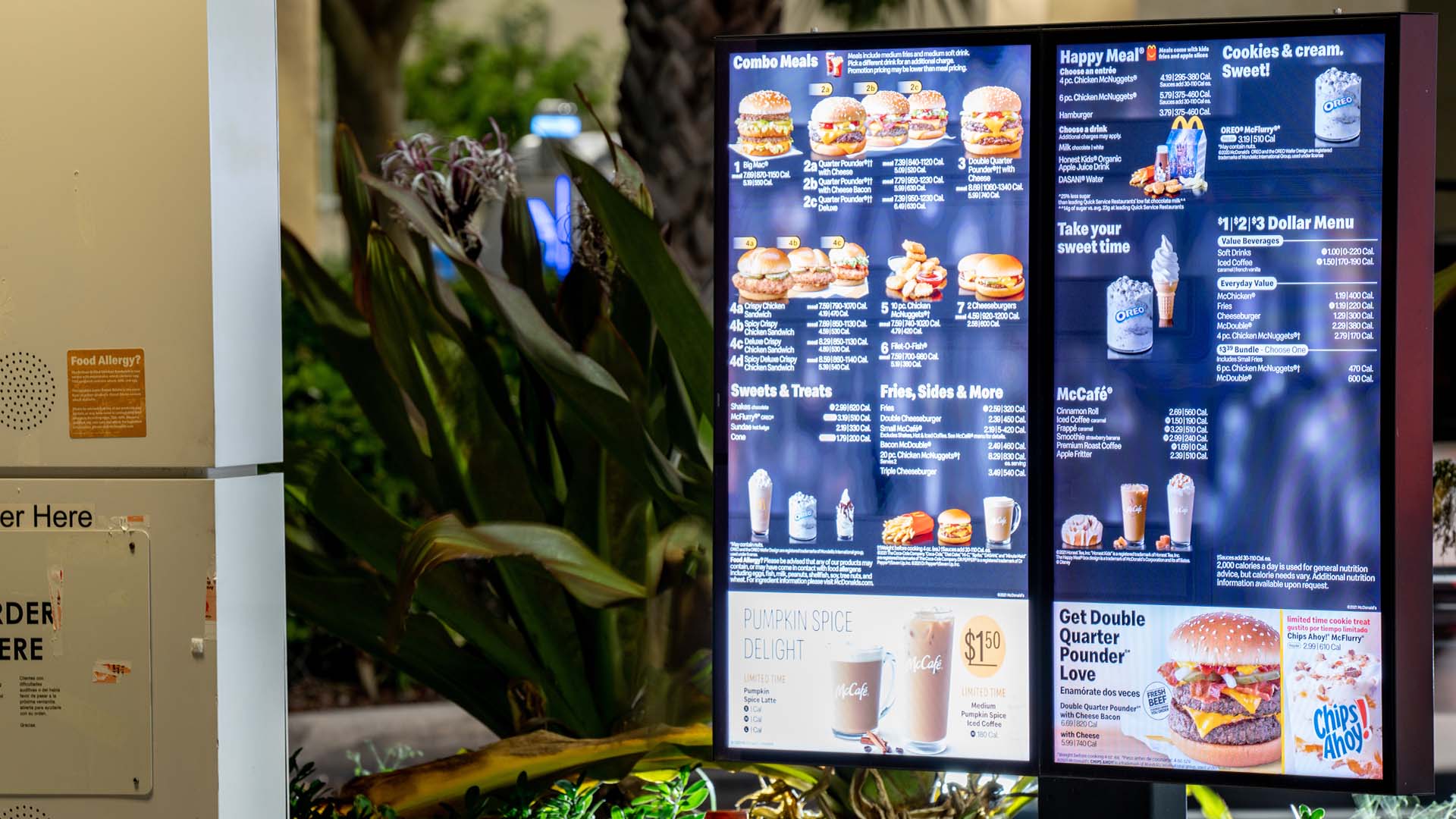
McDonald’s infrastructure includes thousands of digital displays positioned at drive-thru exits and ordering areas. Traditionally, these displays serve only McDonald’s own promotional content: menu items, pricing, limited-time offers, and company announcements. The new pilot repurposes this real estate to accommodate advertisements for brands outside the McDonald’s ecosystem.
The timing of ad delivery is deliberate. By displaying third-party content after the purchase decision has already been made, McDonald’s captures customers during a period of forced wait time. The drive-thru queue creates a captive audience: customers cannot walk away, cannot easily access other sources of entertainment or information, and are facing forward toward the screens.
The pilot operates at select company-owned restaurants rather than the broader franchised network. This limited rollout allows McDonald’s to test the concept, measure advertiser demand, assess customer response, and gather data on optimal ad frequency and content types before considering wider deployment.
McDonald’s Official Position
When Bloomberg asked McDonald’s about the initiative, the company provided a carefully worded statement. A McDonald’s spokesperson explained that the pilot is “exploring ways to share post-purchase content that customers may find helpful, relevant, or interesting, while ensuring the McDonald’s experience remains at the center of every visit.”
This framing positions the advertisements as informational rather than purely commercial. By suggesting the ads offer relevance and utility to the customer, McDonald’s attempts to recast advertising inventory monetization as a form of customer service. The phrase “McDonald’s experience remains at the center” acknowledges potential concern while reassuring stakeholders that the company has not subordinated its primary mission to advertising revenue.
The Financial Pressure Behind the Pivot
Stagnant Sales and Consumer Behavior Shifts
McDonald’s faces legitimate business headwinds that provide context for its advertising expansion. According to Bloomberg reporting, McDonald’s sales growth has stalled. Fewer consumers are eating out at fast-food restaurants, and multiple factors contribute to this trend: prices have risen substantially across the industry, wages for fast-food workers have not kept pace with inflation, and quality inconsistencies have eroded customer confidence in the McDonald’s brand experience.
When customers reduce their frequency of visits or spend less per transaction, companies must find offsetting revenue sources. Advertising on owned assets—the digital displays already installed throughout the restaurant network—offers a revenue stream that does not require customers to spend more on food or require the company to sell additional units.
Planned Investments in Core Product
Critically, McDonald’s has announced intentions to improve its menu quality and operational standards simultaneously with the advertising pilot. This signals that the company recognizes its core challenge: not just cash flow, but customer satisfaction and competitive positioning. The advertising pilot is not presented as a replacement for or substitute to product improvement, but rather as a parallel revenue initiative.
The company’s investment in menu and quality enhancements acknowledges that advertising monetization alone cannot solve the fundamental issue: if customers do not want to visit McDonald’s, advertisements during the drive-thru wait will not reverse that trend.
Advertising Monetization as Industry Trend
The Broader Shift in Consumer Spaces
The McDonald’s pilot reflects a broader shift in how consumer-facing companies view their physical infrastructure. Display screens, printed surfaces, and temporal windows once used exclusively for first-party branding have become advertising inventory. Movie theaters show ads before films. Gas station pumps display promotional content. Grocery store checkout stands feature digital advertisements. The drive-thru queue, by this logic, represents another asset ripe for monetization.
Premium Brand Resistance
This trend has encountered resistance in some quarters. BMW’s senior vice president previously stated that advertisements would never appear inside BMW vehicles, explicitly positioning the car’s interior as a private space. This public position suggests that some premium brands see distinction and privacy as brand value propositions threatened by aggressive advertising.
What Customers Will Experience
The Variable Wait Time Factor
The practical customer experience will depend on implementation details not yet fully specified. Drive-thru wait times vary dramatically. A customer visiting at an off-peak hour might spend thirty seconds waiting, while a customer during lunch rush might wait five minutes or longer. This variation means ad exposure will be uneven across the customer base and unpredictable for advertisers.
Frequency and Content Rotation
Factors that will shape the actual experience include:
- How frequently advertisements appear in the sequence
- Whether customers see the same ads across visits or whether content rotates
- Whether ads are skippable or silent
- How many seconds of screen time third-party brands receive per visit
These implementation choices will determine whether customers perceive the advertising as a neutral element of the experience or as intrusive commercialization.
The Testing Phase
For now, McDonald’s approach is experimental. By confining the pilot to company-operated locations rather than franchises, the company limits its downside. If the program generates meaningful adverse customer reaction or fails to attract advertiser interest, rolling it back is relatively straightforward. If the pilot proves successful (generating advertiser demand, incremental revenue, and acceptable customer satisfaction metrics), broader expansion could follow.
Success will likely hinge on execution: whether ads feel integrated into a valuable experience or nakedly commercial, whether frequency remains reasonable, and whether customer research validates that the initiative does not erode brand loyalty or satisfaction scores.
Frequently Asked Questions
When do the advertisements appear on McDonald's drive-thru menu boards?
The advertisements appear after customers have placed their orders while they wait in the drive-thru queue for pickup. This represents the post-purchase window when customers are stationary but unable to disengage from the displays.
Why is McDonald's introducing advertisements from other brands?
McDonald's faces stagnant sales as fewer consumers visit fast-food restaurants due to high prices, wage stagnation, and quality concerns. The advertising revenue helps offset declining food sales while the company invests in menu and quality improvements.
How does McDonald's justify adding advertisements to the customer experience?
According to a McDonald's spokesperson, the pilot is exploring ways to share post-purchase content that customers may find helpful and relevant. The company emphasizes that the McDonald's experience remains at the center of every visit.
