
Key takeaways
- The 2002 buyout fundamentally restructured Retro Studios’ governance and creative direction.
- Six years after the acquisition, the studio experienced a watershed moment that permanently altered its creative DNA.
- Between the 2008 exodus and the present day, Retro Studios successfully repositioned itself as a multipurpose franchise steward rather than a niche, single-franchise specialist.
- The decision to restart Metroid Prime 4 development in 2017 and 2019 further underscored how completely the studio had transformed.
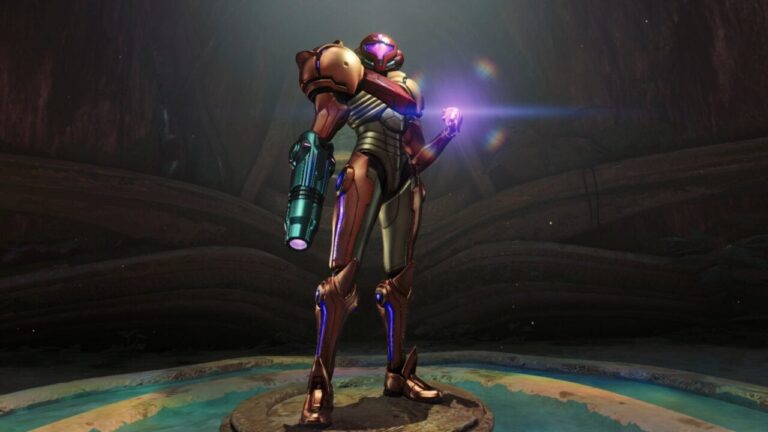
Nintendo purchased the remaining 55 million shares of Retro Studios for $1 million on May 2, 2002, transforming the independent developer into a wholly owned first-party subsidiary just months before the release of Metroid Prime. The acquisition marked the end of founder Jeff Spangenberg’s control and the beginning of a fundamental identity shift that would accelerate over the next two decades. Today, with Metroid Prime 4: Beyond released in December 2025, the studio bears little resemblance to the creative entity that Spangenberg established in 1998.
From Independent Ally to Nintendo Property
The 2002 buyout fundamentally restructured Retro Studios’ governance and creative direction. Nintendo had previously held only a 21.4% stake in the company, but the $1 million acquisition of Spangenberg’s remaining shares elevated the publisher to complete ownership. An official Nintendo statement explained that “Spangenberg desired to pursue other business interests, and opportunity to become majority owner made itself available,” marking the formal end of the founder’s era and the installation of Nintendo VP Steve Barcia as temporary leader.
This transition reclassified Retro from a second-party collaborator—a company aligned with Nintendo but maintaining creative independence—into a first-party subsidiary directly answerable to Nintendo executives. The shift in control extended beyond the boardroom; it fundamentally altered which projects the studio would pursue, how those projects would be developed, and what creative vision would guide them. The studio transitioned from being a small, founder-led experiment into a prolongation of Nintendo’s own strategic interests.
The Exodus That Redefined the Studio
Six years after the acquisition, the studio experienced a watershed moment that permanently altered its creative DNA. In late 2008, three key senior staff members—Design Director Mark Pacini, Art Director Todd Keller, and Principal Technology Engineer Jack Mathews—were physically escorted out of Retro’s Austin offices. These three architects of the acclaimed Metroid Prime trilogy departed to form Armature Studio, effectively removing the original creative vision that had defined the developer’s early identity.
The timing of this exodus proved significant. It occurred following the August 2007 release of Metroid Prime 3: Corruption, the final game in the trilogy that had established Retro’s reputation. The departure of Pacini, Keller, and Mathews severed the studio’s direct lineage to its most celebrated work. By August 2019, approximately half of the team that had worked on Metroid Prime 3 had departed Retro Studios entirely, with employees leaving for companies including id Software, 343 Industries, and Rockstar to pursue work on first-person shooters and more mature gaming experiences.
The Donkey Kong Pivot and Franchise Stewardship
Between the 2008 exodus and the present day, Retro Studios successfully repositioned itself as a multipurpose franchise steward rather than a niche, single-franchise specialist. The studio revived the Donkey Kong Country franchise with Donkey Kong Country Returns for the Wii in November 2010, followed by Donkey Kong Country: Tropical Freeze for the Wii U in February 2014. While commercially successful, these games marked a departure from the narrative depth and “Prime-like” progression that had characterized the original trilogy, instead embracing a more traditional, level-based platformer style.
Industry observers at the time described Retro Studios as “Nintendo’s champion in the west and the new Rare,” a comparison that acknowledged the studio’s evolution. The reference positioned Retro as the successor to Rare—the legendary UK developer behind Donkey Kong and Banjo-Kazooie—in fulfilling Nintendo’s 3D platformer and action-adventure needs. This characterization effectively signaled the end of Retro’s niche identity as a small, founder-led startup and its establishment as a broad-based Nintendo franchise division.
The Metroid Prime 4 Restart and New Generation
The decision to restart Metroid Prime 4 development in 2017 and 2019 further underscored how completely the studio had transformed. Nintendo initially handed the project to producer Kensuke Tanabe rather than assigning it directly to Retro Studios, acknowledging that the original creative team responsible for the trilogy no longer existed at the studio. When Retro eventually rejoined the project in 2019, it was tasked with developing a new engine and direction with a fundamentally reconstituted roster.
The new Retro team hired to lead Metroid Prime 4: Beyond included veterans from Rockstar and Call of Duty—developers with expertise in large-scale, modern game production rather than the Nintendo-centric, action-adventure sensibilities that had defined the original Prime trilogy. This hiring strategy represented not merely generational turnover but a deliberate pivot toward different creative influences and development philosophies. The resulting game, released on December 4, 2025, for Nintendo Switch, embodied this post-2008 identity rather than the studio’s 1998 founding vision.
The Studio’s Evolution and Industry Standing
Retro Studios’ transformation reflects broader patterns in video game studio acquisitions and integration. When a publisher acquires an independent developer, the original creative talent often departs—whether through attrition, forced exodus, or voluntary departure—and the studio’s output gradually reflects the parent company’s priorities rather than its founding principles. Retro’s journey from a scrappy, founder-led startup to a Nintendo subsidiary tasked with stewarding multiple franchises exemplifies this inevitable evolution.
The studio that designed Metroid Prime in 2002 no longer exists in any meaningful creative sense. The architects of that vision have departed, the creative culture has shifted, and the studio’s portfolio now extends far beyond the single franchise that established its reputation. Retro Studios remains a Nintendo studio bearing the same corporate name, but the entity that defined itself through the Prime trilogy has effectively ceased to exist.
What Comes Next for Retro’s Identity
The release of Metroid Prime 4: Beyond marks the beginning of a new chapter for Retro Studios under its current creative leadership. Observers will monitor whether the studio develops a distinctive identity around this new generation of talent or whether it continues functioning primarily as a Nintendo internal studio executing corporate strategy. The question of whether Retro Studios can establish its own creative voice under Nintendo’s ownership—separate from the legacy of Spangenberg’s era—will shape industry perceptions of the studio’s future.
More than two decades have passed since Nintendo acquired Retro Studios, transforming it from an independent developer into a first-party subsidiary. The creative personnel, design philosophies, and franchise portfolio have shifted dramatically in that time. The studio that once defined itself through a single visionary founder and a singular franchise has become something entirely different: a Nintendo division tasked with stewarding multiple properties and executing the publisher’s strategic vision for the western market.
