
Key takeaways
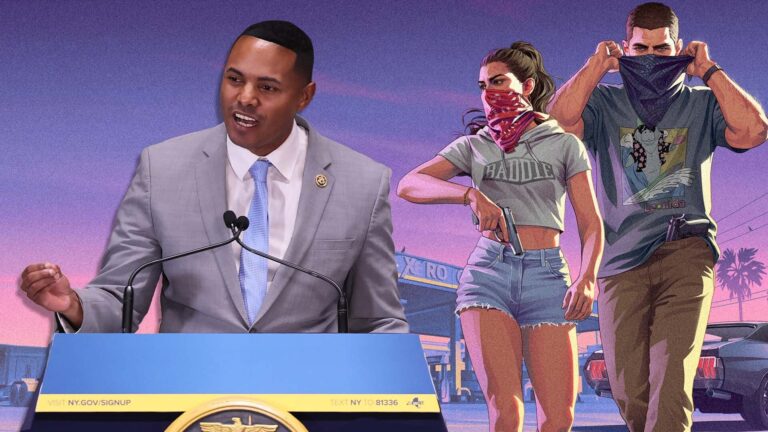
- Rep. Ritchie Torres is introducing the Power To The Players Act, legislation requiring FTC regulations that grant game purchasers actual ownership rather than temporary licenses.
- NBA 2K25, the fifth best-selling U.S. game in 2024, will be delisted October 30 with servers shutting down January 1, 2027, exemplifying the problem Torres aims to address.
- The bill would mandate that games with online features include offline modes that function after server shutdowns, framing preservation as a consumer rights and affordability issue.
- Torres views the legislation as restoring the historical norm of game ownership that existed through the 2000s, and suggests it could become a model for protecting other digital media rights.
NBA 2K25, the fifth best-selling game in the United States during 2024, will be removed from digital storefronts on October 30. By January 1, 2027, the online servers that power its most popular modes will shut down permanently. Players who purchased the $70 title will find it largely unplayable. This scenario has prompted Democratic Congressman Ritchie Torres of New York’s 15th district to take legislative action.
The Power To The Players Act
Torres plans to introduce the Power To The Players Act, legislation designed to protect video game ownership through new Federal Trade Commission regulations. According to Torres in a conversation with Kotaku, the bill’s core principle is straightforward: “If you pay for it, you own it.”
The proposed regulations would require companies selling digital games to grant players more than temporary licenses. Games featuring online components would be required to include offline modes that remain functional after servers are deactivated. Publishers would lose the ability to render purchased titles completely unplayable once support ends.
Torres framed the issue as both a consumer rights and affordability matter. “Consumers must have the right to own, the right to play, and the right to transfer the games they buy,” he stated in a press release. “A game that can be taken away the moment a company pulls the plug is not a purchase. It is a rental disguised as a sale. Families in the Bronx and across the country save up to buy these games, and they deserve better than a license that can vanish at any time.”
Growing Momentum Behind Game Preservation
The Stop Killing Games Movement
Torres’s proposal arrives as consumer advocacy has intensified around digital game preservation. The Stop Killing Games advocacy group spent the last year pressuring publishers to end the practice of rendering games unplayable when online support ceases. The movement gained additional visibility when Sony announced it would end physical disc production for the PlayStation 6, shifting toward an all-digital distribution model for its next console generation.
The Grand Theft Auto VI Factor
The spotlight on digital-only releases became brighter when Rockstar Games announced that Grand Theft Auto VI will launch as a download code inside a box rather than on a physical disc. Consumers purchasing the title, priced starting at $80, receive no physical ownership over their purchase. Combined with the NBA 2K25 delisting, these developments have crystallized concerns about where the industry is headed.
Digital Removals Beyond Gaming
The problem extends beyond interactive entertainment. Earlier in 2024, digital purchases of films including Terminator 2 were removed from users’ libraries, illustrating that digital media erasure affects multiple sectors. However, Torres’s legislation deliberately excludes movies and music, focusing specifically on gaming’s unique dynamics.
Technical Requirements and Scope
The bill directs the FTC to establish specific regulations governing how publishers handle game preservation. Games with online functionality would need to transition to offline playability before server shutdowns occur. This requirement acknowledges that many modern titles depend on remote servers for core features, making offline alternatives a technical necessity rather than an optional feature.
Torres described the legislation not as a radical departure but as a “restoration to the historical norm.” Throughout the 1980s, 1990s, and 2000s, games remained playable indefinitely once purchased. Players owned physical copies they could use whenever they wished. The shift toward digital-only distribution and server-dependent gameplay represents a fundamental change from that model.
The Path Through Congress
Torres, who has represented his district since 2021, declined to confirm whether the bill will attract Republican cosponsors or cross-party support. At 38 years old, he is nearly two decades younger than the median House member, many of whom were born before Pong was released in 1972. Despite this relative youth, the legislation faces structural challenges. An estimated 87 percent of proposed legislation never reaches a full congressional vote, and the bill must navigate committee processes before any such vote occurs.
Publishers are expected to lobby intensely against restrictions on their business models. The entertainment industry has significant resources devoted to congressional influence, and game publishers will likely argue that server maintenance costs and licensing agreements complicate offline preservation requirements.
Torres’s Personal Connection to Gaming
Torres confirmed to Kotaku that he did not purchase NBA 2K25, but his gaming background extends across multiple decades. He grew up with franchises including Grand Theft Auto, Resident Evil, and SOCOM, establishing his perspective as informed by decades of gaming consumption rather than recent casual interest.
The congressman also indicated that if the legislation succeeds in the gaming sector, it could serve as a model for digital media rights more broadly. “I hope we can set a precedent that will be followed elsewhere in the digital economy,” Torres said, suggesting that protections for game ownership could inform how other digital purchases are regulated.
Broader Implications for Digital Distribution
The legislation raises fundamental questions about what ownership means in a digital economy. The distinction between owning a product and holding a revocable license has become increasingly important as digital distribution dominates retail channels. Pricing has accelerated simultaneously, with game prices rising as physical production ends and digital monopolies reduce distribution alternatives.
Whether Congress acts on Torres’s proposal remains uncertain. Congressional action on technology and consumer protection issues has been inconsistent, and the gaming industry represents a multibillion-dollar sector with substantial political influence. The outcome could reshape how digital games are sold and preserved for decades to come.
Source: Kotaku
Frequently Asked Questions
What happens to NBA 2K25 on October 30?
NBA 2K25 will be removed from digital storefronts. By January 1, 2027, online servers will shut down, rendering most popular modes unplayable for the millions who purchased the game.
What would the Power To The Players Act require?
The legislation would direct the FTC to create regulations requiring publishers to grant players ownership rather than licenses. Games with online features would need offline modes that continue functioning after servers shut down.
Has Congress confirmed this bill will advance?
No. Torres has not confirmed cosponsors or Republican support. Approximately 87 percent of proposed legislation never reaches a full congressional vote, and the bill must navigate committee processes first.
