
Key takeaways
- Sakurai ended his 16-year Game Designers Award at Tokyo Game Show, warning that gaming will 'die slowly' without originality as market forces favor familiar ideas.
- The number of games released on Steam annually has jumped from 275 in 2010 to over 19,000 today, with AI tools making imitation faster and cheaper than innovation.
- Creating and marketing truly original games requires navigating obstacles at every stage: conception, internal communication, audience education, and market positioning.
- AI can replicate established game design patterns and aesthetics but cannot replace the pioneering designers who define new directions for the medium.
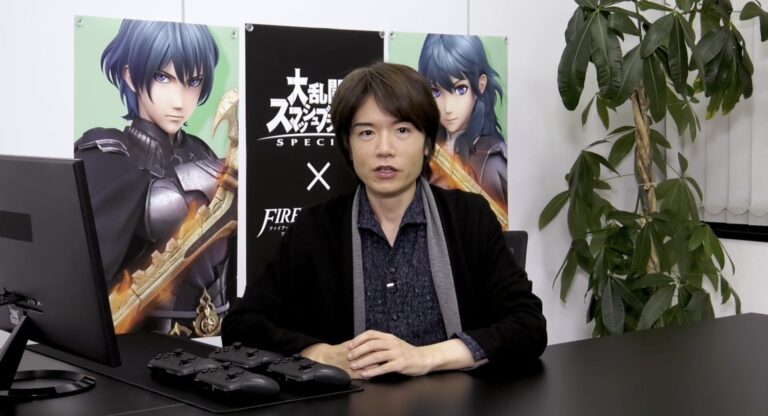
Masahiro Sakurai has concluded one of the gaming industry’s most distinctive initiatives. For 16 years, the legendary designer handed out his Game Designers Award at Tokyo Game Show to celebrate games that took creative risks, regardless of commercial performance. Last month’s ceremony marked the final edition, and Sakurai used the occasion to deliver a sobering assessment of where gaming stands.
An Award Built on Originality
The Game Designers Award centered on a simple principle: recognizing work that pushed beyond established formulas. Past winners included the original Life Is Strange, Mario Kart: Home Circuit, Viewfinder, and Scribblenauts—titles that found new ways to engage players within their genres or created entirely fresh concepts. The award made no claim about sales potential or commercial viability; it existed to spotlight games that designers had made differently.
In his closing speech, Sakurai confronted an uncomfortable reality. “Though it may sound rather grave, originality doesn’t actually have a strong impact on sales,” he said. “I think it actually ranks low on the list of priorities for many.” The comment encapsulated a tension at the heart of modern game development: the most profitable path often runs opposite to the most creative one.
Why Audiences Crave the Familiar
The Convenience Store Analogy
Sakurai explained the problem through an everyday comparison. Most people, he noted, do not rush out to try every new limited-edition drink at convenience stores. Taste preferences settle; customers gravitate toward what they already know. “The more you become accustomed to something, the more you gravitate toward the familiar. Most people tend to only want a taste that matches their preference and is exactly what they expect.”
The Existential Risk to Gaming
Yet this preference for the known carries consequences for the entire medium. “An industry that loses that sort of originality will only die slowly,” Sakurai stated in remarks to Denfaminico Gamer. “The industry exists today because there have always been new ideas and experiences, and people making them.” Without that continuous stream of fresh thinking, gaming would stagnate toward irrelevance.
The Challenge of Building Something New
Existing Genres, Original Mechanics
Sakurai’s own career offers a case study in the problem he describes. Neither Kirby nor Super Smash Bros. invented their genres—2D platformers and fighting games already existed. What made them distinctive was Sakurai’s focus on how players could act within those frameworks. Kirby’s copy ability and the roster structure of Smash Bros. were neither accidental nor inevitable; they emerged from deliberate design choices.
Conception to Market
Getting an original idea off the ground remains extraordinarily difficult. First, a designer must conceive something without obvious precedent. Then comes the challenge of translating that vision to a team. “It’s difficult to convey that ‘this is why it is fun, because you can do this,'” Sakurai explained. From there, a publisher must understand the concept well enough to communicate why it matters to potential players. “What are the game’s selling points?” becomes a question harder to answer when no comparison point exists.
Marketing Without a Blueprint
The language of marketing exacerbates the problem. “Nowadays, so many games are described as XX-like, or games that resemble another one. In other words, the thing everyone else already wants. But originality means you have to create something that isn’t already what people are after, and be deliberate with that. It’s a high hurdle.” Describing a game in relation to existing work guarantees recognition; positioning something truly original demands much more.
The Steam Gold Rush
The scale of the problem has exploded. When Sakurai founded his award in 2010, Steam hosted roughly 275 games released in a given year. The platform now sees over 19,000 games annually. Steam Next Fest this month alone features over 8,000 titles, many leveraging AI to accelerate production and most copying established formulas.
The sheer volume makes discovery nearly impossible and quality assessment meaningless. “Although 19,000 titles is a lot, I think that number will only grow from now on, because AI will be used to turn them out,” Sakurai said. “Most of them will end up unplayable, and there will be so many that it’ll be impossible to keep track or even understand them.”
AI as an Accelerant to Imitation
The Librarian Effect
Sakurai pointed to Librarian: Tidy Up the Arcane Library as a recent example of how ideas propagate. The game presents a straightforward premise: a magical library has been scattered, and the player must restore it to order. The mechanics are simple—straightforward enough that others quickly mimicked the concept. “Games like Supermarket Chaos or Needle in a Haystack Simulator have multiplied like crazy,” he observed. “They’re all puzzle games, but that kind of imitation will be simple for AI to conduct.”
AI’s Replication Problem
Artificial intelligence can analyze atmosphere and structure from acclaimed works—Fumito Ueda’s ICO and Shadow of the Colossus, for instance—and generate serviceable approximations. But replication is not innovation. “Even if AI can create all these sorts of works, such as by analyzing the atmosphere of games from Fumito Ueda like ICO and Shadow of the Colossus and using that to create something similar, which could happen, but AI would not be able to create whatever Ueda himself will create in the future,” Sakurai noted.
A Fragile Hope
Sakurai’s decision to end the award may seem like resignation. Instead, he framed it as a call to action. The gaming industry survives only insofar as designers with genuine vision find room to work. “Without it, there may not be an industry left,” he concluded. His 16-year effort to highlight originality was one tool among many that the industry needs to ensure creative voices remain viable even as market pressures and technological shortcuts make imitation easier than ever.
Source: Kotaku
Frequently Asked Questions
What was Masahiro Sakurai's Game Designers Award?
For 16 years at Tokyo Game Show, Sakurai presented an award recognizing games that demonstrated original design ideas regardless of sales performance. Winners included Life Is Strange, Mario Kart: Home Circuit, Viewfinder, and Scribblenauts. Last month's ceremony was the final edition.
How much has the game release landscape changed since the award started?
When Sakurai founded the award in 2010, Steam hosted approximately 275 games per year. Today Steam releases over 19,000 games annually, with this month's Steam Next Fest alone featuring over 8,000 titles, many using AI to copy existing ideas.
What example did Sakurai give of how AI enables imitation?
Sakurai cited Librarian: Tidy Up the Arcane Library as a simple concept that spawned numerous imitators like Supermarket Chaos and Needle in a Haystack Simulator. He explained that AI can easily replicate this type of design pattern, making imitation faster and cheaper than creating original ideas.
