
Key takeaways
- Arc System Works' Tōkon breaks from Marvel vs. Capcom: Infinite's corporate alignment approach, signaling openness to unconventional character selection.
- Seven overlooked characters—including Madrox, Silvermane, Nightshade, and Madelyne Pryor—could offer unique gameplay mechanics and thematic depth absent from current rosters.
- Marvel fighting games succeed when rosters prioritize creative risk and unexpected matchups over mainstream popularity alone.
- Tōkon has achieved commercial success at launch despite performance issues, providing foundation for roster expansion embracing the medium's tradition of unhinged selection.
Arc System Works has delivered Tōkon: Fighting Souls, a new crossover fighter that channels Marvel’s vast character roster through the studio’s acclaimed 2D fighting game framework. The title positions itself alongside Marvel Rivals while charting its own philosophical path. Producer Michael Francisco has stated that character popularity was not the deciding factor in building the roster, yet the selection process reflects careful consideration of how legacy systems inform modern design. Understanding Tōkon requires examining Marvel’s fighting game history—a lineage rich with unconventional choices that gave the genre much of its character.
Marvel vs. Capcom and the Golden Age of Excess
When Capcom’s Marvel series first appeared in arcades, the timing aligned with superhero culture at its most experimental. The early 2000s were dominated by extreme redesigns, prismatic collectible covers, and an aesthetic that celebrated bold choices. These games featured fighters like Spiral, Blackheart, and Shuma-Gorath long before Thor or Iron Man ever entered the ring. The rosters thrived on unexpected combinations and genuinely obscure characters. Thematically, Capcom’s approach treated fighting games as platforms for character exploration rather than franchises bound by contemporary adaptation priorities.
The Infinite Shift Toward Corporate Alignment
Disney’s Influence and the X-Men Exclusion
Marvel vs. Capcom: Infinite represented a fundamental departure from this creative autonomy. The game synchronized its roster directly with Disney’s theatrical franchise, most notably by locking the X-Men entirely from the playable roster. This decision proved controversial among dedicated fans and raised essential questions about how licensing should inform game design. Were rosters meant to reflect current entertainment priorities, or should they embrace fighting games’ historical tradition of surprising character selection?
What This Taught the Industry
Infinite’s approach demonstrated that strict corporate alignment carried creative costs. The most beloved fighting games historically succeeded because they offered rosters that rewarded exploration and discovery. Constraint-driven design, while sometimes commercially safer, often underperforms in the specific medium of crossover fighters where roster unpredictability itself functions as content.
Tōkon’s Balanced Philosophy
Arc System Works has positioned Tōkon as a middle path. The game features Danger—described as an anime android rather than trap-based creation—a choice that signals willingness to reinterpret characters beyond source material. While Francisco emphasized that popularity metrics did not drive selection, the announced roster demonstrates strategic thinking about variety. Tōkon suggests the studio is willing to embrace the medium’s experimental traditions while navigating modern licensing realities. The game does face technical hurdles to address, but its character philosophy already suggests ambition beyond corporate checkbox compliance.
The Case for Unhinged Character Selection
What transforms a fighting game from competent to memorable is roster unpredictability—the recognition that deep cuts and strange matchups are themselves valuable. Players gravitate toward games offering not just thematic significance but genuine creative risk. Madrox, the Fantastic Four villain turned X-Factor regular, showcases this principle perfectly. Multiple Man’s ability to replicate himself indefinitely, with clones growing progressively disgruntled, suggests gameplay mechanics no other Marvel fighter can replicate. A game featuring such a character advertises mechanical ambition alongside character depth.
Silvermane, Spider-Man’s cyborg mobster antagonist, operates similarly. Once a powerful New York underworld figure, Silvermane sought unconventional physical enhancement as his body deteriorated, becoming grotesquely augmented. Spider-Man’s criminal ecosystem remains historically underrepresented in Marvel fighting games despite its narrative richness in comics. Silvermane represents an aesthetic and mechanical space—technological enhancement, organized crime, bodily horror—that fighting games rarely explore at significant scale.
Characters That Should Be in Tōkon But Aren’t
The Supernatural Tier
Dead Girl, a core member of Mike Allred’s X-Force, discovered necromancer abilities after assassination by her boyfriend. Originally self-absorbed, she eventually found purpose in heroism, honing creepy supernatural powers and aligning with figures like Doctor Strange. Madelyne Pryor, the Goblin Queen and Jean Grey clone, wields forbidden magic and mutant psychic force to warp reality into hellish landscapes, exploiting latent fears through demonic manifestation. Together, these characters create supernatural depth absent from current rosters.
Cult Figures with Mechanical Potential
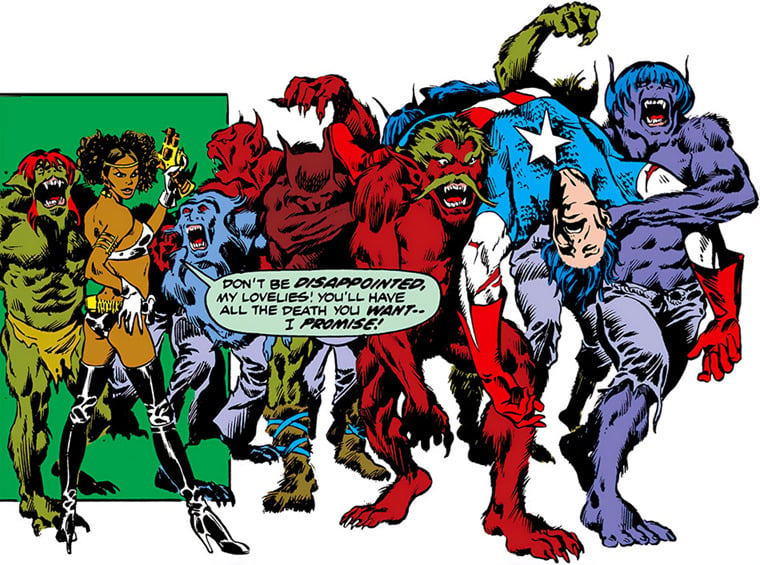
Tilda Johnson, known as Nightshade, represents a concept almost entirely absent from Marvel fighting games: the werewolf commander. Despite Captain America-era origins, she has maintained anti-hero standing within Marvel’s criminal ecosystem. Her signature tactic—transforming other heroes into werewolves for enforcer use—appeared in Netflix’s Luke Cage series, though stripped of her iconic fuzzy army. Fighting games need not replicate MCU constraints.
Rom the Space Knight emerged from 1970s and 1980s Marvel toy licenses like Transformers and Micronauts. While most characters from these properties faded, Rom achieved lasting cultural weight, teaming with the Avengers well beyond toy shelf-life. His current appearance in Marvel Rivals demonstrates ongoing viability. The character’s visual design—resembling a shimmering beer can—offers distinctive aesthetic appeal that the roster would benefit from.
The Anachronistic Wild Card
Clifford F. Michaels, a Spider-Woman antagonist, stands out as the period-piece eccentric. Disgusted by modern technology, he constructs flying tandem bicycles, killer mannequins, and sonic phonographs to terrorize San Francisco while pursuing Gilded Age nostalgia. His anachronistic vision and goofball methodology mask surprising tactical effectiveness, leading to membership in the Hood’s criminal organization. He represents the character type that makes roster deep-dives entertaining—improbable but mechanically sound.
Launch Reception and Technical State
Arc System Works has demonstrated technical mastery across decades of genre leadership. Tōkon’s reported PC performance issues at launch, partially addressed through Epic Games Store workarounds, represent typical launch-window challenges rather than systemic design failures. The game has achieved what its creators describe as colossal success, suggesting players have embraced this entry into Marvel’s fighting game history. The foundation exists for roster expansion that honors the medium’s historical preference for the unhinged and unconventional over corporate predictability.
Frequently Asked Questions
Is character popularity the deciding factor in Tōkon's roster?
According to producer Michael Francisco, character popularity was not the deciding factor in Tōkon's roster, suggesting the game prioritizes creative balance and mechanical variety.
What characters should have been included in Tōkon?
The article proposes seven characters: Madrox (Multiple Man), Silvermane (cyborg mobster), Dead Girl (necromancer), Nightshade (werewolf commander), Madelyne Pryor (Goblin Queen), Rom (Space Knight), and Clifford Michaels (anachronistic inventor).
How does Tōkon differ from Marvel vs. Capcom: Infinite?
Tōkon appears to balance creative freedom with commercial licensing, whereas Infinite strictly aligned rosters with Disney's theatrical franchises and locked the X-Men out entirely.
