
Key takeaways
- Nic Duchesne, producer on Serious Sam: Shatterverse, drew design inspiration from playing Stardew Valley every Christmas for three years with his wife.
- Duchesne translated Stardew Valley's principles of simplicity, intuition, and no-fail design into a cooperative arcade shooter that launches with minimal friction.
- Both games prioritize couch co-op accessibility and low barriers to entry, allowing friends to play together without prerequisites or lengthy tutorials.
- Shatterverse embodies the "beer-and-pretzel" philosophy—affordable, immediately playable, and designed to welcome players who may not be shooter fans.
An Unlikely Connection
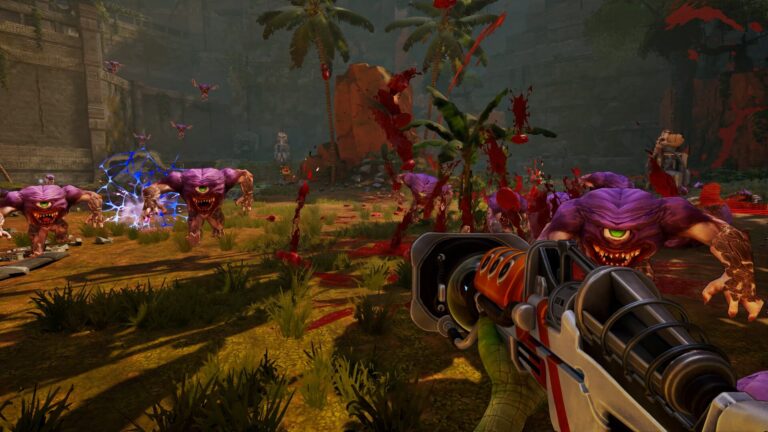
When game developers discuss their influences, the connections often surprise. Nic Duchesne, a producer at Behaviour Interactive working on Serious Sam: Shatterverse, draws creative energy from a source that seems impossibly distant from his current project. For years, he has turned to Stardew Valley—a quiet farming simulation where seasons cycle gently and repetition defines comfort. Yet from a game about crops and relationships, he has extracted principles that now guide the design of a cooperative shooter where up to five players battle through waves of monsters across three levels per run, each stage finishing with a boss encounter. That Shatterverse launched on August 31 already speaks to how complete his translation of those lessons has become.
Duchesne joined Behaviour Interactive nearly a decade ago. His career spans mobile releases like Assassin’s Creed: Rebellion and Giblins: Fantasy Builder, plus several console and PC titles—some already released, others still in development. None would immediately suggest why he gravitates toward a game about rural life and fishing.
The Christmas Ritual
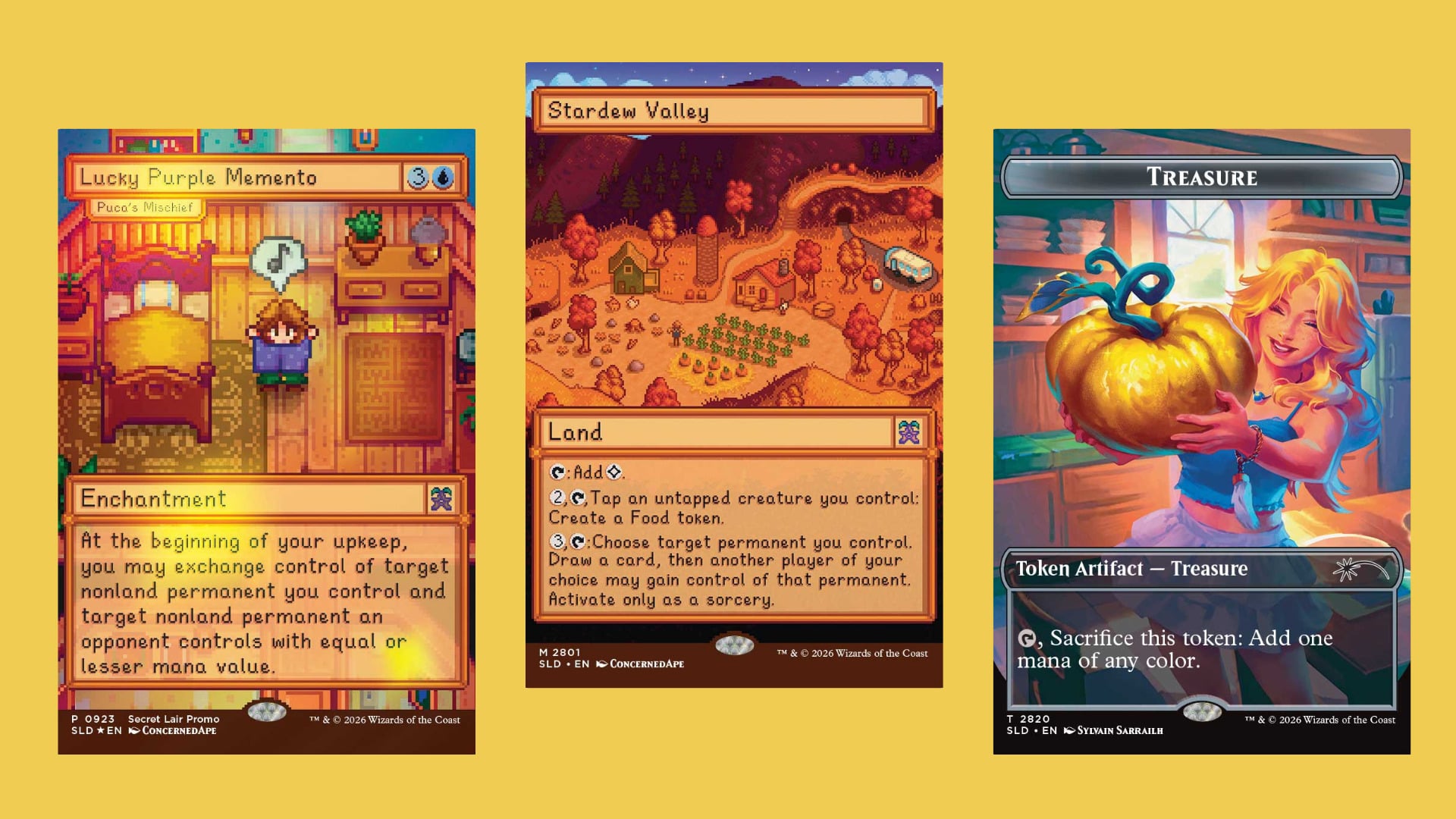
Five years ago, Duchesne and his wife created a holiday tradition. They would select one game together, settle into their home for several days, and disconnect from obligations. For that first Christmas, he suggested Stardew Valley on their console. The pitch was personal: both of them dream of rural life with a small farm and animals, the kind of existence work schedules have always prevented. She agreed.
They returned the next holiday. Then again the following year. Three Christmases running, always starting fresh, always the same game. The pattern solidified into something nearly automatic. “We’re not selecting games for Christmas tradition,” Duchesne explains. “It’s just like, we’re going to select something, then play Stardew Valley. But also it’s very great because they keep updating the game. There’s always a little something that changed from year to year. So it’s a yearly tradition, like watching all The Mummy s or The Lord of the Rings.”
Within their shared playthrough, labor divided naturally. His wife attacked farm duties with intensity, insisting they water crops and tend livestock daily. Once completed, Duchesne pursued solitary leisure—fishing primarily, an activity he rarely enjoys in actual life. “I like to fish. I don’t fish much in my life. But it’s just like, I’m going to be like a regular man and just go fishing. So living the fantasy of being a regular man. You start the day together, you do your chores, and then you live the rest of your day.” That rhythm mirrors real partnership without the financial pressure. “Which is something we don’t get to do because we work all the time. It’s like the fantasy of having free time.”
They married each other in-game every playthrough. Duchesne had never explored Stardew Valley’s alternate courtship options. On their first run, he gifted his wife the Mermaid Pendant without warning, shocking her with the discovery that marriage existed as a possibility at all.
Design Philosophy from Stardew Valley
Simplicity and Intuition
Stardew Valley operates on principles Duchesne identifies as foundational to sound design. Every tool functions exactly as intuition suggests. A pickaxe mines. A shovel digs. A fishing rod casts. Nothing demands explanation because nothing violates basic expectations. “Stardew Valley is very simple,” he observes. “It tries to be complex in what you can do in the sandbox. But on the tin, anyone, like, a young audience can also pick up the game because it’s, like, two buttons. And a pickaxe does what you think a pickaxe does. And a shovel does what you think a shovel does. I’m a very big fan of simple designs that have interesting interaction.”
This directness diverges sharply from contemporary industry approaches. “I think a lot of games, modern games, have become very complex and very complicated. And usually our answer to that is to add a tutorial pop-up or something, and tell the player this information.” Most games hedge their bets with guidance systems. Stardew Valley instead trusts players to learn through doing. When Duchesne first played, the design felt strangely familiar—reminiscent of the original Zelda and its immediate sequels. Subsequent research confirmed the genealogy: Stardew Valley deliberately borrowed that opening framework. A starting screen with exits in four directions. No instruction. Two action buttons. Pure exploration. “You start on a screen, you can go left, up, right, down. Nothing is explained to you. You have two buttons to play around with the world and figure it out because it’s a completely full feeling of exploration. You also explore the game itself and the systems of the game, and you learn how to use them.”
No-Fail Design
Stardew Valley never penalizes players for proceeding at their own pace. The Community Center waits patiently, available whenever approached. Alternatively, the Joja Mart stands ready for those preferring commerce to completion. Progress cannot be lost. Failure does not exist. While Shatterverse operates with different mechanics—death is possible—Duchesne applies the underlying philosophy: players deserve to feel rewarded by their time investment regardless of whether they achieve a stated objective.
“The goal doesn’t matter because you’ve been playing for a hundred hours,” he says. “The more I work in games, the more having that satisfaction at the end of your gameplay, regardless of what you’ve done, I think is very important. Because too many times I think in modern games you need to work an absurd amount of time to get to your goal. And if you didn’t, it feels wasted a little bit because you didn’t make it to that milestone. And so respecting that, anything you do in a game should bring you something. I think it’s very, very important. And Stardew Valley taught me that.”
Couch Co-op Without Friction
Duchesne belongs to a generation shaped by LAN parties, when players gathered in basements and dorms to compete in StarCraft and Diablo. He values shared gaming experiences, particularly those structured without gatekeeping. Stardew Valley achieves this completely—playable solo or cooperatively from the first moment, with zero prerequisites. Shatterverse includes a five- to ten-minute tutorial but allows players to bypass it entirely and launch directly into cooperative play.
This flexibility matters because coordinating friends has become logistically difficult. “I cannot count the number of times that I scheduled with my friends to sit down and play a game,” Duchesne says. “And it’s super hard because everybody’s super busy. We get to the game and it’s like, oh no, we need to play solo for like an hour before we can play together. And then half of the evening is wasted. We just wanted to grab a beer and play together.”
The Beer-and-Pretzel Approach
Shatterverse embodies what Duchesne calls a beer-and-pretzel design philosophy. Low cost. Low barrier to entry. The type of purchase someone makes on Steam or PlayStation during a random afternoon because three hours exist with friends and nothing occupies that time. No setup. No prerequisites. Immediate play.
Between seasons of Call of Duty, League of Legends, or whatever occupies a player’s main rotation, having a few hours together means finding something accessible and fast. “I don’t know what to do between my season of Call of Duty, League of Legends, whatever. But like we have three hours together. Let’s get this game, just enjoy our time. It’s part of our rotation.”
Not every player cares about shooters, yet accessibility means reluctant friends can still participate meaningfully. “I think that’s very powerful for a co-op game. Because we all were in that situation where you’re very excited for a game, but nobody cares. And then it’s a very big ask for your friends to play with you.” Solving that equation becomes straightforward: buy it affordably because the cost invites experimentation, guarantee they will enjoy the experience, and shoulder the learning curve yourself because you understand the mechanics.
Designing for Participants
Duchesne has learned to design with this dynamic in mind. The goal is not to convert skeptics into enthusiasts but to create spaces where skeptics feel welcome. A game does not require universal interest to deliver value. It requires only that one person in the group understands it deeply enough to guide others. Stardew Valley facilitated this during those Christmas sessions—his wife could farm while he fished, both activities valid, both rewarding.
When approached about hypothetical collaborations, Duchesne grows animated. A Serious Sam and Stardew Valley crossover amuses him greatly. It has already happened elsewhere—Doom has partnered with Animal Crossing, after all—so why not here? The Serious Sam multiverse permits anything. “You could have a universe that’s just farming and you need to go in and the objective of the mission is to water your crops while hordes of Mental are attacking your farm. Everything is possible.”
This Christmas, Duchesne expects to play Shatterverse with his wife, possibly with friends as well. The game preserves every principle extracted from years of holiday farming sessions: instantaneous accessibility, couch multiplayer without installation or tutorials, tools that behave predictably, and the promise that hours invested together yield satisfaction independent of scoring or completion.
Frequently Asked Questions
What is Serious Sam: Shatterverse?
Serious Sam: Shatterverse is a cooperative roguelike arcade shooter for one to five players, launched on August 31. Each run consists of three levels ending with boss encounters, filled with hordes of enemies that explode into gore.
How long has Nic Duchesne been working on Shatterverse?
Duchesne has been working on Shatterverse for around three years. He has been employed at Behaviour Interactive for nearly ten years, also working on mobile titles like Assassin's Creed: Rebellion and Giblins: Fantasy Builder, plus other unreleased console and PC games.
What specific design lesson did Duchesne learn from Stardew Valley?
Duchesne identified three core principles: simplicity with intuitive tools that work as expected, no-fail design that rewards players regardless of completion, and couch co-op accessibility without prerequisites. He applied these to Shatterverse, which features a skippable tutorial and immediate cooperative play.
