
Key takeaways
- Harvey Smith and Ben Horne founded Black Pony Immersive after Arkane's 2024 closure, securing no-strings-attached funding for a 26-person remote studio devoted to reviving immersive sims.
- Smith credits Warren Spector's 9-year mentorship and same-day retirement announcement as fundamental to his design philosophy rooted in player connection and emotional resonance.
- Smith believes modern games systematically eliminate mystery through UI clarity and objective markers, citing Inscryption and Elden Ring as rare examples that preserve genuine discovery.
- Black Pony explicitly rejects live service trends and investor demands for 1000x returns within two years, measuring success by whether players remember and discuss games a decade later.
Formation and Constraints
The Year of Funding Searches
Harvey Smith and Ben Horne, who worked together at Arkane during its final years before Microsoft closed the studio in 2024, cofounded Black Pony Immersive to pursue a game design philosophy that major publishers have largely abandoned. The studio emerged after Smith and Horne spent a year searching for funding sources willing to support a dedicated immersive sim without demanding unrealistic returns or a pivot toward trending technologies.
The funding search proved unexpectedly difficult. Smith describes encountering venture capitalists fixated on NFTs and artificial intelligence, while others explicitly stated they wanted to see “times one thousand return within two years”—timelines incompatible with the thoughtful, systems-driven design immersive sims demand. After exhausting most conventional funding avenues, Black Pony Immersive secured backing described as “pretty much no-strings-attached,” allowing the team to operate with autonomy over creative direction.
Building Lean
The studio operates with a 26-person team working remotely and constrained by a lean budget. Smith notes the constraints matter daily: the studio lacks amenities taken for granted at larger operations. When asked about equipment shortages, he gestures to his standing position and quips, “Uh, I’m standing up.” Despite these limitations, Smith believes the studio can achieve what predecessors accomplished. “We’re a scrappy little team, and we hope to pull off what Looking Glass did, or what Origin did, or what Ion Storm did, or what Arkane and Raphael Colantonio certainly did.”
The challenge of maintaining confidence without arrogance sits at the center of Smith’s thinking. He acknowledges past failures—”hard a couple of times. Maybe three, depending on how you count it”—and recognizes that industry turmoil tests resolve. Rather than project confidence, Smith frames the effort as defiance. “It’s not fair to call it confidence,” he says. “I’m not the most confident person. It’s some sort of defiance. It’s an act of rebellion to try to do something hopeful in times like this.”
Warren Spector’s Legacy
The announcement of Black Pony Immersive coincided with an unexpected milestone: Warren Spector, the designer widely recognized as the father of the immersive sim genre, announced his retirement the day before. Spector had been Smith’s mentor since their first collaboration on System Shock, and the two worked together for nine years. Smith’s emotional response to Spector’s exit reflects both gratitude and the weight of continuing a legacy.
Smith credits Spector with shaping his fundamental approach to design. “I never could have asked for a more patient, exuberant mentor. And I learned so much. I’m eternally thankful to Warren.” The timing—Spector stepping back as Smith’s new venture launched—carried unintended symbolism. At 70 years old, Spector had earned his retirement, yet Smith expresses wistful recognition that players lose access to the work he remained capable of producing.
Designing for Human Connection
The Dishonored Wedding
Beyond technical execution, Smith’s design philosophy prioritizes the emotional and social resonance of games. He saves letters from players describing how his work shaped their lives, a practice rooted in belief that games should “get into their fucking heads, and they talk about for 10, 20 years, and you can see the delight, the catharsis.” This conviction crystallized through an anecdote involving Dishonored.
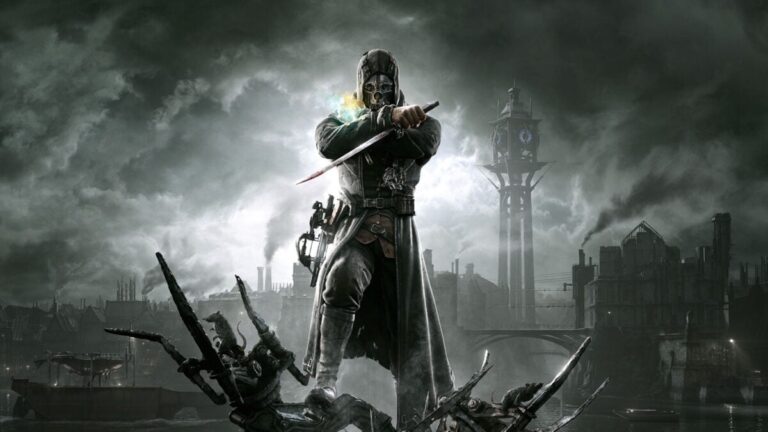
Two fans decided to marry using the game’s aesthetic and requested that Smith contribute something to their ceremony. The pair specifically wanted lines from the Heart—the mystical artifact that offers cryptic commentary on Dishonored’s world—delivered at their wedding. Smith wrote original lines from the Heart’s perspective, analyzing one person as a potential match for the other. He then contacted April Stewart, the voice actor who performed the Heart and Jessamine Kaldwin, asking if she would record the lines. Stewart immediately agreed, recording on her iPhone with her partner in their kitchen.
Smith then reached out to Thomas Mitton, the audio designer, who despite “not working on a project” contributed reverb, wind sounds, heart-beat effects, and layered echoes to create the finished piece. At the wedding, one member of the couple held up a physical Dishonored Heart while the recording played over the speakers. The experience revealed what Smith considers essential to game design: the connection between creator and player transcends the game itself. “There’s more lucrative stuff to do, there’s saner stuff, and there’s stuff that hurts less when it goes bad. But the reason you do it—cynical people call it parasocial, but it’s this connection with the audience, and if you’re a musician or a writer or a filmmaker, a video game maker—if you know you know. It’s very powerful because you’re not doing this shit for yourself.”
The Missing Element in Modern Games
The Hunger for Mystery
Smith’s critique of contemporary game design centers on what he sees as a pervasive absence: mystery. Most games prioritize systems clarity and UI guidance, communicating player objectives and mechanical feedback with precision. “Games are about systems and UI and pointers to the player, and helping the player understand what’s happening in this weird tech that you’re interacting with, right? So technology works against mystery.” Inscryption, the 2021 deckbuilder, broke this pattern by maintaining genuine mystery throughout its runtime. Smith found the experience “delicious”—a word choice suggesting how starved he feels for that particular sensation in contemporary design.
Elden Ring and Discovery
Elden Ring offered a different approach to similar ends. Smith had bounced off previous Souls games, but Elden Ring’s open design created constant curiosity. “You just wander around Limgrave and you hear that music, and you’re just constantly possessed with ‘what is around the corner?’” The game succeeded partly through environmental storytelling and deliberate ambiguity, resisting the exhaustive quest markers and objective pointers standard in open-world design. Smith’s ambition for Black Pony’s project draws from these examples, seeking to create something that feels novel even to players with 30, 40, or 50 years of gaming history.
Crafting Memorable Experiences
The goal is work that people discuss a decade later, games that inspire players to gather and recount specific experiences as if recounting shared adventures. Smith recalls sitting next to the designers of FTL at an awards ceremony, eager to spend the entire evening discussing not just why he loved their game but specific stories and anecdotes from his playthroughs. This connects to a principle articulated by Doug Church, the project lead on System Shock: “When a game really works, people get together later and tell stories as if it actually happened. As if they played football, or went to war, together.” Smith adopted this as a defining measure of success. “That joy, that magic between people.”
Pursuing Hopeful Design
Black Pony Immersive represents a deliberate rejection of industry trends toward live service monetization and engagement metrics. The studio’s founders have watched those models disappoint creatively and commercially, and they’ve chosen a different path. Whether a small team working remotely without proper furniture can achieve what larger, better-resourced studios struggled to accomplish remains uncertain. What’s clear is that Smith and Horne believe the attempt itself matters—that pursuing hopeful, mysterious, human-centered game design in an industry increasingly skeptical of such pursuits constitutes its own form of resistance.
Frequently Asked Questions
Why did Harvey Smith and Ben Horne start Black Pony Immersive?
After Arkane Austin closed in 2024, they spent a year searching for investors willing to fund a dedicated immersive sim without demanding unrealistic returns or pivot toward trending technologies like NFTs and AI. Venture capitalists repeatedly rejected them seeking 1000x returns within two years, incompatible with thoughtful game design. They eventually secured no-strings-attached funding to build a 26-person remote studio.
Who is Warren Spector and why did his retirement matter to Smith?
Warren Spector is the designer credited with creating the immersive sim genre. He mentored Smith since their first collaboration on System Shock and they worked together for nine years. Spector announced his retirement the day before Black Pony Immersive's public announcement, symbolizing a generational handoff that moved Smith deeply.
What does Harvey Smith believe is missing from modern games?
Smith argues that most games prioritize clear systems, UI guidance, and objective markers that work against mystery. He cites Inscryption and Elden Ring as rare exceptions that successfully maintain genuine mystery and discovery, allowing players to explore and uncover secrets rather than following guided paths.
