
Key takeaways
- Sean Murray plans for Hello Games to watch how the industry adopts AI before committing, mirroring the studio's post-COVID decision to observe work trends rather than rush into change.
- Murray believes game development will remain fundamentally difficult regardless of AI tools, contradicting industry predictions that the technology will dramatically reduce production costs.
- Recent backlash against the Tomb Raider remake and Crazy Taxi for using generative AI has highlighted players' concerns about quality and developers' struggle to articulate concrete benefits.
- Hello Games' success with traditional game development methods, combined with a decade of procedural generation experience, gives Murray confidence to prioritize proven approaches over emerging technologies.
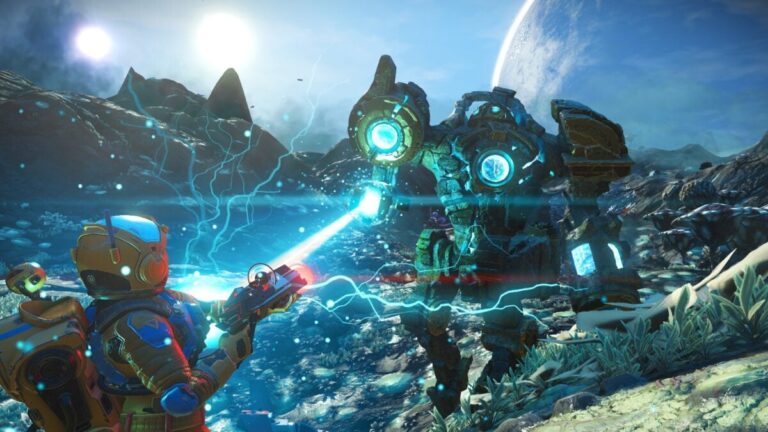
When No Man’s Sky released, one of its defining characteristics was the procedural generation system that could theoretically create more explorable worlds than a single player could visit across multiple lifetimes. A decade later, the gaming industry is locked in a heated debate over whether artificial intelligence and large language models represent the next evolutionary leap in development technology. Sean Murray, managing director of Hello Games, is deliberately stepping back from that conversation.
Hello Games Takes The Long View On AI
In a recent interview with Kotaku marking the tenth anniversary of No Man’s Sky, Murray outlined his studio’s stance on generative AI adoption. Rather than racing to integrate new technologies, Hello Games is taking what Murray characterizes as a “wait and see” approach—one informed by the studio’s decision-making during the post-COVID era. When the pandemic subsided and Hello Games was determining how its team would work going forward, Murray adopted a philosophy of patience and observation.
“I remember saying, ‘Let’s just hold back, stay working from home, and let everyone else f*ck it up,’” Murray told Kotaku. The studio ultimately benefited from this cautious stance, and Murray plans to apply the same strategy to artificial intelligence. “Let’s just enjoy making games the way we’ve always made games. And like, that’s still working for us and we still enjoy it,” he said.
The AI Gold Rush And Its Skeptics
Major Publishers Banking On Generative Solutions
The conversation around AI in gaming has accelerated dramatically. Electronic Arts, the publisher where Murray previously worked as lead programmer on the 2006 cult classic first-person shooter Black at Criterion Games, has positioned artificial intelligence as a financial lifeline. EA is reportedly expecting substantial cost savings from AI implementation, particularly relevant given the company’s massive debt obligations. In 2023, Saudi Arabia’s Public Investment Fund acquired EA as part of a deal valued at approximately $55 billion, and the company has signaled that AI adoption will help offset the financial burden associated with servicing that leveraged buyout.
Murray’s reaction to this corporate enthusiasm is measured. “Like I’m reading about, you know, EA’s just been bought by the Saudis, And they’re like, ‘don’t worry, we’re going to save billions because we’re going to all use AI.’ Right? And I sort of sit there and think, cool, good luck. You know, let’s see how that works out. I will watch from afar,” he said.
Player Backlash Against Generative Content
The theoretical benefits of AI haven’t translated smoothly into consumer acceptance. Several high-profile releases have faced significant player criticism after announcing generative AI usage during development. The Tomb Raider remake and the newly released Crazy Taxi came under fire when developers disclosed the extent of AI integration. These controversies revealed a fundamental tension: while some developers see AI as a productivity multiplier, players worry about the quality implications of generative content, often derisively referred to as “slop.”
The gaming community’s skepticism reflects broader uncertainty about what AI tools actually accomplish in practice. Developers have struggled to articulate concrete benefits from the technology, and public discourse has been dominated by concerns about job displacement, quality degradation, and ethical implications of training AI systems on copyrighted material.

Game Development Remains Fundamentally Difficult
The Hard Problems Persist
Murray’s core thesis contradicts much of the industry optimism surrounding artificial intelligence. He argues that the fundamental challenges of game development—creating experiences that feel responsive, engaging, and polished—won’t be materially altered by new tools, regardless of their sophistication.
“I think making video games is really hard and I think people are going to learn that it’s still really hard and the hard things are still hard, of making a game feel really nice to play,” Murray explained. This perspective runs counter to venture capital-backed predictions that AI will dramatically accelerate development timelines and reduce production costs. Instead, Murray suggests the industry will eventually arrive at a more grounded understanding of what the technology can and cannot accomplish.
Hello Games’ Track Record With Procedural Generation
Hello Games’ decade-long experience with procedural systems offers an instructive precedent. The studio built No Man’s Sky around algorithmic content generation, using sophisticated procedural techniques to create vast numbers of unique worlds. Yet even with these tools, Hello Games found that creating a compelling, functional game required extraordinary attention to gameplay systems, art direction, audio design, and player experience—all the elements that procedural systems cannot automate.
The studio’s continued success with No Man’s Sky, years after its contentious launch, suggests that traditional development priorities—polish, creativity, and understanding player desires—matter more than technological novelty. Murray’s position reflects confidence in Hello Games’ methodology rather than dismissal of emerging tools.
Learning From Post-Pandemic Decisions
Murray’s strategy for navigating AI adoption mirrors his approach to the industry’s rapid shift toward remote and hybrid work arrangements following COVID-19. Rather than making immediate commitments during a period of extreme uncertainty, Hello Games chose to observe how organizational structures evolved across the industry. This patience allowed the studio to make informed decisions based on outcomes rather than predictions.
Murray acknowledged that many companies made hasty decisions during that transition period, and he’s applying that lesson to the AI moment. His willingness to publicly express skepticism about industry hype—particularly regarding EA’s ambitious cost-cutting projections—reflects a kind of confidence that perhaps only comes from having navigated a major creative recovery.
The Broader Industry Context
Hello Games’ cautious stance stands in notable contrast to the broader industry narrative. Major publishers have publicly committed to AI integration targets, venture capital continues flowing toward AI-focused game development tools, and numerous startups promise to revolutionize content creation through generative systems. Yet the backlash against recent high-profile AI disclosures suggests that player skepticism may ultimately constrain the aggressive implementation some executives envision.
Smaller independent studios like Hello Games, unburdened by the debt servicing obligations that make larger publishers desperate for cost-cutting measures, can afford to maintain their current development practices while the industry sorts out which AI applications genuinely enhance creative work versus which merely displace human effort without proportional benefits.
No Man’s Sky’s trajectory from troubled launch to sustained critical and commercial success demonstrates that doing things “the way we’ve always made games” can yield results that no amount of technological disruption can guarantee.
Frequently Asked Questions
Why is Sean Murray cautious about AI in game development?
Murray believes that making video games is fundamentally difficult and that AI won't change this core challenge. He prefers to observe how the industry adopts AI before committing Hello Games to the technology.
What is Sean Murray's previous experience with major game studios?
Before founding Hello Games, Murray worked at Criterion Games, where he was lead programmer on the 2006 FPS Black. Criterion Games was owned by Electronic Arts at that time.
What recent games faced criticism for using generative AI?
The Tomb Raider remake and the new Crazy Taxi game came under fire from players after disclosing that generative AI was used during their development.
