
Key takeaways
- Polyarc Games closed after 12 years despite Moss and Moss: Book II receiving critical acclaim and winning best VR game at The Game Awards 2022.
- Limited VR market adoption and reduced hardware investment from Meta and PlayStation prevented the studio from sustaining operations.
- The non-VR adaptations of Moss games failed to capture the original experiences, demonstrating that VR-specific design does not translate to traditional platforms.
- Polyarc's shutdown illustrates how critical success alone cannot ensure commercial viability in emerging gaming sectors.
Polyarc Games has announced it is closing after 12 years of operation. The studio confirmed through a statement posted on LinkedIn that active development has ended and the team is dispersing. The announcement marks another notable casualty in the volatile virtual reality sector, despite Polyarc’s track record of critical success with its flagship franchise.
The Rise of Moss in Virtual Reality
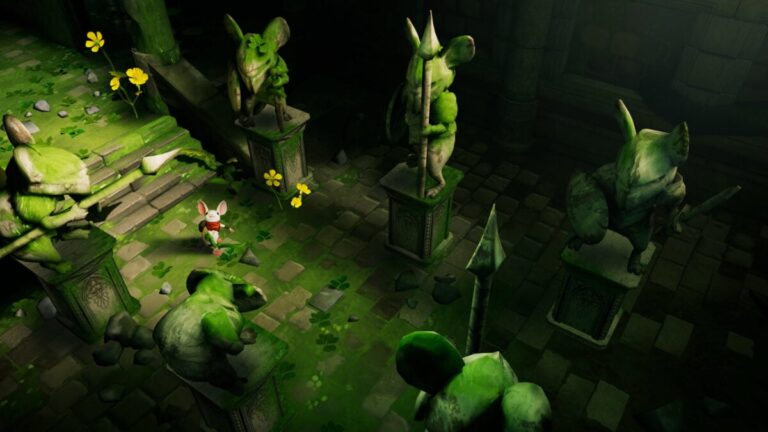
Polyarc entered the public consciousness with Moss, a puzzle fantasy adventure released in 2018 for PlayStation VR, two years after the headset launched. The game centered on Quill, an anthropomorphic mouse protagonist navigating fantastical environments. The title garnered multiple award nominations and demonstrated that VR could support substantive, story-driven experiences beyond technical novelty or experimental gameplay.
Award Recognition and Critical Acclaim
Moss received widespread recognition from critics and industry bodies. The game’s success validated Polyarc’s creative vision within a nascent medium and proved that developers could craft narratives and puzzles specifically designed for VR rather than simply porting existing game concepts into headsets. This critical platform elevated Polyarc’s standing and drew attention to the studio’s technical execution and artistic direction.
Franchise Expansion
The studio expanded the Moss universe with Moss: Book II, released in 2022 for PlayStation VR2. This sequel built upon the original’s combat and emotional framework, iterating on established mechanics while maintaining the core identity that resonated with players. The title won best VR game of the year at The Game Awards 2022, cementing Polyarc’s reputation as a leading creator in the virtual reality space at a moment when VR adoption remained limited.
The VR Market’s Fragmentation
Despite critical recognition, the broader virtual reality ecosystem has proven inhospitable to studios specializing in VR-exclusive titles. The market has not expanded as some early enthusiasts predicted, and headset manufacturer commitments have diverged sharply. While companies like Valve continue to invest in new virtual reality hardware development, others, including Meta and PlayStation, have visibly reduced their engagement with the sector. This pullback left studios like Polyarc dependent on an audience that never materialized at scale.
Divergent Corporate Strategies
Hardware manufacturers have signaled conflicting priorities. Valve’s ongoing investment in VR technology suggests confidence in the medium’s long-term viability, while Meta—despite its massive spending on metaverse infrastructure—has scaled back consumer VR ambitions. PlayStation, which published Polyarc’s titles, similarly appears to have deprioritized VR as a core platform pillar. These shifts in corporate strategy directly affected which projects received funding and which teams found themselves without sustainable business models.

The Non-VR Adaptation Experiment
Polyarc attempted to reach a broader audience by releasing non-VR versions of both Moss games adapted for standard television displays. The studio recreated the franchise in 2D format, but the transition resulted in significant losses to the experience. The original games leveraged VR-specific affordances—spatial design, environmental presence, and interaction models—that do not translate cleanly to conventional gaming. The adaptation underscored a fundamental limitation: titles designed specifically for virtual reality cannot simply be ported to other platforms without compromising their core appeal.
What Polyarc’s Closure Signals
The shutdown of Polyarc after 12 years of operation, culminating in award-winning releases, reflects broader structural challenges in the VR sector. In announcing the closure, the studio stated: “After nearly 12 years riding the joyous rollercoaster of emotions that is making video games, our time together has come to an end.” Critical acclaim did not guarantee commercial viability or long-term studio stability. The company’s inability to sustain operations despite producing some of the highest-regarded VR games suggests that hardware adoption, market size, and consumer spending on VR titles remain insufficient to support dedicated development teams at scale.
Former PlayStation executive Shuhei Yoshida, who oversaw the company’s VR initiatives, acknowledged Polyarc’s closure on social media. “Goodbye Polyarc, you (and Quill) will be remembered,” he wrote on X. His public farewell reflected the genuine respect Polyarc earned within industry circles, even as the organization ran out of runway.
The Broader Implications
Polyarc’s closure adds to a growing list of VR-focused studios that have either shut down or retreated from the sector. The pattern suggests that the virtual reality industry remains in a protracted holding pattern—neither collapsing entirely nor achieving the mainstream adoption that would support diverse, sustainable software development. Hardware manufacturers continue to fund selected projects, but independent studios struggle to find economic models that align with current market demand.
For players invested in VR experiences, Polyarc’s departure means the loss of a studio that consistently demonstrated how to craft meaningful narratives and gameplay within the medium’s constraints. The Moss franchise remains accessible on PlayStation VR and VR2, but no new chapters are forthcoming. The studio’s closure serves as a reminder that commercial failure and critical success occupy separate dimensions in the video game industry, and that even exceptional creative work cannot guarantee the institutional stability required to sustain a development team.
Frequently Asked Questions
Why did Polyarc Games shut down?
Polyarc announced closure after 12 years because the virtual reality market has not expanded to support a sustainable audience for VR-exclusive titles. Major hardware manufacturers like Meta and PlayStation have reduced their VR commitments, limiting funding opportunities for independent studios despite Polyarc's critical success.
What games did Polyarc develop?
Polyarc created the Moss franchise, beginning with Moss released in 2018 for PlayStation VR. The studio followed with Moss: Book II in 2022 for PlayStation VR2, which won best VR game of the year at The Game Awards 2022. Polyarc also released non-VR versions of both games for standard television displays.
Is the VR market still viable for independent game developers?
The VR market presents significant challenges for independent studios. While Valve continues to invest in VR hardware, Meta and PlayStation have pulled back. Polyarc's closure, despite producing acclaimed titles, suggests the current market cannot support sustainable operations for VR-focused development teams.
