
Key takeaways
- The G02 device was produced through a regional brand licensing agreement intended exclusively for the China market, according to an official statement from Lenovo representative Pedro.
- The controversy centers on a stark discrepancy between the device’s official specifications and actual user experiences.
- Gaming industry observers noted the move as a textbook example of brand damage control in an era of heightened copyright enforcement.
- The G02 represents a regional licensing experiment that Lenovo never intended for global distribution.
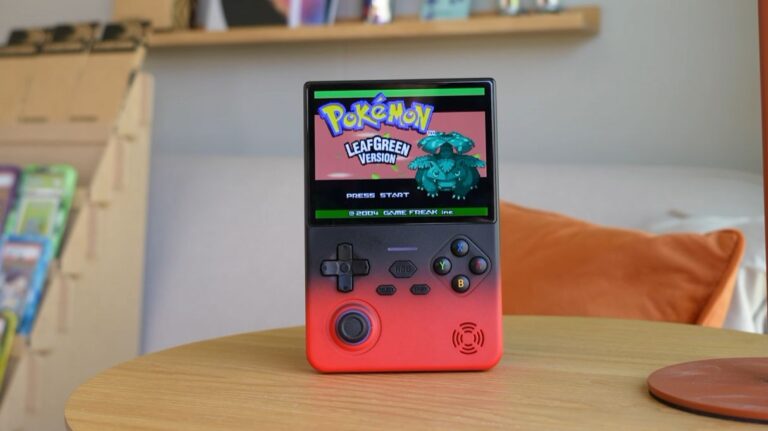
Lenovo has quietly ended all authorized sales and removed its branding from a budget retro handheld device preloaded with over 21,000 illegal game ROMs, marking a decisive retreat from a regional licensing product that never belonged to its official global portfolio. The Lenovo G02, a Game Boy-styled device powered by a Rockchip RK3326 processor, shipped with copyrighted titles from Nintendo, Sony, Sega, and Neo Geo on internal storage or bundled microSD cards. The company’s decision to distance itself from the device follows viral reports exposing the massive piracy scope and subsequent pressure over brand association with copyright infringement.
Lenovo Pulls Branding From Piracy-Packed Device
The G02 device was produced through a regional brand licensing agreement intended exclusively for the China market, according to an official statement from Lenovo representative Pedro. The company confirmed it was “currently investigating reports that some third-party vendors may be offering devices with preloaded software” and emphasized that “sales of this device outside of PRC are not authorized and are not compliant with Lenovo’s channel policy.” This statement effectively distanced the company from unauthorized gray market sales while acknowledging the piracy allegations.
Lenovo has systematically removed its name from listings on major dropshipping platforms including AliExpress and Alibaba, where the G02 is now rebranded as “Sunyao G02” (described as a Lenovo ecological brand) or simply “Gusgu.” The device remains available for purchase but operates under alternative branding, effectively severing Lenovo’s public association with the product. This rebranding strategy shields the company from direct legal liability while the hardware continues circulating through gray market channels at price points between $50 and $100.
The Piracy Problem and Gray Market Inflation
The controversy centers on a stark discrepancy between the device’s official specifications and actual user experiences. Lenovo stated that units officially sold within the People’s Republic of China do not contain preloaded games and run a clean Linux-based operating system. However, devices reaching international markets arrived with massive ROM libraries, suggesting third-party vendors were modifying hardware after factory production to inflate prices on the gray market.
The preloaded content includes over 21,000 illegal game ROMs spanning 30+ emulators, with specific titles including Nintendo’s *Super Mario* and *The Legend of Zelda* franchises, alongside PlayStation 1, Sega Genesis, NES, and Super Nintendo Entertainment System libraries. The device’s instruction manual explicitly states that “any content installed by the user—and any issues that may arise—are the sole responsibility of the user of the device,” establishing Lenovo’s legal position that piracy represents unauthorized user modifications rather than official product features. This clause became critical legal protection as the piracy allegations spread across gaming communities and tech media.
Industry Reaction and Market Shift
Gaming industry observers noted the move as a textbook example of brand damage control in an era of heightened copyright enforcement. The G02 became associated with a broader pattern affecting budget retro handhelds from manufacturers like Anbernic and Miyoo Mini, which similarly ship with preloaded pirated content from third-party vendors. However, Lenovo’s official investigation into vendor practices and subsequent branding removal represented a more aggressive distancing strategy than competitors typically employ.
The device’s technical limitations underscore why the piracy bundling occurred. With only 1GB of RAM and a 4.5-inch IPS display running at 1024×768 resolution, the G02 reliably emulates systems up to PlayStation 1 and Dreamcast but struggles with more demanding platforms. This modest hardware positioned the device as a direct competitor to established budget retro handhelds rather than Lenovo’s premium Legion Go line, which launched in October 2023 with a Ryzen Z1 Extreme processor, 16GB RAM, and an 8.8-inch 144Hz display priced at $699.99. The G02’s positioning in the sub-$100 market made it vulnerable to vendor modifications that enhanced perceived value through ROM libraries.
A Regional Licensing Experiment Gone Wrong
The G02 represents a regional licensing experiment that Lenovo never intended for global distribution. Unlike the Legion Go and Legion Go S, which comprise Lenovo’s official handheld gaming portfolio, the G02 existed as a white-labeled product distributed only through Chinese market channels. The device’s emergence on international platforms through unauthorized sellers created confusion among consumers who believed they were purchasing an official Lenovo budget entry into the handheld gaming space.
This strategy mirrors historical patterns in the consumer electronics industry, where regional licensing agreements create ambiguity around product ownership and liability. Lenovo’s investigation into third-party vendor practices revealed a coordinated gray market strategy where low-cost hardware was enhanced with illegal ROM collections to justify higher retail prices to international buyers unfamiliar with the device’s true specifications and origin.
What Comes Next for Retro Handheld Markets
The G02 discontinuation signals potential regulatory pressure on budget handheld manufacturers regarding preloaded content verification and supply chain accountability. Gaming industry analysts will monitor whether other manufacturers face similar investigations or whether Lenovo’s approach becomes a template for brand protection in an industry where piracy has become endemic to certain market segments. The removal of Lenovo branding does not eliminate the device from circulation but establishes clear separation between the company’s official product lines and gray market variants.
Lenovo’s decisive action to withdraw authorized sales and rebrand third-party listings demonstrates how copyright concerns can force major technology companies to abandon entire product categories, even when those products never officially belonged to their global portfolios. The G02 will likely continue operating under alternative names on dropshipping platforms, but the loss of Lenovo’s brand association represents a significant market repositioning that protects the company’s reputation from ongoing piracy allegations while the underlying hardware persists in legal gray zones.
