

Key takeaways
- Fortune's Weave's character writing, particularly protagonist Theodora, provides compelling narrative hooks that sustain player engagement despite 30 hours into the game.
- The game's time management systems force extensive map traversal and grinding for materials that consume playtime without offering meaningful strategic engagement.
- By gating character training to a single location and locking progression behind renown earned primarily through supply gathering, the game creates friction between its strong narrative and tedious progression.
- The multi-lord campaign structure means the first playthrough—with a player's preferred character—is also the most punishing and time-consuming before quality-of-life improvements unlock.
Fire Emblem: Fortune’s Weave presents a compelling character at the center of a game increasingly at odds with itself. According to Kotaku’s preview coverage, after 30 hours with the title, the appeal of its protagonist and supporting cast is what continues to drive engagement, while the underlying systems work against that momentum rather than enhancing it.
Theodora and Her Narrative Appeal
Theodora, one of four Flame Lords players can follow, emerges as a particularly well-realized protagonist for the strategy RPG. She ascended to her throne after a conflict with her brother that left her with a missing arm, which she has replaced with a magical prosthetic. Her story brings her to the Heroic Games, where she competes to reclaim ancestral lands her kingdom lost in previous generations. The added wrinkle is that her new arm carries a corruption slowly eroding her mind as she fights her way through the tournament. Kotaku’s reviewer noted that the character work here distinguishes itself from typical royal portrayals in games, where monarchs are often depicted as arrogant and incompetent. “When I play Theodora, she’s the ‘better’ I think of,” the reviewer wrote, pointing to the support conversations between her and party members as the element keeping them engaged after the honeymoon phase wore off.
The Time and Progression Puzzle
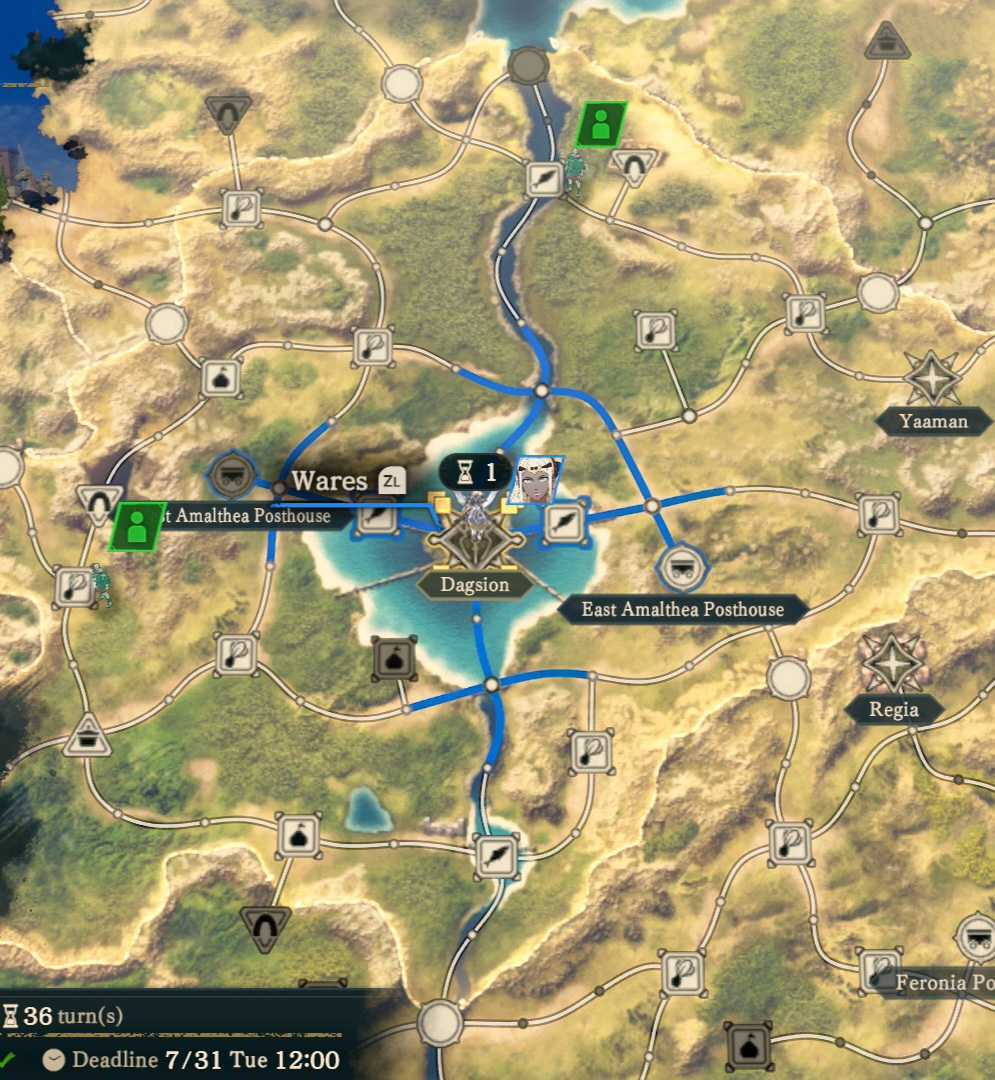
What’s working narratively, however, is undermined by the structure surrounding it. According to Kotaku’s experience, the game’s time management system sits at the root of the problem. Unlike Fire Emblem: Three Houses, where activities like training or preparing meals consumed time and advanced calendar days, Fortune’s Weave separates these concerns. Training and cooking are free in terms of calendar progression, but are instead gated by per-character stamina meters and activity limits within specific windows. The actual currency of time comes from moving across the map, which Kotaku found to be painfully inefficient.
Map Traversal Wastes Available Time
Moving between locations requires selecting routes in single-segment increments rather than simply picking a destination and having time deducted automatically. The map itself is enormous and filled with nodes containing raw materials—fish, meat, vegetables, smithing supplies—along with dungeons and towns. Exploring a new area can consume 15-20 time segments just to reach it, another 15-20 to unlock its nodes, and yet another 15-20 to return. The reviewer described this cycle as particularly grating when contrasted with the abundance of available time in some chapters, which offer over 100 segments before a deadline hits.
Training and Progression Gates
The absurdity compounds when character progression is considered. Training party members can only happen once per week, and exclusively in the main city. If a player ventures out to explore a portion of the map and decides mid-expedition to level up their characters, they must abandon their current objective, trek back to the city, spend time training, and then trek back to their original location—all while watching available time segments deplete. Carriages exist to cut down travel time, but they only function within a single area, not between them. Kotaku’s reviewer flagged this design as particularly frustrating given the stated goal of playing as a Flame Lord commanding troops, yet spending the majority of actual playtime walking across maps. Fast travel eventually unlocks after reaching an undiscovered progression point, but the reviewer noted this relief comes far too late in the experience.
Renown and the Supply Grind
Progression through the map itself is locked behind renown gates. Players earn renown through main story quests, general side quests, and character-specific side quests—in Theodora’s case, sending supplies back to citizens. The problem is which of these actually generates meaningful renown progress. General side quests provide pittance; gathering supplies emerges as the fastest path forward, at least in the early chapters.
But gathering is where the design becomes actively hostile to continued engagement. Completing supply tasks means collecting 10, 20, or 30 pieces of a specific material from a specific region, with no guarantee the game will actually provide what’s needed when you search. Kotaku’s reviewer described the resulting loop as soul-crushing: “I just feel stuck on this unsatisfying wheel of walking across a map picking vegetables and fish like some kind of hobo hunter-gatherer. I am a Flame Lord, damnit! I’m supposed to be leading my troops from winged horseback, and I don’t even get to do that often enough!”
Combat and Character Leveling
The strategic combat encounters that comprise the closest thing to engaging tactical gameplay are sparse. Dungeon battles feel inconsequential, with enemies offering little resistance and the exchanges themselves lacking friction. The map-based strategic battles—where the real learning and engagement should occur—are too infrequent to serve as a primary leveling method.
The Auto Pilot Problem
This absence creates a vacuum that the game fills with “auto activities,” letting characters train, search for materials, or fight without player input. While this technically lets progression happen without manual grinding, it transforms stretches of playtime into a passive experience where the game plays itself. The reviewer pushed back against this design, noting that they want to play the game rather than watch it progress on its own.
The core issue is compounded by the fact that map-based battles provide substantially more experience than the alternatives, yet they occur rarely enough that meaningful character growth requires either extensive grinding or relying on the auto system—neither of which feels satisfying.
The Four-Lord Campaign Structure
Fortune’s Weave offers four Flame Lord campaigns, with each broken into multiple parts. The reviewer is still in part one with Theodora despite 30 hours of play and growing frustration with the structure. The prospect of repeating the same tedious early-game loop three more times with different characters feels overwhelming. While the game supposedly includes boons designed to smooth out subsequent playthroughs, the reviewer had not encountered them yet.
What particularly stings is that the first playthrough—logically the experience where a player would be most invested, playing as their preferred Flame Lord—is also the one where the systems are at their most punishing and least optimized. By the time systems improve and time gates open up, players will have already moved on to subsequent lords where the journey is presumably less grueling. The reviewer expressed regret about not choosing Dietrich, another Flame Lord option, as their initial character, framing it as choosing a “sacrificial struggle bus” to get through the worst of the experience on a character they cared less about.
Kotaku’s reviewer drew an implicit comparison to Fire Emblem: The Blood of Dawnwalker, where a similar time management system worked because narrative tension made the constraints feel purposeful. In Fortune’s Weave, the time systems impede rather than enhance, creating friction without meaningful payoff.
Source: Kotaku
Frequently Asked Questions
How much time has Kotaku spent with Fire Emblem: Fortune's Weave?
Kotaku's reviewer has played for two weeks and reached 30 hours, still in part one as Theodora.
What is Theodora's story in Fortune's Weave?
Theodora is a newly enthroned queen who won her crown fighting her brother, losing an arm in the process. She replaced it with a magic arm and entered the Heroic Games to reclaim ancestral lands. The arm carries a corruption slowly eroding her mind.
What is the main problem with Fortune's Weave's progression systems?
The game forces extensive map traversal to reach new areas and complete tasks, while character training is only available once per week in the main city. This requires players to constantly backtrack, wasting time segments that also gate progression through renown earned mainly by gathering supplies.
