
Key takeaways
- Debra Wilson has expressed confusion about why game studios repeatedly use her actual likeness instead of creating distinct character appearances for her roles.
- Insomniac and other developers defend Wilson's casting by citing her superior talent and years of professional experience compared to other auditioners.
- Studios increasingly cast recognizable actors in games as the traditional entertainment industry has destabilized, with performers diversifying into interactive media.
- The practice creates tension between allowing actors to escape into characters and allowing studios to leverage recognizable talent for marketing and production efficiency.
Debra Wilson has spent decades lending her voice to video game characters, from military shooters to superhero adventures. But in recent years, an unusual pattern has emerged: the actors and actresses who play major roles in games increasingly share the exact facial features of their performers. For Wilson, this trend raises an uncomfortable question about her own craft that even she struggles to answer.
During an appearance on the podcast Hyperfixated with Joseph Shepherd, the MADtv alumna expressed genuine confusion about why so many of her in-game performances feature her real-world likeness rather than a digitally distinct character. The episode was recorded before Marvel’s Wolverine released, though clips from the conversation have since circulated widely online.
An Actor’s Perspective on Digital Representation
Wilson articulated a viewpoint that cuts against the prevailing practice in contemporary game development. She told Shepherd that she actually prefers roles where the character bears no resemblance to her actual appearance, viewing the disconnect between performer and avatar as essential to the craft itself.
“I love games where they don’t look like me at all,” Wilson said during the podcast. “I might as well just go and do theater if it just looks like me. Then how do you get a chance to really escape into a character?” The question highlights a philosophical divide in performance capture work: whether the goal is to preserve the actor’s recognizable presence or to leverage their talent while allowing them to inhabit something entirely different.
Where Players See Wilson’s Face
Recent High-Profile Roles
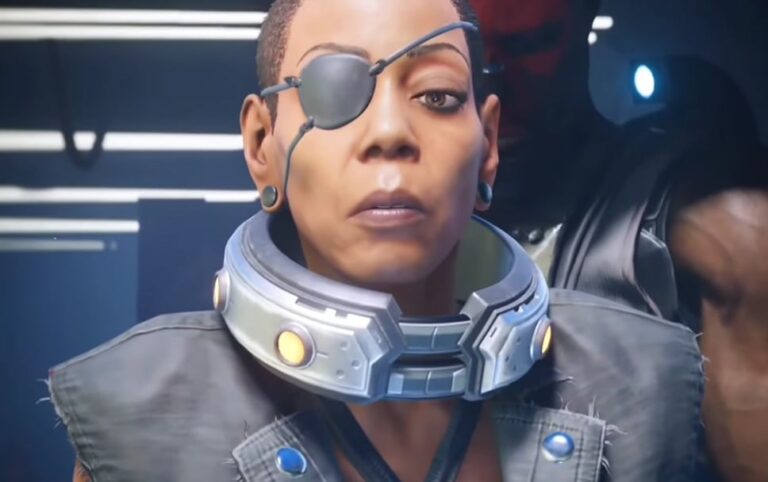
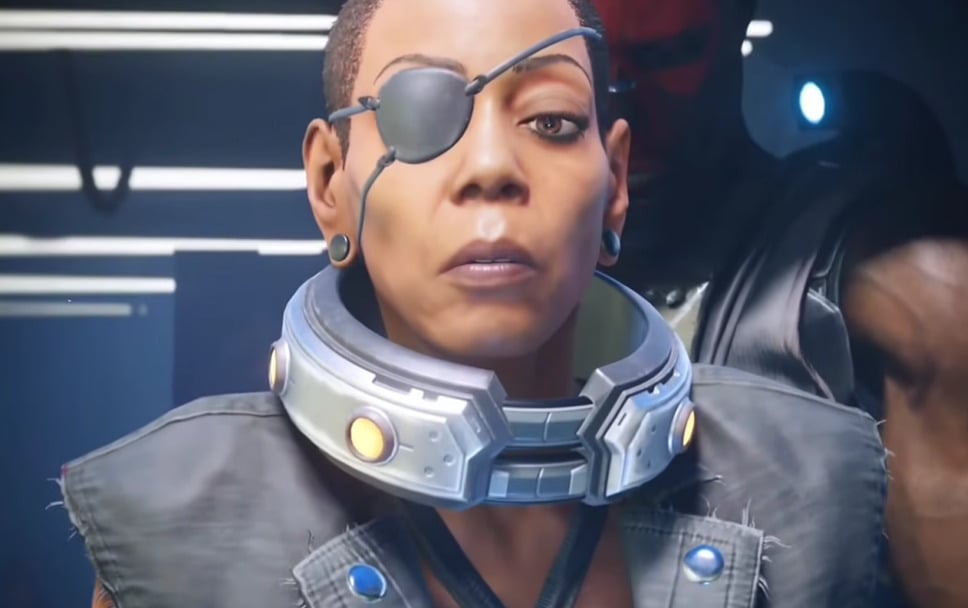
Wilson’s visible likeness has become particularly prevalent in AAA titles over the past several years. In Marvel’s Wolverine, Insomniac Games cast her as Callisto, a one-eyed Morlock leader, with her face mapped directly onto the character model. In Suicide Squad: Kill the Justice League, she portrays Amanda Waller with identical facial capture. Wolfenstein II: The New Colossus featured her as Grace Walker using the same approach.
A Broader Pattern
These recent examples follow a trajectory established years earlier. Death Stranding incorporated her likeness, as did Star Wars Jedi and various Call of Duty installments. What distinguishes the recent wave is the deliberate choice by studios like Insomniac to have their primary cast resemble their voice actors and motion capture performers, a decision that reflects changing philosophies in game production.
Why Studios Keep Casting Her
The Talent Argument
When this topic resurfaces in gaming communities, industry professionals often defend the practice by pointing to Wilson’s exceptional abilities. Del Walker, who worked on both Star Wars Jedi and Suicide Squad: Kill the Justice League, articulated this perspective bluntly on social media. “After working on multiple games with this woman, I truly WISH you guys could see her casting audition videos compared to her competition,” Walker wrote. “It’s like watching 1996 Michael Jordan turn up to a high school basketball game.”
Developers and casting directors attribute Wilson’s repeated appearances to what they describe as a “competition crushing reel”—audition materials that demonstrate her proficiency in a way that outpaces other candidates. Her years of experience in voice performance and on-camera work across television, theater, and games have apparently created a gap between her capabilities and those of other performers auditioning for similar roles.
Economic Efficiency
Beyond pure talent, studios benefit from casting recognizable performers whose faces already carry professional polish and camera experience. When a game incorporates motion capture alongside voice work, using an established actor simplifies production logistics and market positioning. The performer’s physical presence becomes part of the game’s marketability.
The Changing Landscape of Actors in Games
The phenomenon Wilson described reflects broader shifts in the entertainment industry. As traditional film and television structures have destabilized, established actors have diversified their income streams by moving into game development. Keanu Reeves served as a central character in Cyberpunk 2077, while Jack Quaid underwent motion capture to animate a slime cube in another production. These high-profile examples demonstrate that studios now routinely pursue recognizable talent for interactive media.
The 1990s saw a brief explosion of full-motion video in games, featuring digitized actors and actresses in cutscenes. That era faded as technology evolved, but the principle underlying it—that an actor’s recognizable appearance adds value to a game—never entirely disappeared. Modern motion capture technology has simply made the integration seamless rather than conspicuous.
The Tension Between Performance and Escapism
Wilson’s discomfort reflects a legitimate artistic tension. Voice acting traditionally allowed performers to disappear into characters, guided only by their vocal choices and the director’s instructions. Motion capture added physicality without necessarily adding facial identity. But when a performer’s actual face appears on screen, the psychological contract changes for both the actor and the player.
From a player perspective, recognizing a known actor can enhance immersion for some—celebrity casting has market value. From Wilson’s perspective, the choice eliminates the opportunity to fully transform into the role. Whether studios should prioritize recognition or artistic range represents a genuine creative disagreement.
No Clear Industry Standard
What remains unclear is whether this practice will continue or if a counter-trend might develop. Insomniac’s deliberate choice to match cast with appearance is not universal. Some studios continue to hire actors for voices and motion capture without using their actual faces. The inconsistency suggests the decision comes down to individual studio preference, budget considerations, and market strategy rather than any firm industry rule.
Wilson’s public confusion about the pattern—combined with the defensive responses from those who work with her—indicates that even those deeply embedded in the system struggle to articulate a clear rationale. The practice persists because it works economically and addresses specific production needs, but it lacks the kind of conceptual certainty that typically governs major creative decisions.
Source: Kotaku
Frequently Asked Questions
Which games feature Debra Wilson's likeness?
Recent high-profile examples include Marvel's Wolverine (as Callisto), Suicide Squad: Kill the Justice League (as Amanda Waller), Wolfenstein II: The New Colossus (as Grace Walker), Death Stranding, and Star Wars Jedi. She has also appeared in various Call of Duty titles.
Why did Debra Wilson say she prefers games where characters don't look like her?
Wilson stated on the Hyperfixated podcast that using her actual likeness prevents her from fully escaping into a character, and that if she simply looks like herself, she might as well be performing in theater rather than lending her talent to a digitally distinct role.
How do game developers justify casting Debra Wilson repeatedly?
Industry professionals cite Wilson's exceptional talent and years of professional experience. Del Walker, who worked with her on multiple games, compared her casting audition videos to other candidates as comparable to "1996 Michael Jordan" appearing in a high school basketball game.
